Biodiversity
What is Biodiversity and Why is it Important?
By Clwyd Probert • Updated: December 2025 • 15 min read
Biodiversity is the variety of all living things on Earth—from the smallest microbes to the largest whales, encompassing genetic variation within species, the richness of species in ecosystems, and the diversity of habitats across our planet. It underpins human survival by providing food, medicine, clean air, water purification, and a stable climate. The WWF Living Planet Report 2024 reveals a devastating 73% decline in monitored wildlife populations since 1970, making biodiversity protection one of humanity's most urgent challenges.
What is Biodiversity? A Complete Definition
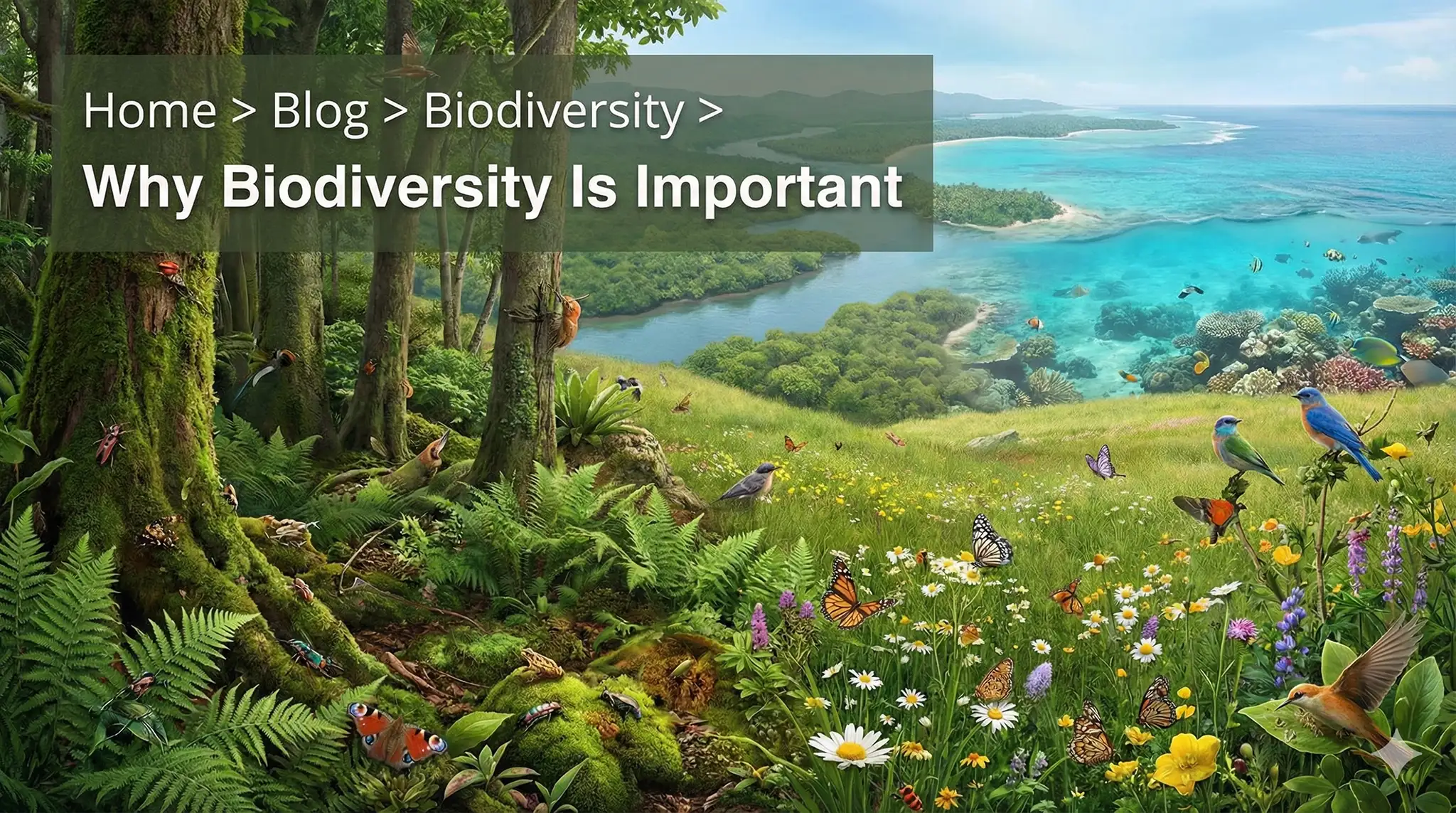
Biodiversity—short for biological diversity—describes the extraordinary variety of life that exists on our planet. The term encompasses every living organism, from microscopic bacteria in the soil to ancient whales traversing our oceans, and from the genetic code that makes each individual unique to the complex ecosystems where countless species interact.
 Scientists estimate that Earth hosts approximately 8.7 million eukaryotic species, yet remarkably, only around 2.16 million have been formally described and catalogued. This means we have identified barely a quarter of the life forms sharing our planet. Each year, researchers describe approximately 13,000 new species—from pygmy pipehorses to ghost sharks to previously unknown fungi—highlighting how much remains to be discovered.
The concept of biodiversity extends far beyond simply counting species. It represents the intricate web of relationships that has evolved over billions of years, creating the living systems upon which all life—including human life—depends. When we speak of biodiversity, we are describing the complete tapestry of life: its variety, its complexity, and its profound interconnectedness.
🌍 Key Statistic
Scientists have identified an estimated 10% of all species on Earth. The remaining 90%—potentially millions of species—await discovery, many in threatened habitats like tropical rainforests and deep oceans.
The Three Levels of Biodiversity
Biodiversity operates at three interconnected levels, each essential for maintaining healthy, resilient natural systems. Understanding these levels helps us appreciate why protecting biodiversity requires attention to genes, species, and habitats alike.
Genetic Diversity
Genetic diversity refers to the variation in genetic makeup within species and populations. This variation—encoded in DNA—determines everything from disease resistance to climate tolerance, enabling species to adapt to changing conditions over time.
Research indicates that genetic diversity has declined by approximately 1% per decade since the mid-19th century. This erosion carries serious consequences: some 75% of crop genetic diversity was lost between 1900 and 2000, reducing agriculture's resilience to disease, climate shifts, and environmental stress. When populations become isolated through habitat fragmentation, gene flow between groups diminishes, leading to inbreeding and reduced adaptability.
Species Diversity
Species diversity describes the variety and abundance of different species within an area. This is the level of biodiversity most people think of first—the richness of different plants, animals, fungi, and microorganisms that make up a community.
The IUCN Red List now assesses over 166,061 species, with approximately 46,337 species (28%) currently threatened with extinction. Freshwater habitats, though comprising just 0.01% of Earth's water, support one-third of all vertebrates and approximately 10% of all known animals—yet these ecosystems show the steepest declines of any habitat type.
Ecosystem Diversity
Ecosystem diversity encompasses the range of different habitats, biological communities, and ecological processes across landscapes and seascapes. From tropical rainforests to Arctic tundra, from coral reefs to peatlands, each ecosystem type provides unique conditions supporting distinct assemblages of life.
These three levels are deeply interdependent. Genetic diversity enables species to adapt; species diversity creates complex food webs and ecological interactions; and ecosystem diversity provides the varied habitats where this richness can flourish. Damage at any level ripples through the others.
Why is Biodiversity Important? The Essential Services Nature Provides
Biodiversity is not merely a measure of nature's richness—it is the foundation upon which human civilisation depends. Every breath we take, every meal we eat, and every medicine that heals us connects back to the web of life that biodiversity represents. Here's why protecting this diversity matters so profoundly.
Food Security and Agriculture
Biodiversity underpins global food production in ways both visible and hidden. Approximately 75% of global food crops rely at least partially on animal pollinators—bees, butterflies, birds, and bats that transfer pollen between plants. In the UK alone, pollination services are valued at £430-630 million annually, with 85% of apple crops and 45% of strawberry crops depending on bee pollination.
Beyond pollination, healthy soils teeming with diverse organisms break down organic matter, cycle nutrients, and create the conditions crops need to thrive. Wild relatives of domesticated crops carry genetic traits—drought tolerance, pest resistance—that plant breeders need to develop resilient varieties for a changing climate.
Medicine and Human Health
The natural world remains humanity's greatest pharmacy. Some 75% of approved pharmaceutical drugs derive from or were inspired by natural compounds. Aspirin originated from willow bark; the cancer drug Taxol comes from Pacific yew trees; antibiotics trace back to soil fungi. Yet with each species lost, potential cures disappear before we can discover them.
Biodiversity also protects health in less obvious ways. Research published in The Lancet confirms that 75% of emerging infectious diseases are zoonotic—jumping from animals to humans—and often arise where ecosystems face disruption. High biodiversity disperses disease among non-reservoir hosts, reducing transmission to humans through what scientists call the "dilution effect."
Climate Regulation and Carbon Storage
Healthy ecosystems serve as the planet's primary climate regulators. Forests, wetlands, and oceans absorb and store vast quantities of carbon dioxide that would otherwise warm our atmosphere. UK peatlands alone store approximately 3.2 billion tonnes of carbon—the nation's largest terrestrial carbon reserve—while globally, peatlands hold more carbon than all the world's forests combined, despite covering only 3% of land area.
Nature-based solutions could contribute approximately 20% of the climate mitigation needed by 2050 to limit warming below 2°C. Yet when ecosystems degrade, they switch from carbon sinks to carbon sources: 80% of UK peatlands are damaged and now emit approximately 23,100 kilotonnes of CO2 equivalent annually.
Clean Air and Water
Nature works constantly to purify the air we breathe and the water we drink. Trees and plants filter pollutants from the atmosphere—UK vegetation removes approximately 1.3 million tonnes of air pollutants annually, a service valued at £2.5 billion. Wetlands act as natural water treatment systems, filtering sediments and absorbing excess nutrients before water reaches rivers and aquifers.
Mental Health and Wellbeing
The benefits of biodiversity extend to our psychological wellbeing. A landmark 10-year Welsh study of 2.3 million adults found that access to green spaces was linked to significantly better mental health outcomes, with benefits strongest among those in deprived areas. Research suggests regular access to biodiverse natural environments can halve the risk of developing poor mental health.
The Economic Value of Biodiversity
The economic case for protecting biodiversity has never been clearer. Far from representing a trade-off between environment and economy, nature underpins economic activity at every level—and its loss threatens prosperity as surely as it threatens the natural world.
Global Economic Dependencies on Nature
$125-145T
Annual value of global ecosystem services
55%
of global GDP depends on functioning ecosystems
£1.5T
Total asset value of UK ecosystem services
12%
Potential UK GDP loss from nature degradation
The World Economic Forum calculates that $44 trillion of economic value generation—more than half of global GDP—is moderately or highly dependent on nature and exposed to risks from its loss. The Swiss Re Institute found that 55% of global GDP ($41.7 trillion) relies on functioning biodiversity and ecosystem services.
The UK's Office for National Statistics values Britain's ecosystem services at £1.5 trillion in total asset value, generating £47 billion annually. Health benefits from nature-based recreation alone account for £445 billion in asset value. Yet University of Oxford research warns that continued nature degradation could cause a 12% loss to UK GDP by the 2030s—potentially £300 billion in economic damage.
The landmark Dasgupta Review on the Economics of Biodiversity (2021) found that natural capital per person declined by nearly 40% between 1992 and 2014, even as produced capital doubled. This fundamental imbalance, the review argues, requires shifting from GDP-focused measures to inclusive wealth accounting that properly values nature's contributions.
UK Biodiversity: The State of Nature in Britain
The United Kingdom faces a sobering reality: it ranks among the most nature-depleted countries on Earth. Centuries of industrialisation, agricultural intensification, and urban expansion have left Britain with only a fraction of its original wildlife, though pockets of remarkable biodiversity persist and recovery remains possible.
The State of Nature Report 2023, produced by a partnership of over 60 conservation organisations, documents the scale of decline. Average species abundance has fallen 19% since 1970, with 16% of the 10,000+ species assessed now at risk of extinction from Great Britain. Most strikingly, the UK retains only 50.3% of its biodiversity—placing it in the bottom 10% globally and among the lowest in Europe.
Species Under Threat
The crisis touches nearly every taxonomic group. Some 43% of British bird species face extinction risk, alongside 31% of amphibians and reptiles, 26% of terrestrial mammals, and 28% of fungi and lichens. Pollinators have declined 18% in distribution since 1970, while flowering plants show a 54% decrease. Only 14% of important wildlife habitats remain in good condition.
Iconic British species illustrate these statistics in tangible terms. Hedgehogs have plummeted from an estimated 30 million in the 1950s to approximately 879,000 today, with rural populations dropping 30-75% since 2000. The water vole, immortalised as Ratty in The Wind in the Willows, has suffered 94% distribution loss since the 1900s—making it Britain's most rapidly declining mammal. Red squirrels number only 287,000 compared to 2.7 million grey squirrels, with 75-80% of remaining populations concentrated in Scotland.
Biodiversity Net Gain: A New Legal Framework
In response to this crisis, the UK has introduced pioneering legislation. Biodiversity Net Gain became mandatory for most developments from 12 February 2024, requiring a minimum 10% net gain in biodiversity value maintained for 30 years. This landmark provision of the Environment Act 2021 uses DEFRA's Statutory Biodiversity Metric to calculate biodiversity units, with gains achievable on-site, off-site via registered habitat banks, or through statutory credits as a last resort.
The UK's Environmental Improvement Plan sets an apex goal of halting biodiversity decline by 2030, with legally binding targets requiring species abundance to be 10% greater than 2030 levels by 2042 and creation of 500,000+ hectares of wildlife-rich habitat outside protected sites. However, progress on the 30x30 target—protecting 30% of land for nature by 2030—remains challenging: only 2.93% of England's land is currently effectively protected.
The Five Key Threats to Biodiversity
The Intergovernmental Science-Policy Platform on Biodiversity and Ecosystem Services (IPBES) has identified five interconnected drivers accelerating biodiversity loss worldwide. Understanding these threats is essential for developing effective responses.
1. Habitat Loss and Land-Use Change
Habitat destruction remains the single greatest threat to biodiversity globally. In 2024, Global Forest Watch documented 6.7 million hectares of tropical primary forest destroyed—nearly double 2023 levels and the largest annual loss on record. Fires caused 60% of this loss, marking the first year fire became the leading driver of deforestation.
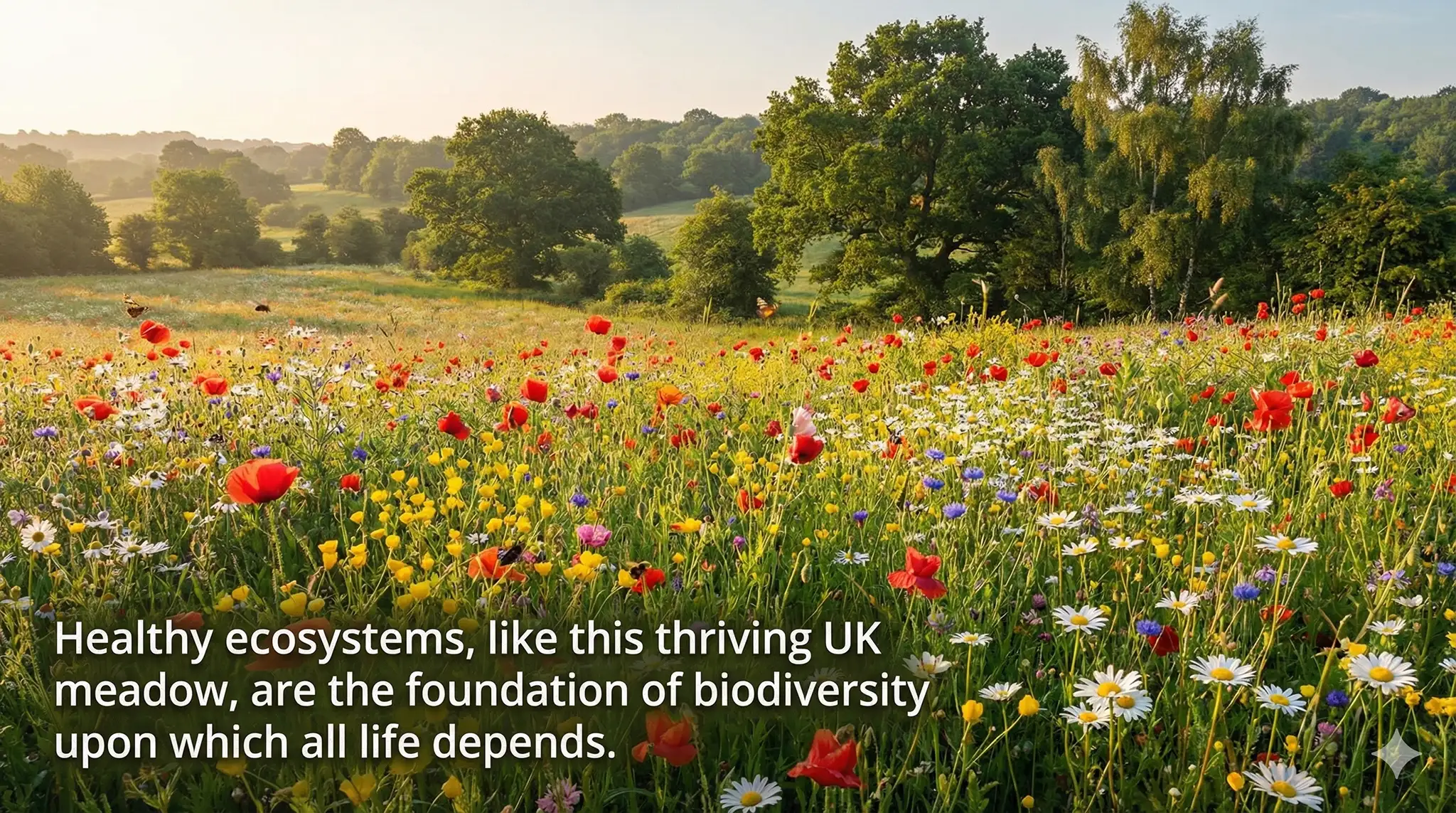
Wetlands have lost over 400 million hectares since 1970, disappearing three times faster than forests. These ecosystems, despite their decline, still provide $39 trillion in ecosystem services annually. In the UK, 97% of wildflower meadows have vanished since the 1930s, and ancient woodland continues to face pressure from development.
2. Direct Exploitation of Species
Overexploitation—hunting, fishing, and harvesting beyond sustainable levels—affects species across ecosystems. Some 35-38% of global fish stocks are now overfished, up from just 10% in 1974. Wildlife trafficking remains a major threat, while legal but unsustainable extraction continues to deplete populations of everything from timber trees to medicinal plants.
3. Climate Change
Rising temperatures and shifting weather patterns increasingly stress natural systems. IPCC projections indicate that at 1.5°C warming, approximately 9-14% of species face high extinction risk, rising to 13-39% at 4°C. Marine species have already shifted distributions poleward at an average of 59 km per decade, disrupting ecological relationships built over millennia.
The fourth global coral bleaching event (2023-2025) has become the largest on record, affecting 84% of the world's coral reef area across 82 countries. The Great Barrier Reef lost more than one-third of its live hard coral—the largest annual drop in approximately 40 years.
4. Pollution
Chemical pollutants, plastic waste, excess nutrients, and noise pollution all take their toll. Ocean plastic kills an estimated 100 million marine animals annually, including 100,000 marine mammals and 1 million seabirds. Some 267 marine species are affected, with 86% of sea turtle species impacted. Nutrient pollution from agriculture creates dead zones in coastal waters, while pesticides continue to harm pollinators and soil organisms.
5. Invasive Alien Species
Non-native species introduced to new environments can devastate local wildlife. IPBES reports that invasive species cost the global economy over $423 billion annually—a figure that has quadrupled every decade since 1970. These species have contributed to 60% of recorded extinctions. The UK faces costs of £4 billion per year, with ash dieback fungus (£883.5 million) and Japanese knotweed (£246 million) among the most damaging invaders.
Conservation Success Stories: When Protection Works
Despite the scale of biodiversity loss, conservation interventions succeed in more than two-thirds of cases when properly resourced and implemented. These success stories demonstrate that decline is not inevitable—and that determined action can bring species back from the brink.
🦅 Red Kite: From 3 Pairs to 1,800
The red kite, reduced to just a handful of breeding pairs in Welsh valleys by the 1980s, now numbers approximately 1,800 breeding pairs following reintroductions beginning in 1990. This recovery—described as the most successful raptor conservation story in Europe—has been so complete that the UK now supplies red kite chicks back to Spain for conservation efforts there.
🦋 Large Blue Butterfly: Back from Extinction
The large blue butterfly was declared extinct in Britain in 1979. After scientists discovered its caterpillars depend on specific red ant species, reintroductions from Sweden began in 1983. Today, Britain holds the world's largest concentration of large blues, with over 10,000 adults across 33+ sites—numbers greater than at any point in 150 years.
🦦 Otter: Return to Every County
Otters nearly disappeared from England by the 1970s, present at only 6% of survey sites due to organochlorine pesticides. Following pesticide bans, legal protection, and habitat restoration, otters now appear in every county in England—a remarkable recovery that continues to strengthen river ecosystems.
🦫 Beaver: 400 Years After Extinction
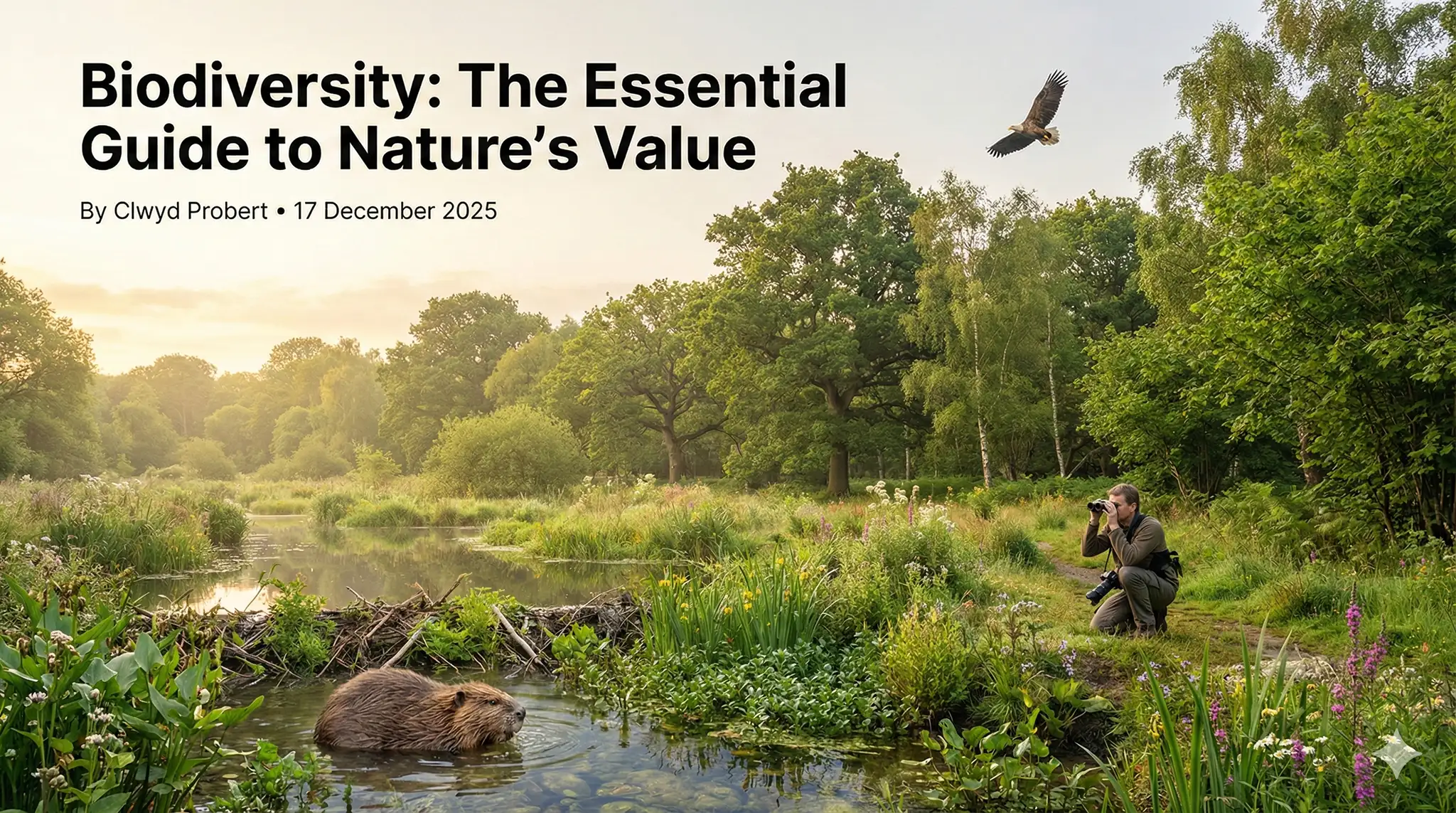
Beavers are returning to Britain after 400 years of absence. The River Otter Trial in Devon (2015-2020) proved successful, and in March 2025, the first licensed wild release occurred in Purbeck, Dorset. Studies demonstrate beavers provide natural flood mitigation, drought resilience, improved water quality, and significant biodiversity increases in their territories.
Rewilding projects also show measurable ecosystem recovery. Knepp Estate in West Sussex, Britain's flagship rewilding site, has demonstrated remarkable results since converting from intensive farming in 2001. Satellite analysis documents 40% increase in tree coverage, six-fold increase in shrub coverage, and soil absorbing 4.8 tonnes more CO2 per hectare per year than conventional farmland. The site now hosts rare turtle doves, nightingales, peregrine falcons, and major purple emperor butterfly populations.
Protecting Biodiversity: What Can Be Done?
The evidence is clear: biodiversity loss can be slowed and reversed when we act with determination and adequate resources. From international agreements to individual choices, multiple pathways exist for protecting the natural world.
International Frameworks
The Kunming-Montreal Global Biodiversity Framework, adopted in December 2022 by 192 countries, sets ambitious targets for the coming decade. The headline "30x30" goal commits nations to protecting 30% of terrestrial, inland water, coastal, and marine areas by 2030 through ecologically representative, well-connected protected areas. Additional targets include restoring 30% of degraded ecosystems and mobilising $200 billion annually for biodiversity.
COP16 in Cali, Colombia (October-November 2024) achieved significant progress, establishing the Cali Fund for benefit-sharing from genetic resources and creating the first permanent body for Indigenous Peoples and local communities in biodiversity governance.
What You Can Do
Individual and community actions make a genuine difference when multiplied across society. Consider these practical steps:
- Create wildlife habitat at home: Even small gardens can support biodiversity through native planting, leaving areas wild, and providing water sources
- Support sustainable consumption: Choose products certified as sustainably sourced, reduce waste, and consider the biodiversity footprint of purchases
- Participate in citizen science: Contribute to wildlife monitoring schemes like the Big Garden Birdwatch or butterfly counts
- Support conservation organisations: Join or donate to wildlife charities working to protect habitats and species
- Advocate for change: Contact elected representatives about environmental policies and support businesses committed to nature-positive practices
- Reduce pesticide use: Create pesticide-free spaces that support pollinators and soil health
The Critical Window
The WWF Living Planet Report 2024 identifies the next five years as critical for determining whether humanity can bend the curve on biodiversity loss. The frameworks exist, the evidence is clear, and the solutions are known. What remains is implementation at the scale and pace the crisis demands.
Frequently Asked Questions About Biodiversity
What is biodiversity in simple terms?
Biodiversity is the variety of all living things on Earth. It includes every plant, animal, fungus, and microorganism, along with the genetic differences within each species and the ecosystems where they live. Think of it as the complete web of life that makes our planet habitable and provides everything from food and medicine to clean air and water.
Why is biodiversity important to humans?
Biodiversity provides essential services worth over $125 trillion annually, including food production, medicines (75% of drugs derive from nature), clean air and water, climate regulation, and flood protection. Over half of global GDP—$44 trillion—depends directly on functioning ecosystems. Without biodiversity, human civilisation could not survive.
What are the three levels of biodiversity?
The three levels are genetic diversity (variation in genes within species), species diversity (variety of different species in an area), and ecosystem diversity (range of different habitats and ecological processes). All three levels interconnect and support each other—damage at any level affects the others.
How much has biodiversity declined?
According to the WWF Living Planet Report 2024, monitored wildlife populations have declined by 73% on average since 1970. Freshwater species show the steepest decline at 85%. The UK has lost 19% of species abundance since 1970 and retains only 50.3% of its original biodiversity, placing it among the most nature-depleted nations globally.
What are the main threats to biodiversity?
The five main drivers identified by IPBES are habitat loss and land-use change, direct exploitation of species, climate change, pollution, and invasive alien species. Habitat destruction remains the greatest threat, with 6.7 million hectares of tropical forest lost in 2024 alone—nearly double the previous year's total.
What is UK Biodiversity Net Gain?
Biodiversity Net Gain is UK legislation requiring most new developments to deliver at least 10% improvement in biodiversity value, maintained for 30 years. It became mandatory in February 2024 under the Environment Act 2021, using DEFRA's Statutory Biodiversity Metric to measure gains on-site, off-site, or through statutory credits.
Can biodiversity loss be reversed?
Yes, conservation interventions succeed in more than two-thirds of cases when properly resourced. UK success stories include red kites recovering from near-extinction to 1,800 breeding pairs, the large blue butterfly returning after being declared extinct in 1979, and otters now present in every English county after near-elimination in the 1970s.
How does biodiversity affect climate change?
Biodiversity and climate are deeply interconnected. Ecosystems store vast amounts of carbon—UK peatlands alone hold 3.2 billion tonnes. Healthy forests, wetlands, and oceans absorb CO2, while nature-based solutions could provide 20% of climate mitigation needed by 2050. Protecting biodiversity is essential for addressing the climate crisis.
Conclusion: Our Shared Responsibility
Biodiversity is not merely an environmental concern—it is the foundation upon which human health, prosperity, and survival depend. The 73% decline in wildlife populations since 1970, the 46,337 species facing extinction, and the UK's status as one of the most nature-depleted nations on Earth represent a crisis demanding urgent response.
Yet the evidence also offers hope. Conservation works when properly resourced. Red kites soar again over British skies. Large blue butterflies flutter across meadows where they had vanished. Otters hunt in rivers that once ran empty. Beavers return after four centuries of absence. These successes demonstrate that with determination, resources, and sustained commitment, we can restore what has been lost.
The next five years will prove decisive. The frameworks exist—from the Kunming-Montreal Global Biodiversity Framework to the UK's Environment Act. The economic case is compelling—from the £1.5 trillion value of UK ecosystem services to the 12% GDP at risk from nature degradation. The solutions are known. What remains is the collective will to act at the scale the crisis demands.
Every species saved, every habitat restored, every policy strengthened moves us toward a future where biodiversity thrives alongside human prosperity. This is not a burden to be borne but an opportunity to be seized—for ourselves, for the extraordinary web of life with which we share this planet, and for the generations yet to come.
References and Further Reading
This article draws on the latest peer-reviewed research and authoritative reports. Key sources include:
- WWF Living Planet Report 2024 – Comprehensive global assessment of wildlife population trends
https://www.worldwildlife.org/publications/2024-living-planet-report/ - State of Nature Report 2023 – UK wildlife and habitat assessment by 60+ conservation organisations
https://stateofnature.org.uk/ - IUCN Red List of Threatened Species – Global database of species conservation status
https://www.iucnredlist.org/ - IPBES Assessments – Intergovernmental science-policy assessments on biodiversity
https://www.ipbes.net/ - ONS UK Natural Capital Accounts 2023 – Economic valuation of UK ecosystem services
https://www.ons.gov.uk/economy/environmentalaccounts/bulletins/uknaturalcapitalaccounts/2023 - The Dasgupta Review – The Economics of Biodiversity
https://www.gov.uk/government/publications/final-report-the-economics-of-biodiversity-the-dasgupta-review - Kunming-Montreal Global Biodiversity Framework – International biodiversity targets
https://www.cbd.int/gbf - UK Environmental Improvement Plan Progress Report 2024-2025
https://www.gov.uk/government/publications/environmental-improvement-plan-annual-progress-report-2024-to-2025 - Global Forest Watch – Deforestation Data
https://gfr.wri.org/latest-analysis-deforestation-trends - RSPB State of Nature Report – UK biodiversity analysis
https://www.rspb.org.uk/whats-happening/news/state-of-nature-report
Continue Your Exploration
Delve deeper into the world of biodiversity with our related guides:
Share this article
Help spread awareness about the importance of biodiversity