· Originally published: 15 January 2023
Why Is Biodiversity Important? The Essential Guide to Nature's Value
Biodiversity is important because it provides the foundation for all life on Earth—delivering ecosystem services worth an estimated £44 trillion annually, supporting 75% of global food crops through pollination, and protecting human health by preventing pandemics. The WWF Living Planet Report 2024 reveals a catastrophic 73% decline in wildlife populations since 1970, with one million species now threatened with extinction according to the IPBES Global Assessment. Understanding why biodiversity matters has never been more urgent as we approach critical tipping points that could irreversibly transform the natural systems upon which humanity depends.
Every breath we take, every meal we eat, and every drop of water we drink connects us to the intricate web of life that biodiversity represents. From the microscopic bacteria that enrich our soils to the great whales that regulate ocean nutrients, each species plays an irreplaceable role in maintaining the planetary systems that sustain human civilisation. Yet despite this fundamental importance, we are dismantling this life-support system at unprecedented speed.
At Pixcellence, we believe that understanding the importance of biodiversity is the first step toward protecting it. This comprehensive guide explores the scientific, economic, and human dimensions of why biodiversity matters—and what we can all do to reverse its decline before it's too late.
What Is Biodiversity and Why Does It Matter?
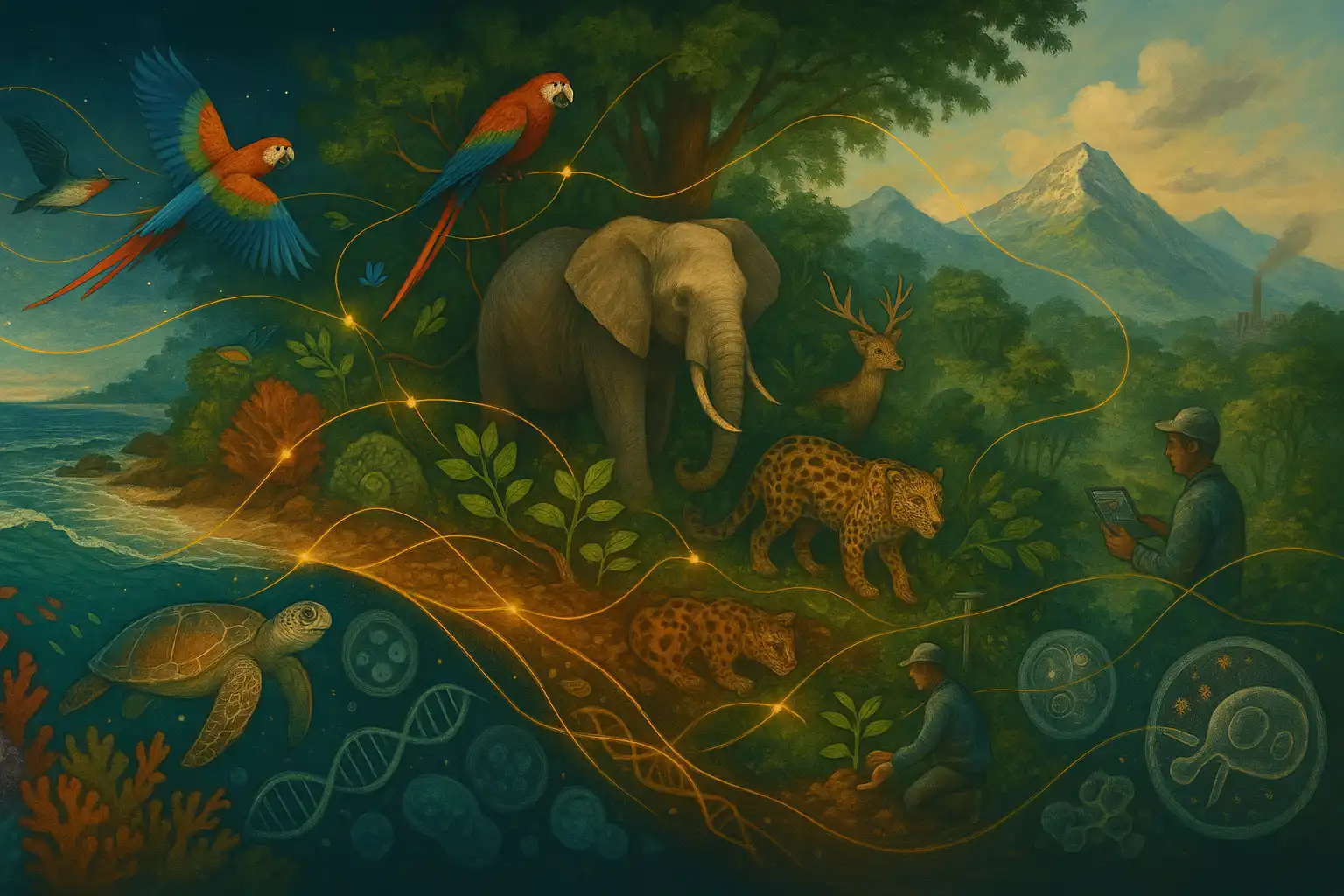
Biodiversity encompasses the variety of all living things on Earth—from genes to species to entire ecosystems. Scientists recognise three interconnected levels: genetic diversity (variation within species), species diversity (the range of different species), and ecosystem diversity (the variety of habitats and ecological communities). Each level depends upon and reinforces the others, creating the resilient natural systems that regulate our climate, purify our water, and provide our food.
The IUCN Red List currently assesses over 172,600 species globally, with 47,187 classified as threatened with extinction. This includes 38% of the world's 47,282 tree species—revealed for the first time in the October 2024 Global Tree Assessment—and 44% of reef-building coral species, up from 33% in 2008. These are not abstract statistics; they represent the unravelling of ecosystems that have taken millions of years to evolve.
Biodiversity matters because healthy ecosystems provide what scientists call "ecosystem services"—the benefits nature delivers to humanity without charge. The World Economic Forum estimates that £44 trillion of economic value (over half of global GDP) depends directly on nature. When we lose biodiversity, we lose these services, and no technology can replace them at the scale required.
The Ecological Importance of Biodiversity
Ecosystems function through complex interactions between thousands of species, each performing roles that cannot be easily substituted. Pollinators such as bees, butterflies, and hoverflies enable the reproduction of over 75% of flowering plants and contribute to 35% of global crop production by volume. The economic value of pollination services alone reaches £235-577 billion annually according to the IPBES, yet pollinator populations in the UK have declined by 18% on average since 1970.
Biodiversity builds ecosystem resilience—the capacity to withstand and recover from disturbances such as droughts, floods, and disease outbreaks. Diverse ecosystems contain multiple species that perform similar functions, meaning that if one species declines, others can compensate. Monocultures, by contrast, are vulnerable to catastrophic collapse when conditions change. Ireland's Great Famine, triggered by a single potato blight, demonstrates the dangers of reduced genetic diversity in crops.
Nutrient cycling—the movement of essential elements like nitrogen, carbon, and phosphorus through ecosystems—depends on diverse communities of decomposers, bacteria, and fungi. Healthy soils contain billions of organisms per handful, breaking down organic matter, fixing atmospheric nitrogen, and making nutrients available to plants. Agricultural practices that degrade soil biodiversity eventually undermine the productivity they seek to maximise.
Key Ecological Functions of Biodiversity:
- Climate regulation through carbon sequestration and water cycling
- Pollination of crops and wild plants (75% of flowering plants)
- Natural pest control reducing need for chemical pesticides
- Water purification through wetlands and natural filtration
- Soil formation and fertility maintenance
- Coastal protection from storms and erosion
The Economic Value of Biodiversity
The economic case for biodiversity protection has become irrefutable. The landmark Dasgupta Review, commissioned by the UK Treasury and published in 2021, demonstrated that humanity has been treating nature as an unlimited resource while systematically depleting it. Natural capital per person declined 40% between 1992 and 2014, even as produced capital (buildings, machines, infrastructure) doubled. This fundamental imbalance threatens the prosperity we have achieved.
For the UK specifically, the Green Finance Institute's April 2024 analysis found that continued nature degradation could cause a 12% reduction in UK GDP—larger than the economic impacts of the 2008 financial crisis or the COVID-19 pandemic. The report identified that £1.2 trillion of UK GDP (44% of the total) depends on ecosystem services, with particular exposure in agriculture, water utilities, and the food and beverage sector.
The World Bank projects that partial ecosystem collapse could reduce global GDP by £2.1 trillion annually by 2030. Yet investment in nature protection delivers remarkable returns: UNEP-WCMC research from 2024 demonstrated a 20:1 return on investment for closing the natural capital gap, with £5.9 trillion in investment potentially generating £121 trillion in economic value.
| Ecosystem Service | Annual Global Value | Key Examples |
|---|---|---|
| Pollination | £235-577 billion | Bees, butterflies, hoverflies |
| Coral reef services | £7.9-8.8 trillion | Fisheries, tourism, coastal protection |
| Forest carbon storage | £2.4 trillion | Climate regulation, timber |
| Natural pest control | £382 billion | Predatory insects, birds |
Biodiversity and Human Health
The COVID-19 pandemic brought into sharp focus the connection between biodiversity loss and human health. Approximately 75% of emerging infectious diseases are zoonotic—transmitted from animals to humans—with habitat destruction and wildlife trade increasing the frequency of such spillover events. The IPBES Pandemics Report calculated that prevention through ecosystem protection costs just £17-25 billion annually, compared to the £6.4-12.8 trillion cost of COVID-19 alone.
The World Health Organisation's One Health approach recognises that human health, animal health, and ecosystem health are fundamentally interconnected. Intact ecosystems provide natural barriers that reduce disease transmission, while degraded landscapes bring wildlife into closer contact with human populations. Scientists estimate that up to 1.7 million undiscovered viruses exist in mammals and birds, with 540,000-850,000 potentially capable of infecting humans.
Beyond pandemic prevention, biodiversity underpins modern medicine. Over 40% of pharmaceutical formulations derive from natural sources, while 75% of approved antimicrobial drugs come from natural compounds. The loss of species before their potential medicinal properties are discovered represents an incalculable cost—estimated at £450 billion to £4.5 trillion in undiscovered marine anti-cancer drugs alone.
Mental health benefits of nature exposure are increasingly well-documented. The NHS England Green Social Prescribing Programme, studying 8,339 participants, found that nature-based activities improved happiness and reduced anxiety to national averages. The Wildlife Trusts estimate that targeted green social prescribing could save the NHS £500 million annually, with 95% of programme volunteers reporting improved mental health.
The State of UK Biodiversity
The State of Nature 2023 report delivered a sobering assessment: Britain is one of the world's most nature-depleted nations, retaining less than half of its pre-industrial biodiversity. Across the UK, species studied have declined on average by 19% since 1970, with one in six (16%) of over 10,000 assessed species at risk of extinction from Great Britain.
Certain taxonomic groups face severe pressure. A striking 43% of British birds are at risk of extinction, alongside 31% of amphibians and reptiles and 26% of terrestrial mammals. Farmland birds have declined by 58% since 1970, while pollinators including bees, hoverflies, and moths have decreased by 18% on average. Species such as the turtle dove, hazel dormouse, and European eel now face an uncertain future in the UK.
Habitat condition is equally concerning. Only 14% of important wildlife habitats are in good ecological condition, with just 7% of woodlands and 25% of peatlands meeting standards. The intensive management of land for farming and the accelerating impacts of climate change remain the two biggest drivers of nature loss on land, while overfishing and climate change dominate marine decline.
UK Biodiversity Net Gain: A New Era
Since February 2024, the UK's mandatory Biodiversity Net Gain requirement means all new developments must deliver a minimum 10% net gain in biodiversity, maintained for at least 30 years. This world-leading policy aims to ensure development contributes positively to nature recovery rather than simply minimising harm.
The Environment Act 2021 also established legally binding targets including halting species abundance decline by 2030 and increasing it by 10% by 2042, alongside creating 500,000 hectares of new wildlife-rich habitat.
Biodiversity and Climate Change: A Two-Way Relationship
Climate change and biodiversity loss form a dangerous feedback loop, with each crisis accelerating the other. IPCC projections indicate that at 1.5°C of global warming, 70-90% of coral reefs will decline; at 2°C, virtually all tropical coral reefs face severe degradation with over 99% at risk. A 2022 study found that coral refugia—areas capable of supporting reef survival—would drop from covering 84% of reefs to just 0.2% at 1.5°C and disappear entirely at 2°C.
Yet biodiversity is also our greatest ally in fighting climate change. Peatlands store approximately 550 gigatonnes of carbon—twice as much as all the world's forests combined—while covering only 3% of Earth's land surface. The Amazon rainforest holds 150-200 gigatonnes of carbon, equivalent to 15-20 years of global anthropogenic emissions. Protecting and restoring these ecosystems is essential for meeting climate targets.
Nature-based solutions offer cost-effective climate mitigation. Mangrove forests sequester carbon at rates up to four times higher than terrestrial forests while providing coastal protection worth £62 billion annually. Seagrass meadows, salt marshes, and kelp forests similarly capture and store carbon while supporting marine biodiversity. The UK's commitment to restore 35,000 hectares of peatland by 2025 recognises this dual benefit for climate and nature.
Conservation Success Stories: Proof That Recovery Is Possible
Against the backdrop of decline, remarkable recovery stories demonstrate that targeted conservation works. The Iberian lynx represents perhaps the greatest cat species recovery ever achieved: from just 62 mature individuals in 2001 to over 2,400 in 2024, prompting the IUCN to downgrade its status from Endangered to Vulnerable in June 2024. Habitat expanded 67-fold from 49 km² to 3,320 km², supported by €90 million in investment and over 400 captive-bred reintroductions since 2010.
The European bison has recovered from near-extinction—just 54 captive animals survived after World War I—to over 8,000 individuals across Europe today. The UK welcomed its first wild bison in 6,000 years at Wilder Blean in Kent in 2022, where the herd now numbers eight animals including UK-born calves, demonstrating how "ecosystem engineers" can transform degraded habitats.
UK successes include the large blue butterfly, declared extinct in Britain in 1979 and now numbering over 10,000 individuals across 33 sites in southwest England—the greatest concentration anywhere in the world. Bittern booming males increased from just 11 in 1997 to 283 in 2024 through reedbed restoration. In February 2025, the UK Government announced that licensed wild beaver releases would be permitted, marking a milestone in rewilding efforts.
Perhaps most dramatic is the saiga antelope recovery in Kazakhstan—from approximately 40,000 individuals in 2005 to 2.8 million in 2024—representing the largest mammal population recovery ever recorded. This success earned the Altyn Dala Conservation Initiative the 2024 Earthshot Prize, demonstrating what's possible with sustained commitment and resources.
How You Can Help Protect Biodiversity
While the biodiversity crisis requires systemic change at governmental and corporate levels, individual actions collectively make a significant difference. The choices we make about our gardens, our consumption, and our engagement with conservation organisations all contribute to the direction of travel for nature.
Actions That Make a Difference:
- Transform your garden: Let areas grow wild, plant native species, create a pond, and avoid pesticides. UK gardens cover more land than all nature reserves combined.
- Support wildlife charities: Organisations like the Wildlife Trusts, RSPB, and local conservation groups depend on public support to protect and restore habitats.
- Choose sustainable products: Look for certifications like FSC for wood, MSC for fish, and RSPO for palm oil. Consumer choices shape corporate behaviour.
- Reduce food waste: 30% of food is wasted globally, meaning land cleared for agriculture produces nothing. Wasting less reduces pressure on wild habitats.
- Volunteer and record wildlife: Citizen science programmes need volunteers to monitor species. Your observations contribute to the scientific understanding that guides conservation.
- Use your voice: Write to MPs, sign petitions, and support policies that protect nature. Political will follows public demand.
At Pixcellence, we support wildlife charities, artists, and photographers who share our passion for celebrating and protecting the natural world. By raising awareness and showcasing the beauty of wildlife through photography and education, we hope to inspire a deeper connection with nature that motivates lasting change.
Frequently Asked Questions About Biodiversity
Why is biodiversity important for food security?
Biodiversity is essential for food security because 75% of global food crops depend on animal pollination, while genetic diversity in crops provides resistance to diseases and climate stress. Soil organisms create the fertility that agriculture requires. Without biodiversity, our ability to feed the global population would collapse.
How much has biodiversity declined globally?
The WWF Living Planet Report 2024 documented a 73% average decline in monitored wildlife populations since 1970. Freshwater species suffered the steepest losses at 85%, followed by terrestrial (69%) and marine (56%). Latin America and the Caribbean experienced a 95% decline—the most severe of any region.
What are the main threats to biodiversity?
The five main drivers of biodiversity loss are habitat destruction (especially for agriculture), climate change, pollution, invasive species, and overexploitation of wildlife. In the UK, intensive farming and climate change are the primary drivers on land, while overfishing and climate change dominate marine decline.
Can biodiversity loss be reversed?
Yes, biodiversity loss can be reversed with sufficient commitment and resources. The Iberian lynx recovery from 62 to over 2,400 individuals, the European bison's return from near-extinction, and the UK's large blue butterfly restoration all demonstrate that species can recover when given protection, habitat, and time.
What is the UK doing to protect biodiversity?
The UK has implemented mandatory Biodiversity Net Gain requiring 10% uplift from new developments, legally binding targets to halt species decline by 2030, and committed to protecting 30% of land and sea by 2030. The National Biodiversity Strategy published in February 2025 sets out how the UK will achieve all 23 Global Biodiversity Framework targets.
How does biodiversity loss affect climate change?
Biodiversity loss accelerates climate change by destroying natural carbon sinks. Deforestation releases stored carbon, while degraded peatlands (which hold twice as much carbon as forests) become emission sources. Conversely, protecting and restoring ecosystems provides cost-effective climate mitigation alongside biodiversity benefits.
The Decisive Decade for Biodiversity
The evidence is unambiguous: biodiversity loss represents an existential threat to both nature and the human systems that depend upon it. With 73% wildlife population declines, one million species at risk, and ecosystems approaching critical tipping points, the urgency for action has never been greater. Yet the economic case for protection is compelling (20:1 returns on conservation investment), the policy frameworks are in place (Global Biodiversity Framework, UK Biodiversity Net Gain), and remarkable species recoveries prove that nature can bounce back when given the chance.
What happens in the next five years will determine the future of life on Earth. The 2030 deadline for halting species decline, the 30x30 commitment to protect land and sea, and the urgent need to close the biodiversity financing gap all demand immediate, scaled action. Converting policy ambition into ecological recovery requires mobilising committed finance, reforming harmful subsidies, and implementing conservation measures at unprecedented speed.
At Pixcellence, we believe that knowledge inspires action. By understanding why biodiversity matters—for ecosystems, economies, and human wellbeing—we can all become advocates for the natural world. The science is clear, the solutions exist, and the window for action, though narrowing, remains open. The question is whether we will act with the urgency the crisis demands.
Delve deeper into the world of wildlife and conservation. Explore our guides on biodiversity fundamentals, climate impacts on wildlife, and the world's biodiversity hotspots.
References & Further Reading
- WWF (2024). Living Planet Report 2024: A System in Peril. livingplanet.panda.org
- State of Nature Partnership (2023). State of Nature 2023. stateofnature.org.uk
- IUCN (2024). The IUCN Red List of Threatened Species. iucnredlist.org
- IPBES (2019). Global Assessment Report on Biodiversity and Ecosystem Services. ipbes.net/global-assessment
- HM Treasury (2021). The Economics of Biodiversity: The Dasgupta Review. gov.uk/dasgupta-review
- Convention on Biological Diversity (2022). Kunming-Montreal Global Biodiversity Framework. cbd.int/gbf
- UK Government (2024). Biodiversity Net Gain. gov.uk/biodiversity-net-gain
- Green Finance Institute (2024). Assessing the Materiality of Nature-Related Financial Risks for the UK. greenfinanceinstitute.com
- IPCC (2022). Climate Change 2022: Impacts, Adaptation and Vulnerability. ipcc.ch/report/ar6/wg2
- Wildlife Trusts (2023). Landmark Report Shows UK Wildlife's Devastating Decline. wildlifetrusts.org