Are Seagulls Protected in the UK?
Yes — all gulls in the United Kingdom are fully protected under the Wildlife and Countryside Act 1981. This means it is illegal to kill, injure, or take any wild gull, or to damage, destroy, or disturb their nests or eggs, without a specific licence from the relevant national authority. Herring gulls receive absolute protection regardless of perceived nuisance, and penalties for illegal killing reach unlimited fines and up to six months imprisonment.
Despite their visible presence in towns and cities, gull populations are in serious decline. The herring gull, common gull, and great black-backed gull are now Red Listed as species of conservation concern in the UK, with coastal breeding populations of herring gulls declining by over 50% in the past five decades.
Key Takeaway
Every gull species breeding in the UK is legally protected. Killing, injuring, or disturbing nesting gulls without a licence carries unlimited fines and up to 6 months imprisonment. Urban abundance masks a genuine conservation crisis — herring gull populations have halved in 50 years.
50%+
Coastal Decline
Herring gull coastal populations over 50 years
75%
Common Gull Loss
Population decline in Scotland (Seabirds Count)
31%
Licence Approval
NatureScot approval rate in 2024 (down from 83%)
Sources: NatureScot 2025, RSPB Scotland 2025, Seabirds Count Census
Which UK Laws Protect Seagulls?
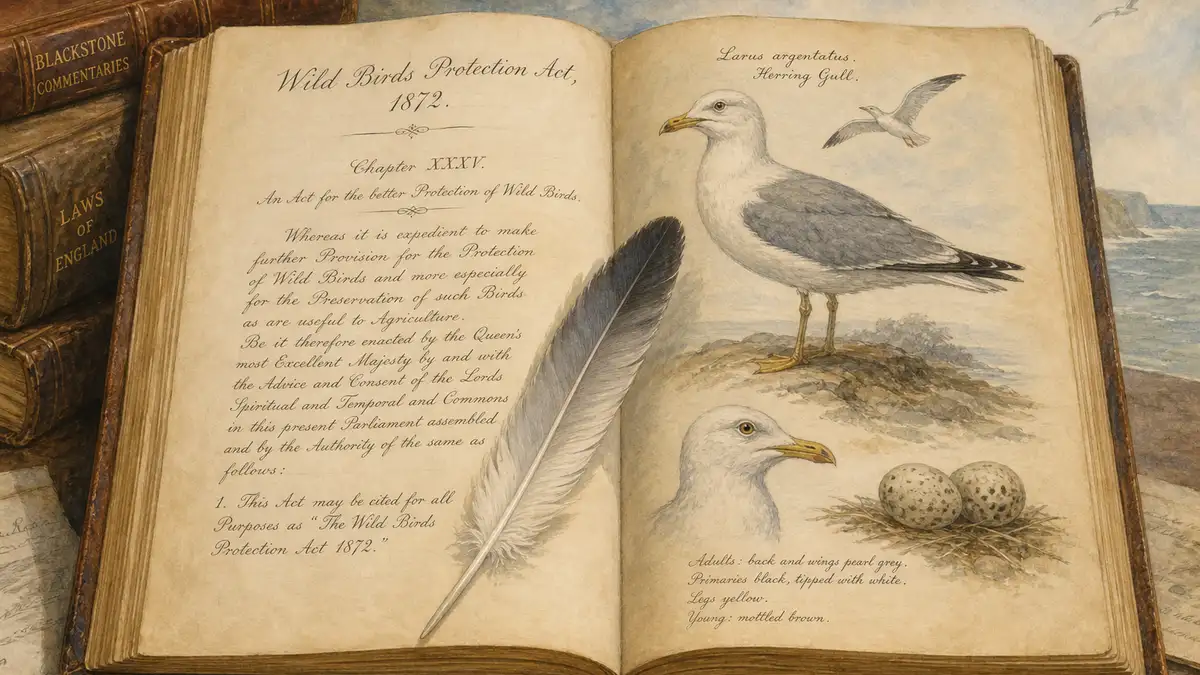
The primary legislation protecting gulls is the Wildlife and Countryside Act 1981 (as amended), which applies across England, Scotland, Wales, and — under separate Wildlife Order provisions — Northern Ireland. This landmark legislation makes it an offence to kill, injure, or take any wild bird, damage or destroy any wild bird's nest, or take or destroy eggs, except where specifically authorised by licence.
The Act applies strict liability, meaning even unintentional or reckless harm triggers legal consequences. Certain species, including herring gulls, receive what the legislation terms "absolute protection" — they cannot be killed or their nests disturbed under any circumstances without an individual licence, regardless of perceived nuisance.
Beyond the 1981 Act, gulls receive additional protection through the Conservation of Habitats and Species Regulations 2017 when nesting within designated Special Protection Areas. The combined legal framework represents one of the UK's more serious wildlife enforcement regimes, with maximum penalties of unlimited fines, imprisonment for up to six months, or both.
What Are the Penalties for Harming Gulls?
The maximum penalty for breaching the Wildlife and Countryside Act 1981's bird protection provisions comprises an unlimited fine, imprisonment for up to six months, or both. This applies to anyone who kills, injures, or takes a wild gull, or who damages, destroys, or disturbs an active nest or eggs without proper licensing authority.
Prosecution can result from direct harm (poisoning, shooting, trapping) or from indirect disturbance — removing nesting material during the breeding season, blocking access to established nest sites, or recklessly causing nest abandonment through construction activity. Courts have upheld convictions even where defendants claimed ignorance of the law or argued that their actions were motivated by public safety concerns.
An "authorised person" under the Act means the owner or occupier of land, or someone specifically authorised by the owner. A pest control contractor cannot independently authorise their own actions — they require explicit written delegation from the property owner or occupier to act under a valid licence.
Why Are Gull Populations Declining?
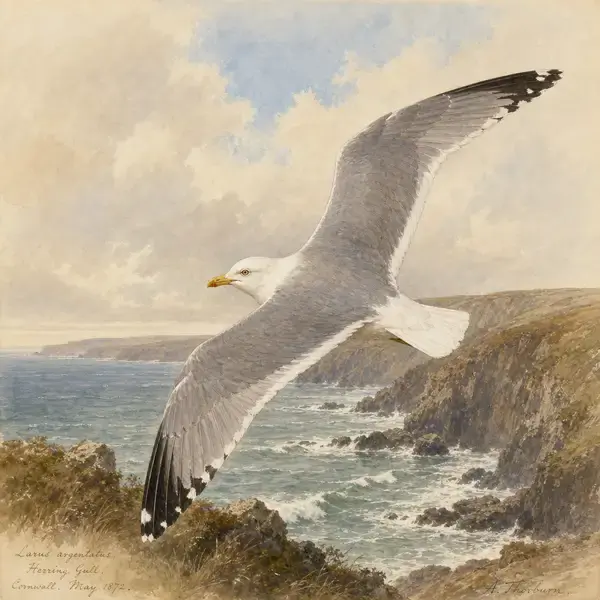
Despite their conspicuous urban presence, UK gull populations face a genuine conservation crisis. The most recent comprehensive survey — the Seabirds Count census — reveals that all five primary breeding species in Scotland have declined by between 44% and 75%. Three species now hold Red List status: herring gull, common gull, and great black-backed gull. Lesser black-backed gull and black-headed gull have been assigned Amber List status.
Multiple interconnected factors drive these declines. Food availability changes in traditional marine habitats — particularly the depletion of sandeel stocks by commercial fishing in the North Sea — have dramatically reduced prey for coastal-breeding gulls. The UK government closed English North Sea waters to industrial sandeel fishing in 2024, but only after decades of fishing pressure had reduced gull food sources.
Coastal habitat loss through development, recreational disturbance, and climate-driven modification has restricted available nesting sites. This forced gulls into urban environments where rooftop nesting provides alternative accommodation — an ecological displacement, not adaptive success. Highly pathogenic avian influenza (H5N1) caused mass mortality in 2023, with some Scottish colonies experiencing 50% population reductions and lesser black-backed gulls declining 58% in affected breeding sites.
Which Gull Species Live in the UK?
Five primary gull species breed regularly across the United Kingdom, each with distinct characteristics and conservation trajectories:
| Species | Identification | Conservation Status | Population Trend | Key Fact |
|---|---|---|---|---|
| Herring Gull | Grey wings, yellow bill with red spot, pink legs | Red List | -48% (Scotland) | Absolute protection — cannot be harmed under any nuisance justification |
| Common Gull | Smaller than herring, pale green-yellow legs, gentle appearance | Red List | -75% (Scotland) | Most severely affected species — faces predicted extinction within 25 years at 2020-2022 control levels |
| Great Black-backed Gull | Largest gull globally, all-black back, powerful bill | Red List | -50% (Scotland) | Despite predatory prowess, equally affected by environmental pressures |
| Lesser Black-backed Gull | Similar to herring but smaller, dark grey back, yellow legs | Amber List | -58% (avian flu) | Severely impacted by 2023 H5N1 outbreaks in breeding colonies |
| Black-headed Gull | Small, dark brown head in breeding season, red legs and bill | Amber List | -44% (Scotland) | Record low monitoring indices since 1993/94 (BTO Wetland Bird Survey) |
Sources: NatureScot Gulls 2025, BTO Waterbirds Report 2024/25
Explore our guide to protected species in the UK for the full picture of wildlife legislation.
Explore Protected Species GuideCan You Get a Licence to Control Gulls?
Yes, but the licensing process is restrictive and approval rates are declining sharply. No gull species appears on general licences in England or Scotland, meaning every proposed lethal intervention requires an individual licence application demonstrating specific justification.
In England, Natural England's GL40 and GL42 general licences — which allow streamlined control of certain bird species — explicitly exclude all gulls. Anyone wishing to undertake lethal control must apply for an individual A08 or A09 licence demonstrating one of five legally recognised purposes: preventing serious damage to livestock, preventing disease spread, preserving public health or safety, conserving wildlife, or preserving air safety.
Crucially, noise nuisance, fouling, property damage, or general annoyance do not constitute valid justification. Applicants must provide documentary evidence (photographs, financial records, incident logs) and must demonstrate that all non-lethal deterrent methods have been attempted and failed before lethal control is considered.
Important Legal Distinction
Common misconception: Many people believe that visible abundance of gulls in towns means they are "pest" birds with limited protection, similar to feral pigeons.
The reality: UK law provides gulls with stronger protection than pigeons, crows, or magpies. No general licence covers gulls anywhere in England or Scotland. Individual licensing with documented evidence is mandatory for any intervention.
How Does Licensing Differ Across the UK?
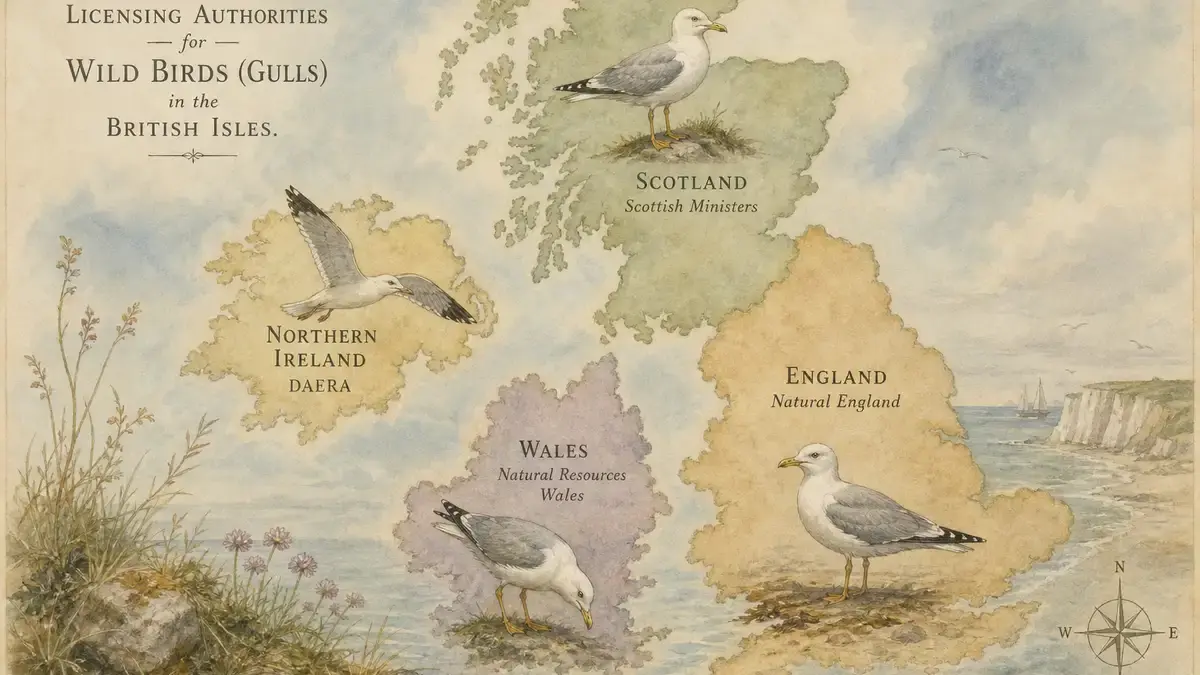
Gull management licensing varies significantly between England, Scotland, Wales, and Northern Ireland. Each devolved administration operates its own system with different authorities, licence types, and species coverage:
| Nation | Authority | Licence Types | Gull Coverage | 2026 Status |
|---|---|---|---|---|
| England | Natural England | GL40, GL42 + individual A08/A09 | Not on general licences — individual only | Calendar year validity; documented evidence required |
| Scotland | NatureScot | Individual applications only | Removed from general licences since April 2020 | Approval rate collapsed to 31% in 2024; review scheduled 2026 |
| Wales | Natural Resources Wales | GL001, GL002, GL004 (expanded suite) | Varies by licence — check current documents | Expanded general licence suite published for 2026 |
| N. Ireland | DAERA / NIEA | TPG1, TPG2, TPG3 | Some species on general licences | Framework broadly stable; confirm validity dates |
Sources: BPCA Bird Control Licences 2026, NatureScot Gull Management Guidance
The most significant recent development is NatureScot's dramatic licensing tightening. In 2022, 83% of 2,385 applications were approved. By 2024, this collapsed to just 31% of 1,619 applications. This reflects RSPB population modelling showing that 2020-2022 licensing levels could have reduced the Scottish herring gull population by 50% within 25 years — and driven common gull and great black-backed gull toward extinction.
What About the Avian Influenza Threat?
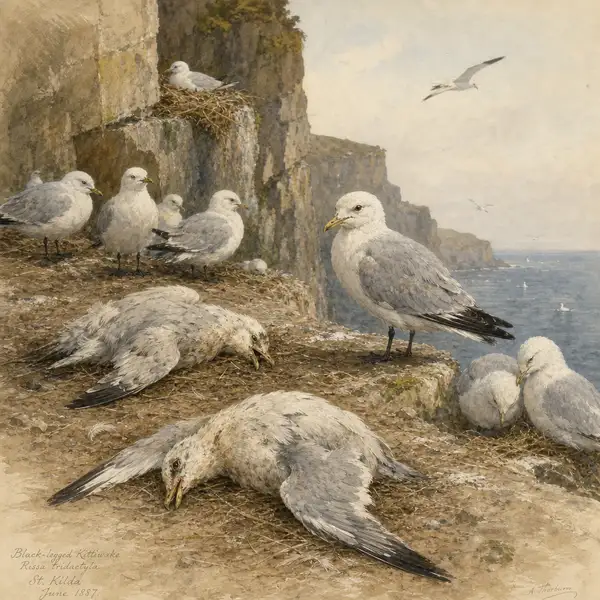
Highly pathogenic avian influenza (H5N1) has emerged as a devastating new threat compounding existing population pressures. In July 2023, a mass mortality event at the Ekkerøy kittiwake colony in Northern Norway killed at least 15,000 birds — an estimated 50% population reduction in a single outbreak.
UK gull populations proved especially vulnerable because their pelagic lifestyle meant low pre-existing immunity to H5 viruses. When infected migratory birds introduced the virus to dense breeding colonies, explosive transmission followed. Research found that the BB genotype virus circulating in 2023 possessed enhanced replication capability in gull species, making outbreaks particularly lethal.
The combination of avian influenza mortality layered atop decades of habitat loss, food scarcity, and licensed control has created what conservationists describe as a perfect storm. The BTO Wetland Bird Survey 2024/25 recorded record low population indices for black-headed gull, common gull, great black-backed gull, and kittiwake — the worst figures in over 30 years of monitoring.
What Legal Deterrents Can You Use Without a Licence?
Property owners and managers can implement a wide range of non-lethal deterrent measures without requiring any licence. NatureScot's hierarchical guidance specifies that prevention through physical measures and scaring devices should always be the first approach:
Physical Barriers (Pre-breeding Season)
Install roof spikes on ledges, attach netting over open areas, deploy wires across roof edges. Implement between February and early April before gulls return. 50mm mesh netting is effective against gulls and poses no danger to the birds.
Sensory Deterrents
Automated laser systems produce light patterns that birds perceive as threatening. Bio-acoustic devices emit distressed bird calls or predator sounds. These are most effective when combined with physical barriers.
Eliminate Attractants
Secure waste in closed bins, remove food scraps from outdoor areas, and restrict access to food sources that attract gulls during daytime hours. Unsecured waste is one of the primary reasons gulls concentrate in urban areas.
Annual Pre-nesting Debris Removal
Clear accumulated nesting material from rooftops before each breeding season begins (February-March). This prevents sites from becoming attractive to nesting birds. After chicks fledge (August-September), remove old nests and enhance deterrents.
An integrated approach combining physical barriers with active deterrents has proven to reduce bird presence by 70% or more in commercial settings. The critical timing principle is that all deterrent work must be completed before nesting begins — once a gull has started building a nest, disturbing it without a licence becomes a criminal offence.
Why Is Culling Gulls Ineffective?
Ecological research consistently demonstrates that lethal control fails to achieve lasting population reduction. When gulls are culled from a territory, younger birds rapidly take up the vacated space. This territorial replacement dynamic means that expensive, legally restricted culling programmes fail to deliver permanent population reduction.
A seven-year ecological analysis examining lethal control of comparable species found that reducing or cancelling control effort does not increase damage, and that higher culling numbers actually correlated with higher damage the following year — suggesting that culling creates ecological perturbations rather than solving the underlying problem.
This ineffectiveness compounds the ethical and legal objections. RSPB Scotland's population modelling revealed that if NatureScot had continued issuing licences at 2020-2022 levels — when over 100,000 nests were authorised for destruction in a single year — the Scottish herring gull population could have declined 50% in 25 years. Common gull, great black-backed gull, and black-headed gull were modelled to face extinction within the same timeframe.
What Should You Do During Breeding Season?
The gull breeding season runs approximately from April to September. Once nesting has commenced, management options become severely constrained. Understanding the seasonal cycle helps property managers plan their interventions at the right time:
Prevention Window (Feb-Apr)
Install physical deterrents, clear old nesting material, secure waste facilities. This is your best opportunity — all work is lawful before nesting begins.
Protected Period (May-Sep)
Active nests cannot be disturbed without a specific licence. Tolerate nesting birds until chicks naturally fledge, then remove nests and install deterrents for next season.
The RSPB advises that householders must tolerate nesting birds until chicks naturally fledge, and then the nest can be removed and deterrents put in place to prevent its return. Planning ahead — with deterrents installed by early March — is far more effective and legally straightforward than attempting reactive management during the breeding season.
What Is the Conservation Outlook for UK Gulls?
The future trajectory for UK gull populations remains uncertain but concerning. Ongoing pressures from habitat loss, marine ecosystem changes, avian influenza, and — despite tightening — continued licensed control create a challenging conservation landscape.
Recent positive developments include the 2024 sandeel fishing ban in the North Sea, the Scottish Government's £100,000 investment in community-based non-lethal gull management, and NatureScot's dramatic tightening of licensing criteria. The gull conservation community emphasises finding ways to live alongside gulls rather than attempting to eliminate their urban presence — recognising that urban gulls reflect coastal population collapse rather than genuine abundance.
For our biodiversity, gulls play important ecological roles as scavengers, nutrient cyclers, and indicator species for marine ecosystem health. Their decline signals broader environmental degradation affecting the entire UK marine food web. Protecting gulls through effective legislation while supporting communities in managing human-gull coexistence represents one of UK conservation's more complex but essential challenges.
The Bottom Line
Gulls are not pests — they are Red and Amber Listed species in serious decline. Their visible urban presence masks a genuine conservation crisis. The most effective and legal approach to gull management combines pre-season deterrent installation with waste management and community education, not lethal control that is both legally restricted and ecologically ineffective.
Frequently Asked Questions
Is it illegal to destroy a seagull's nest?
Yes. Under the Wildlife and Countryside Act 1981, it is an offence to damage, destroy, or disturb the nest of any wild bird — including all gull species — while it is in use or being built. Penalties include unlimited fines and up to six months imprisonment. Nest removal is only lawful after chicks have fledged and abandoned the nest, or under a specific licence from Natural England, NatureScot, NRW, or DAERA.
Can I remove seagull eggs from my roof?
Not without a licence. Removing, destroying, or interfering with wild bird eggs is illegal under the Wildlife and Countryside Act 1981. Some licensed pest control operators can oil or prick eggs under specific licensing to prevent hatching, but this requires prior authorisation and documented evidence that non-lethal deterrents have failed. Nests must then be checked every three weeks between early May and end of June.
Are herring gulls more protected than other gulls?
Herring gulls receive "absolute protection" under the Act, meaning they cannot be harmed under any circumstances without an individual licence — even public health or safety arguments require formal licensing applications. Other gull species are also fully protected but may be subject to general licence provisions in some UK nations (particularly Wales and Northern Ireland). In England and Scotland, all gull species require individual licensing for any control action.
What should I do if gulls are nesting on my property?
If nesting has already begun, you must generally tolerate the birds until chicks naturally fledge (typically by August-September). After fledging, remove the nest and install deterrents — spikes, netting, or wires — before the next breeding season begins in March. If gulls pose a direct threat to public health or safety (blocking ventilation, near food processing), contact your local authority or a licensed pest control professional about individual licensing options.
Why are there so many gulls in towns if they are declining?
Urban gull presence reflects habitat displacement, not population growth. As coastal breeding habitats have degraded through development, food scarcity, and disturbance, gulls moved to towns where rooftops provide alternative nesting sites and unsecured waste provides food. NatureScot confirms that while we may see more gulls in daily life, this does not mean an increase in the overall population — it represents a redistribution of an increasingly rare species.
Can my council help with gull problems?
Most councils provide advice on deterrent methods and can direct you to licensed pest control operators. However, councils cannot authorise the killing or disturbance of protected gulls outside of the formal licensing regime. Some councils offer subsidised netting or spike installation schemes. The Scottish Government has invested £100,000 in community-based non-lethal gull management programmes as a model for proactive deterrence.
Want to learn more about UK wildlife protection?
Explore our growing library of conservation guides covering protected species, biodiversity legislation, and practical wildlife management across the UK.
Sources: Wildlife and Countryside Act 1981, NatureScot Gulls 2025, RSPB Scotland Licensed Gull Control 2025, DEFRA Wild Bird Populations 2024, East Suffolk Council Seagulls Guidance, Nature Reviews HPAI Gull Mortality 2024