Biodiversity is important because it sustains every ecosystem service that human civilisation depends upon — from pollination and soil fertility to clean water and climate regulation. At Pixcellence, we believe understanding the science behind biodiversity's importance reveals why protecting species richness is not optional but essential for our collective survival on a rapidly changing planet.
This article explores the mechanisms — food webs, functional redundancy, tipping points, and biodiversity-ecosystem function relationships — that explain why biodiversity matters at a fundamental level. If you're looking for a broader overview, our guide to the importance of biodiversity covers the wider picture, while this piece digs into the ecological science.
Key Takeaway
Biodiversity is not merely a count of species — it is the functional architecture of life. Each species contributes complementary roles (pollination, decomposition, predation) that collectively produce the ecosystem services we rely on. Losing species erodes these functions in ways that accelerate as richness declines, making every extinction progressively more damaging.
What Are Biodiversity-Ecosystem Function Relationships?
The relationship between biodiversity and ecosystem functioning (known as BEF in ecological science) is one of the most extensively studied questions in modern ecology. Decades of field experiments and meta-analyses have demonstrated that ecosystem services arise from complementary functions provided by substitutable species, making ecosystem output concave in species richness. In plain terms, each additional species contributes something unique, but some species can partially cover for others if they disappear.
This concave relationship has profound implications. At high species richness, losing one species might be buffered by functional redundancy — other organisms can fill the gap. But as richness declines, each subsequent loss removes irreplaceable functions. Think of it like removing rivets from an aeroplane wing: the first few might not matter, but eventually you reach a threshold where the structure fails catastrophically.
Research into BEF relationships consistently shows that diverse ecosystems are more productive, more stable, and more resilient to environmental shocks than species-poor ones. This principle applies across terrestrial, freshwater, and marine environments, and it underpins every argument for why biodiversity conservation is scientifically non-negotiable. For a deeper look at what biodiversity actually means, our definitions guide breaks down the concept across genetic, species, and ecosystem levels.
Source: Tilman, D., Isbell, F., & Cowles, J.M. (2014). Biodiversity and Ecosystem Functioning. Annual Review of Ecology, Evolution, and Systematics, 45, 471–493. Updated synthesis findings confirmed through 2025.
How Do Food Webs Demonstrate Biodiversity's Importance?
Food webs are the interconnected feeding relationships that link every organism in an ecosystem — from microscopic soil bacteria to apex predators. They demonstrate why biodiversity is important because removing even a single species can trigger cascading effects throughout the entire network, a phenomenon ecologists call trophic cascades.
The most celebrated example is the Yellowstone wolf reintroduction of 1995–96. When grey wolves were returned to the park after a 70-year absence, they suppressed overgrazing by elk herds. Riverside vegetation recovered, stabilising stream banks and reducing erosion. Beaver populations returned, creating wetland habitats. Songbird diversity increased. Even the physical course of rivers changed. One predator species restructured an entire landscape.
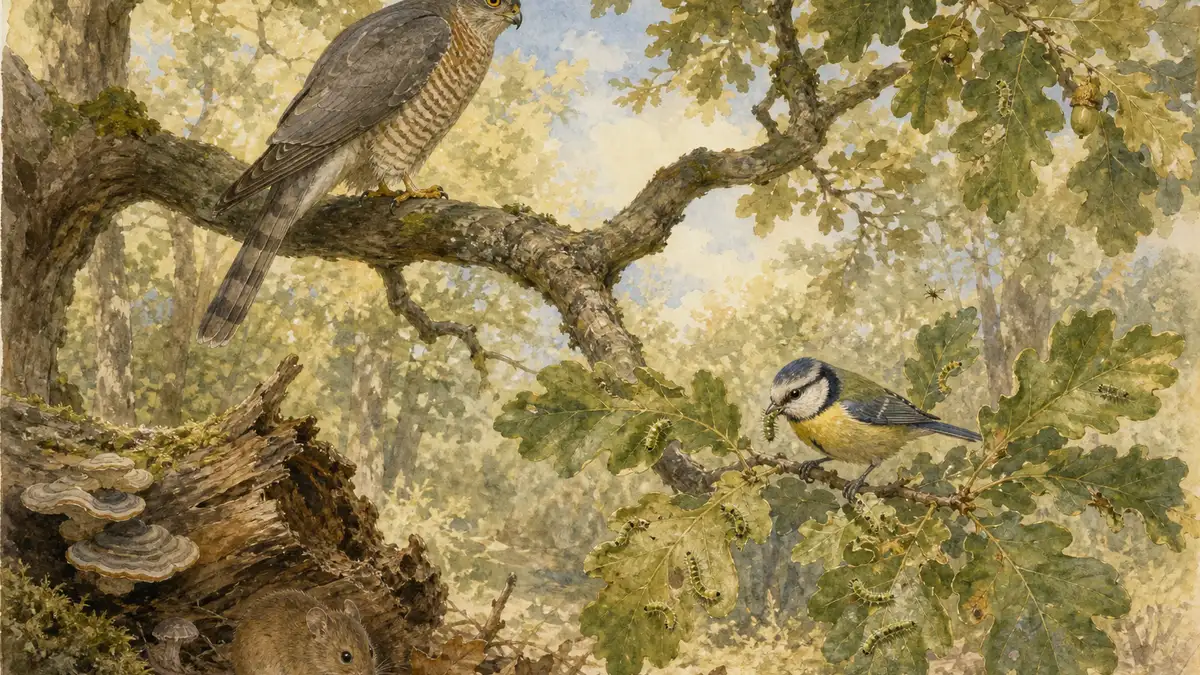
This principle operates everywhere. In marine ecosystems, the decline of sharks has triggered mesopredator release, where mid-level predators explode in numbers and devastate smaller fish and shellfish populations. In UK woodlands, the loss of keystone species through biodiversity loss can simplify food webs to the point where they become vulnerable to collapse from a single disease outbreak or extreme weather event.
Source: Ripple, W.J. & Beschta, R.L. (2012). Trophic cascades in Yellowstone. Biological Conservation, 145(1), 205–213.
What Ecosystem Services Does Biodiversity Provide?
Ecosystem services — the benefits nature provides to humanity — can be quantified in economic terms, and the figures are staggering. Biodiversity underpins four categories of services: provisioning (food, fibre, medicine), regulating (climate, water, disease), supporting (nutrient cycling, soil formation), and cultural (recreation, spiritual value). Here at Pixcellence, we track the latest valuation data to demonstrate that conservation is not a cost but an investment.
$235–577bn
Global value of wild pollinators annually
$200–600
Per acre per year from soil biota services
3 tons CO₂
Per acre per year sequestered by polycultures
$50–150
Per acre per year in avoided water treatment costs
Sources: IPBES Global Pollinator Assessment (updated 2025); Soil Health Institute field trial meta-analysis (2024–25); USDA polyculture carbon sequestration studies (2025).
Wild pollinators alone are worth an estimated $235–577 billion globally each year, and biodiverse polycultures boost neighbouring crop yields by 20–30% through enhanced pollination services. Below the surface, soil organisms — fungi, bacteria, nematodes, earthworms — provide $200–600 per acre per year in nutrient cycling and disease suppression that would otherwise require synthetic fertilisers and pesticides.
Water purification is another critical service. Biodiverse riparian zones and wetlands filter sediment, absorb excess nutrients, and break down pollutants, saving communities $50–150 per acre per year in avoided water treatment costs. When we degrade these natural systems, we must replace them with expensive engineered alternatives — or suffer the health consequences of contaminated water. Our article on ecosystem diversity explores how different habitat types deliver distinct bundles of these services.
| Ecosystem Service | Biodiverse System | Degraded/Monoculture | Difference |
|---|---|---|---|
| Carbon sequestration | 3 tons CO₂/acre/yr | 0.5 tons CO₂/acre/yr | 6× higher |
| 30-year net value | $52,000/acre NPV | ~$5,977/acre NPV | 8.7× higher |
| Soil nutrient cycling | $200–600/acre/yr | Synthetic replacement required | Net saving |
| Pollination uplift | 20–30% yield boost | Managed hive dependency | Resilience gain |
| Water purification | $50–150/acre/yr saved | Engineered treatment needed | Cost avoided |
Sources: Permaculture polyculture NPV data from 30-year agroforestry field trials (2025); carbon figures from USDA Conservation Practice Standards; pollination data from IPBES (2025 update).
What Is Functional Redundancy and Why Does It Matter?
Functional redundancy is the ecological insurance policy that protects ecosystems from collapse. It occurs when multiple species perform similar roles within an ecosystem — for example, several bee species all pollinating the same crop, or different fungal species all decomposing leaf litter. If one species disappears, others can compensate, maintaining the ecosystem function.
However, functional redundancy is not infinite. As species are lost, the safety net thins. Ecologists describe this through the rivet hypothesis: just as an aircraft can lose a few rivets without structural failure, an ecosystem can absorb some species losses. But each lost "rivet" increases the probability of sudden, catastrophic failure. The danger is that ecosystems often appear stable right up until the moment they are not — a pattern known as the shifting baseline syndrome.
In practical terms, functional redundancy explains why permaculture polycultures yield 8.7 times higher net value ($52,000 per acre NPV over 30 years) compared with monocultures. Diverse planting systems contain built-in redundancy: if one crop fails to disease or drought, others compensate. This biological insurance translates directly into financial resilience for farmers and food security for communities. Understanding how climate change interacts with biodiversity makes the case for redundancy even more urgent.
Explore the Full Picture
This article covers the science, but biodiversity's importance extends into health, culture, and economics. Explore our complete biodiversity resource hub for the wider story.
Browse Our Biodiversity Hub →
What Are Ecological Tipping Points and How Do They Relate to Biodiversity?
Ecological tipping points are thresholds beyond which ecosystems undergo rapid, often irreversible shifts to fundamentally different states. The 2025 Global Tipping Points Report identified several systems approaching or crossing these critical boundaries, with biodiversity loss acting as both a driver and a consequence of these transitions.
Coral reefs crossed their first global tipping point at just 1.3–1.4°C of warming — a threshold we have already passed. Mass bleaching events are now occurring with increasing frequency, transforming vibrant reef ecosystems into algae-dominated rubble fields. The biodiversity hosted by coral reefs (roughly 25% of all marine species) faces cascading collapse as the structural foundation of their habitat degrades.
The Amazon rainforest faces potential dieback at 1.5°C of global warming, a scenario where the forest can no longer generate sufficient rainfall to sustain itself. This would convert vast tracts of the world's most biodiverse terrestrial ecosystem into degraded savanna, releasing billions of tonnes of stored carbon and accelerating climate change further. These feedback loops demonstrate that biodiversity loss and climate change are not separate crises but a single, interconnected emergency.
Tipping Point Warning
Once an ecological tipping point is crossed, recovery may take centuries — or may never occur at all. The 2025 Global Tipping Points Report warns that multiple Earth systems are approaching these thresholds simultaneously, creating the risk of cascading failures where one tipping point triggers others.
Source: Lenton, T.M. et al. (2025). Global Tipping Points Report. University of Exeter Global Systems Institute.
What Does UK Data Tell Us About Biodiversity Decline?
The United Kingdom provides a detailed case study of biodiversity decline in a developed nation. The JNCC Biodiversity Indicators framework tracks the state of UK nature through 18 indicators and 33 measures covering species abundance, habitat extent, ecosystem pressures, and conservation responses. The long-term picture is sobering: many indicators for natural assets and pressures have deteriorated over decades.
England's legislative response includes the Biodiversity Net Gain (BNG) mandate, which requires all new developments to deliver a minimum 10% net gain in biodiversity, measured through a standardised metric and maintained for at least 30 years. This policy represents a significant shift from simply mitigating damage to actively enhancing nature through the planning system. Our UK biodiversity profile provides a comprehensive overview of the nation's ecological status.
However, policy alone cannot reverse decline without addressing root causes. Agricultural intensification, habitat fragmentation, pollution, and the wider drivers of biodiversity loss continue to exert pressure on UK ecosystems. The gap between policy ambition and ecological reality remains wide, particularly for marine environments where global ocean protection stands at only 9.6% — well short of the 30×30 target of protecting 30% of seas by 2030.
Source: JNCC (2025). UK Biodiversity Indicators. Joint Nature Conservation Committee. Available at: jncc.gov.uk.
How Does Biodiversity Support Human Health?
The connection between biodiversity and human health operates through multiple pathways — from the pharmacological (over 50% of modern medicines derive from natural compounds) to the epidemiological (diverse ecosystems regulate disease vectors) and the psychological (exposure to biodiverse environments measurably reduces stress, anxiety, and depression).
Biodiverse environments act as disease regulators through what ecologists call the dilution effect. In species-rich communities, disease-carrying organisms represent a smaller proportion of the total population, reducing transmission rates to humans. Conversely, when biodiversity declines, generalist species that carry zoonotic diseases (such as certain rodent and bat species) often thrive in degraded habitats, increasing pandemic risk. The COVID-19 pandemic brought this mechanism into sharp public focus.
Soil biodiversity directly affects the nutritional quality of our food. Healthy, biologically active soils produce crops with higher concentrations of essential minerals and vitamins compared with depleted, chemically managed soils. The $200–600 per acre annual value of soil biota services includes not only nutrient cycling but also the suppression of plant pathogens that would otherwise require fungicide application. For more on this topic, our article on biodiversity and human health explores these connections in greater detail.
What Can We Do to Protect Biodiversity?
Protecting biodiversity requires action at every scale — from international policy frameworks to individual garden management. The science is clear on what works: habitat protection, ecological restoration, sustainable land management, and reduction of pollution and overexploitation. The challenge is implementation at the speed and scale the crisis demands.
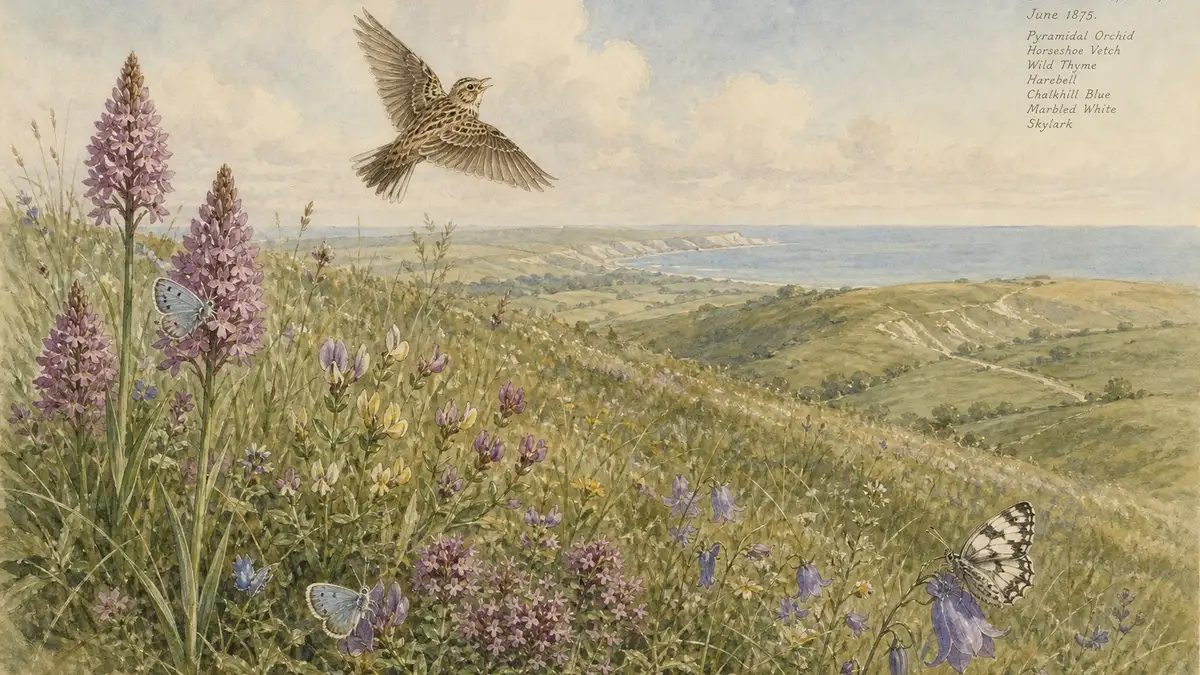
At the landscape scale, polyculture and agroforestry systems demonstrate that productive agriculture and biodiversity conservation are not mutually exclusive. Polycultures sequester 3 tons of CO₂ per acre per year compared with 0.5 tons in monocultures, whilst simultaneously boosting neighbouring crop yields by 20–30% through enhanced pollinator habitat. These systems deliver the 8.7× higher net value documented in long-term field trials, proving that biodiversity-friendly farming is also economically superior farming.
Key Takeaway
The most effective biodiversity protection strategies work with ecological processes rather than against them. Polycultures, rewilding, and habitat connectivity deliver measurable economic returns alongside environmental benefits. Explore our practical guide on how to protect biodiversity for actionable steps at every scale.
In the UK, individuals can contribute through wildlife-friendly gardening, supporting local conservation organisations, engaging with practical biodiversity protection initiatives, and holding developers and local authorities accountable to BNG requirements. Every patch of habitat matters — urban gardens, roadside verges, church yards, and school grounds all form part of the ecological network that sustains biodiversity.
Frequently Asked Questions About Why Biodiversity Is Important
Why is biodiversity important for ecosystem stability?
Biodiversity provides functional redundancy — multiple species performing similar ecological roles. When environmental conditions change or individual species decline, others can compensate, maintaining critical functions like pollination, decomposition, and predation. Research consistently shows that species-rich ecosystems recover faster from disturbances such as drought, flooding, and disease outbreaks compared with species-poor systems.
What is the economic value of biodiversity?
Wild pollinators alone contribute an estimated $235–577 billion to global agriculture annually. Soil organisms provide $200–600 per acre per year in nutrient cycling and disease suppression. Biodiverse polycultures deliver 8.7 times higher net present value over 30 years compared with monocultures. These figures represent conservative estimates — many ecosystem services remain unquantified.
What are ecological tipping points?
Ecological tipping points are thresholds beyond which ecosystems undergo rapid, often irreversible transitions to fundamentally different states. Coral reefs, for example, crossed a global tipping point at 1.3–1.4°C of warming. The Amazon rainforest risks dieback at 1.5°C. Once crossed, these thresholds can trigger cascading failures across interconnected Earth systems.
How does biodiversity loss affect human health?
Biodiversity loss increases pandemic risk through the dilution effect — as species-rich communities decline, disease-carrying generalist species become proportionally dominant, increasing zoonotic transmission to humans. Additionally, degraded soils produce less nutritious food, and reduced access to biodiverse natural environments is associated with higher rates of stress, anxiety, and depression in human populations.
What is Biodiversity Net Gain in the UK?
Biodiversity Net Gain (BNG) is an English planning policy requiring all new developments to deliver a minimum 10% net gain in biodiversity, measured using a standardised metric. Gains must be maintained for at least 30 years. The policy shifts development from simply avoiding harm to actively enhancing nature, creating new habitats or improving existing ones as a condition of planning permission.
Why do polycultures outperform monocultures?
Polycultures harness complementary ecological functions — different root depths access different soil nutrients, varied flowering times support pollinators throughout the season, and mixed canopy structures create diverse microclimates. This biological complementarity produces $52,000 per acre NPV over 30 years, sequesters 6 times more carbon, and provides natural pest control that reduces input costs.
The Pixcellence Team
We are a community of biodiversity advocates, conservation communicators, and environmental educators committed to making ecological science accessible. Our content is researched using peer-reviewed sources and verified against the latest data from organisations including JNCC, IPBES, and the Global Tipping Points project.
Join the Pixcellence Community
Understanding why biodiversity is important is the first step. Taking action is the next. Explore our complete resource library, connect with fellow advocates, and discover how you can make a measurable difference for nature in your community.
How to Protect Biodiversity → Explore Our Biodiversity Hub →