The ocean covers 70 per cent of Earth's surface and sustains the vast majority of planetary biodiversity — yet it faces an unprecedented convergence of threats from climate change, overfishing and pollution. More than 10 per cent of the world's ocean is now protected under various conservation designations, a milestone achievement that nevertheless falls far short of the internationally agreed target to protect 30 per cent by 2030. From marine protected areas and sustainable fisheries to blue carbon ecosystems and groundbreaking international treaties, ocean conservation strategies are evolving rapidly — but whether they can keep pace with the scale of the crisis remains an open question.
Key Takeaway
Ocean conservation has reached a critical inflection point. The High Seas Treaty entered into force in January 2026, the UK has designated 374 Marine Protected Areas covering 38 per cent of its waters, and blue carbon ecosystems are being restored along British coastlines. Yet only 3.3 per cent of the global ocean is fully protected, bottom trawling continues inside MPAs, and coral reefs have suffered their worst bleaching events on record. Bridging the gap between ambitious targets and effective protection is the defining challenge of marine conservation.
In This Guide
- What is the state of the ocean crisis?
- How do marine protected areas work?
- What is the UK doing to protect its seas?
- Can fisheries become sustainable?
- What is happening to coral reefs?
- What are blue carbon ecosystems?
- What does the High Seas Treaty mean for conservation?
- What can individuals do?
- Frequently asked questions
10.2%
Ocean Protected
global ocean under MPA designation
3.3%
Fully Protected
no-take or highly protected zones
374
UK MPAs
covering 38% of UK waters
670%
Fish Biomass
increase in no-take MPAs vs unprotected
Sources: Marine Protection Atlas / Mongabay, JNCC, Pew Bertarelli Ocean Legacy
What Is the State of the Ocean Crisis?
Every part of the ocean is now affected by the triple planetary crisis of climate change, biodiversity loss and pollution, according to the 2025 Copernicus Ocean State Report. Global sea temperatures reached a record 21°C in spring 2024, with nearly 40 million square kilometres of ocean — more than 10 per cent of the global surface and an area almost equivalent to Asia — experiencing marine heatwaves of strong to extreme intensity.
Ocean acidification compounds the thermal crisis. Seawater pH has declined from 8.11 in 1985 to 8.04 in 2024, representing a 40 per cent increase in acidity compared with pre-industrial levels. This reduces the availability of calcium carbonate essential for corals, molluscs and plankton to build their shells and skeletons. Meanwhile, ocean deoxygenation has created over 500 low-oxygen "dead zones" in coastal waters globally, driven by nutrient pollution and warming-induced stratification.
Climate change is already reshaping UK marine life. Research from the Centre for Environment, Fisheries and Aquaculture Science shows most species designated as threatened or declining are shifting northward toward the central North Sea. Mobile species like basking sharks and thornback rays may gain suitable habitat, while sessile seabed fauna — including sea pens — could lose up to 40 per cent of suitable habitat by 2100.
How Do Marine Protected Areas Work?
Marine Protected Areas (MPAs) are designated areas of ocean managed for long-term conservation through restriction of fishing and other damaging activities. Their effectiveness depends on the quality of protection, not merely the quantity — and the gap between designation and genuine conservation remains one of the defining issues in marine policy.
Fully protected "no-take" zones yield the greatest biodiversity benefits. A comprehensive review of 100 of the world's largest MPAs found that fish biomass in no-take zones is, on average, 670 per cent greater than in adjacent unprotected areas and 343 per cent greater than in partially protected MPAs. These areas also generate spillover effects, with thriving fish populations moving beyond boundaries to sustain catches in surrounding fisheries.
Yet globally, only 3.3 per cent of the ocean is fully or highly protected — down from 3.0 per cent following policy reversals including the rollback of the Pacific Islands Heritage Marine National Monument. The 30x30 target — the international commitment to protect 30 per cent of the ocean by 2030 — is dramatically behind schedule. At the current rate of progress (0.8 per cent increase since 2022), protection is projected to reach only approximately 10 per cent by 2030. Achieving the target would require protecting an additional area roughly equivalent to the Indian Ocean in just four years.
Paper Parks Problem
Many designated MPAs offer minimal real protection. Marine protected areas are overwhelmingly concentrated within national waters, which account for over 9 per cent of global ocean protection, while the high seas remain sparsely protected at only 1 per cent. Over 100,000 hours of industrial fishing occurred within UK offshore MPAs in 2025, with just 10 vessels responsible for over a quarter of suspected bottom trawling activity inside protected zones.
What Is the UK Doing to Protect Its Seas?
The United Kingdom has designated 374 Marine Protected Areas covering 38 per cent of UK waters — substantially exceeding the global average and representing completion of what the government terms an "ecologically coherent network." The UK has set a legally binding target requiring at least 70 per cent of protected features in MPAs to be in favourable condition by 2042, with the remainder in recovering condition.
England's three pilot Highly Protected Marine Areas (HPMAs) — Allonby Bay, North East of Farnes Deep and Dolphin Head — represent the most stringent protection category, prohibiting all extractive and destructive activities including commercial and recreational fishing, dredging and anchoring. Scotland has declined to establish HPMAs, instead managing 247 MPAs covering 37 per cent of Scottish seas through Nature Conservation Marine Protected Areas and Special Protection Areas.
The Marine Management Organisation launched its most extensive consultation to date in 2025, proposing fisheries management measures for 42 marine protected areas in English waters. The proposed byelaws would prohibit bottom trawling across approximately 30,000 square kilometres. The estimated cost to UK businesses is approximately £530,000 per year, while the projected benefit over 20 years is £3.1 billion — accounting for enhanced fish populations, nutrient cycling and climate regulation.
The UK is also future-proofing its MPA network for climate change, recognising that static protected areas must evolve as species shift northward. A Marine Recovery Fund, established through developer contributions from offshore wind projects, enables strategic deployment of conservation resources across the network.
Can Fisheries Become Sustainable?
Global fisheries and aquaculture production reached approximately 193 million tonnes in 2024, with capture fisheries projected to reach 94 million tonnes by 2034 — a modest 3.2 per cent increase reflecting many stocks approaching Maximum Sustainable Yield thresholds. Overfishing remains one of the most significant drivers of marine biodiversity loss, with bottom trawling particularly destructive — dragging heavily weighted nets along the seafloor, destroying habitats and killing non-target species.
The UK-EU fisheries agreement reached in May 2025 grants European trawler fleets 12 years' access to UK waters until 2038. The UK initially demanded the EU relinquish 80 per cent of its catch share, but settled for a gradual return of 25 per cent over five and a half years — translating into less than 10 per cent increase in the UK's share. Non-quota species including edible crab, scallop and lobster — comprising approximately one quarter of the UK fishing industry's value — remain mutually accessible.
Rising wholesale prices illustrate the economic pressures on marine resources. The price of cod increased by 200 per cent between December 2024 and early 2026, driving UK fish and chip shops toward alternative species including pollock, hake and hoki. Marine Stewardship Council certification continues to expand, with the Norwegian snow crab fishery and Argentine red shrimp fishery both achieving certification in 2024–2025.
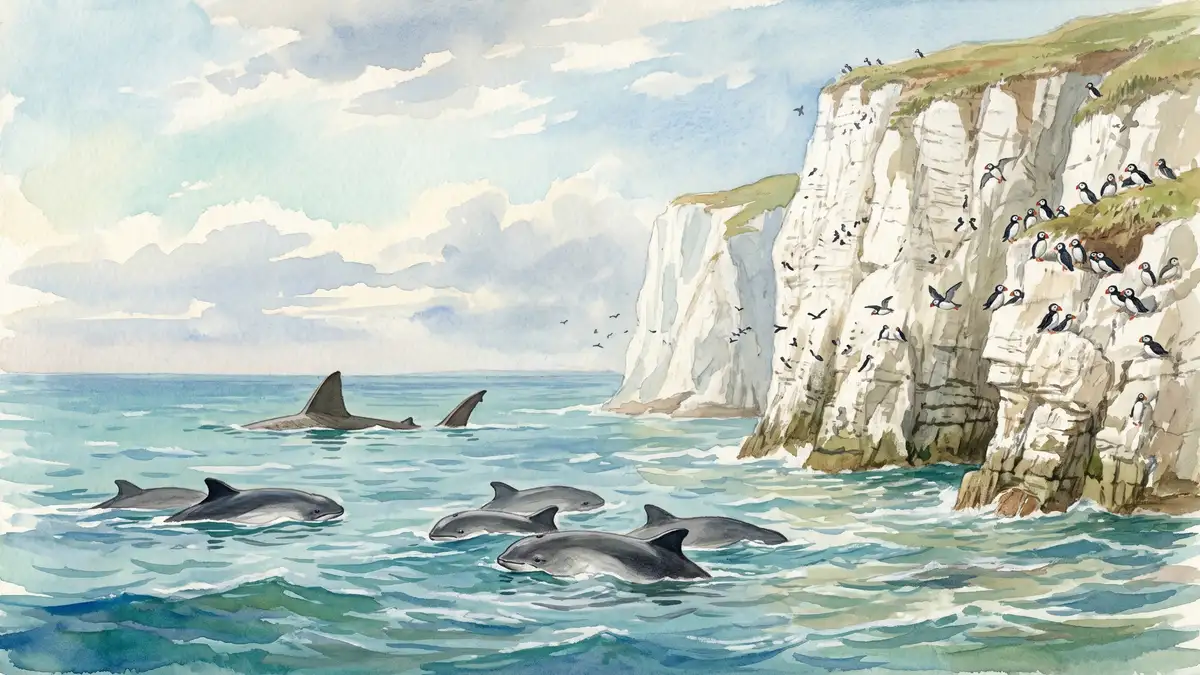
Harbour porpoise bycatch in English waters is being addressed through targeted management measures. The Marine Management Organisation is considering time-area closures, mandatory acoustic deterrent devices and enhanced monitoring for gillnet vessels operating in protected areas including the Southern North Sea MPA.
What Is Happening to Coral Reefs?
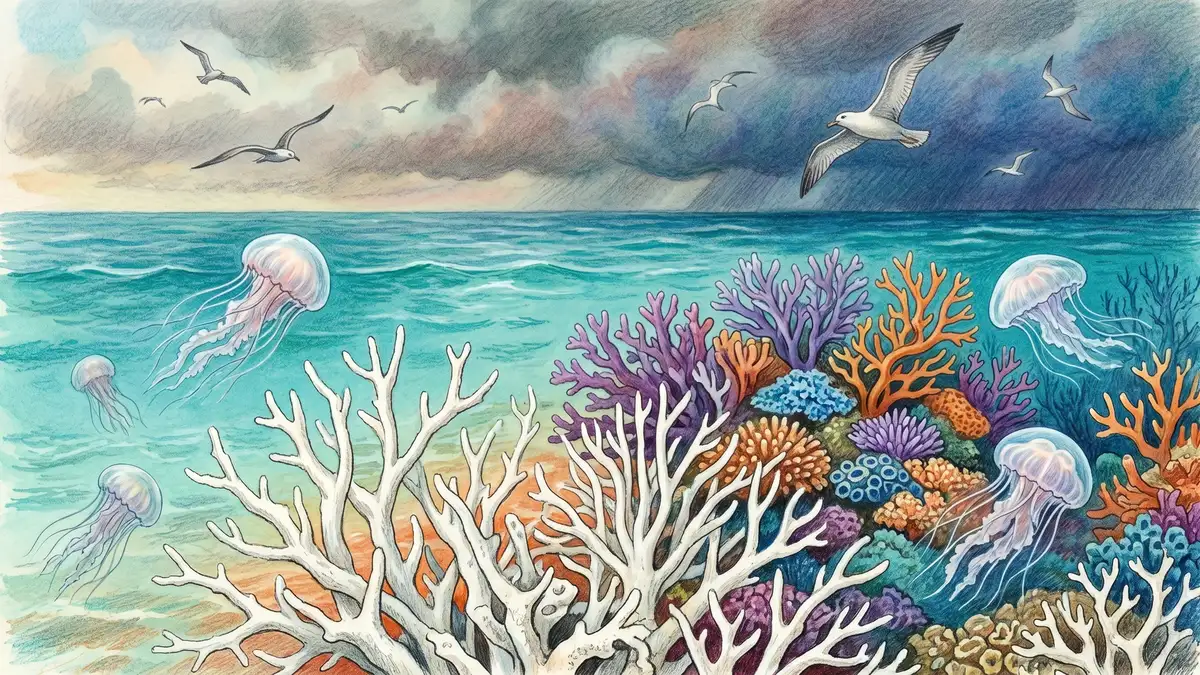
Coral reefs face the most acute crisis of any marine ecosystem. The fourth global coral bleaching event, declared in April 2024, triggered the Great Barrier Reef's fifth mass bleaching in just eight years — with the largest spatial footprint ever recorded. Northern Great Barrier Reef coral cover declined by 24.8 per cent in a single year, the largest annual decline recorded for the region. The southern reef suffered even worse, losing 30.6 per cent of coral cover and dropping below its long-term average for the first time.
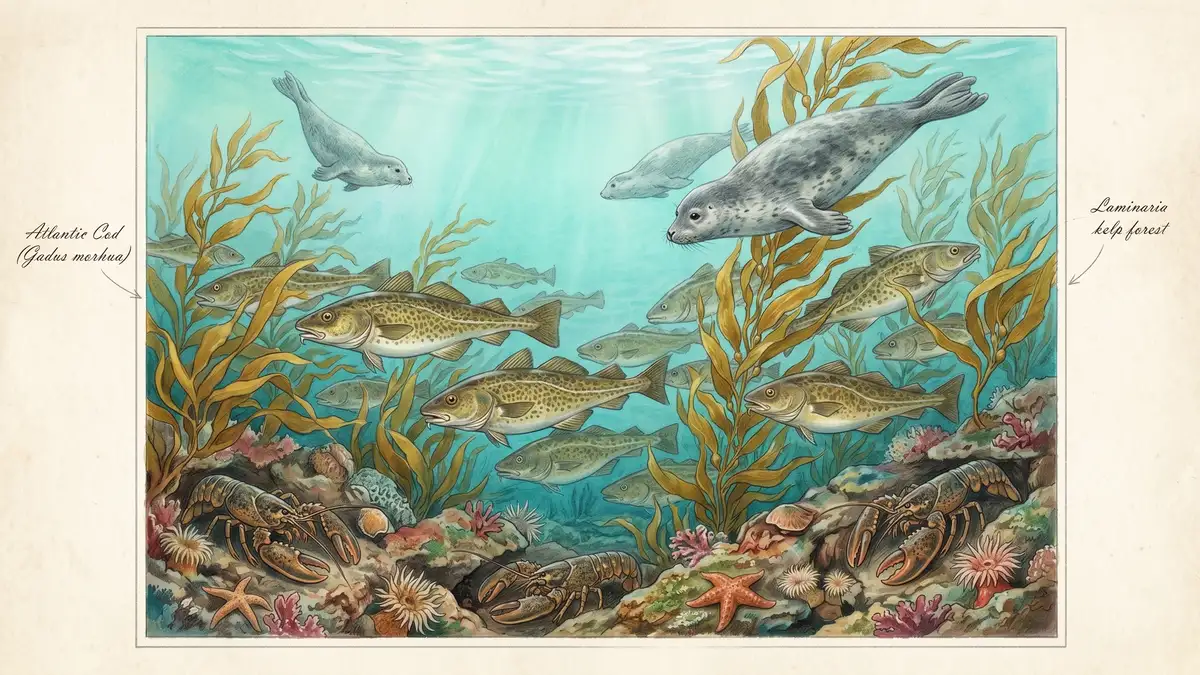
Restoration technologies are advancing to address these losses. Three-dimensional printed reef structures — using terracotta clay, sand and pozzolanic cement — create artificial habitats where organisms can attach and fish can shelter. In the Kattegat strait between Denmark and Sweden, Ørsted and WWF Denmark deployed 12 3D-printed reef structures to address historically low cod stocks. UK Overseas Territories, hosting 40,329 native species (1,851 endemic), are developing rapid response protocols for Stony Coral Tissue Loss Disease and bleaching events.
What Are Blue Carbon Ecosystems?
Blue carbon ecosystems — seagrass meadows, salt marshes and mangroves — absorb and store carbon up to five times more effectively than terrestrial forests, despite covering less than 2 per cent of the ocean's surface. Between 2014 and 2025, nearly 7 million Blue Carbon Credits were issued, corresponding to approximately 20 million tonnes of CO₂ sequestered annually. Current credit prices range between $5 and $35 per tonne.
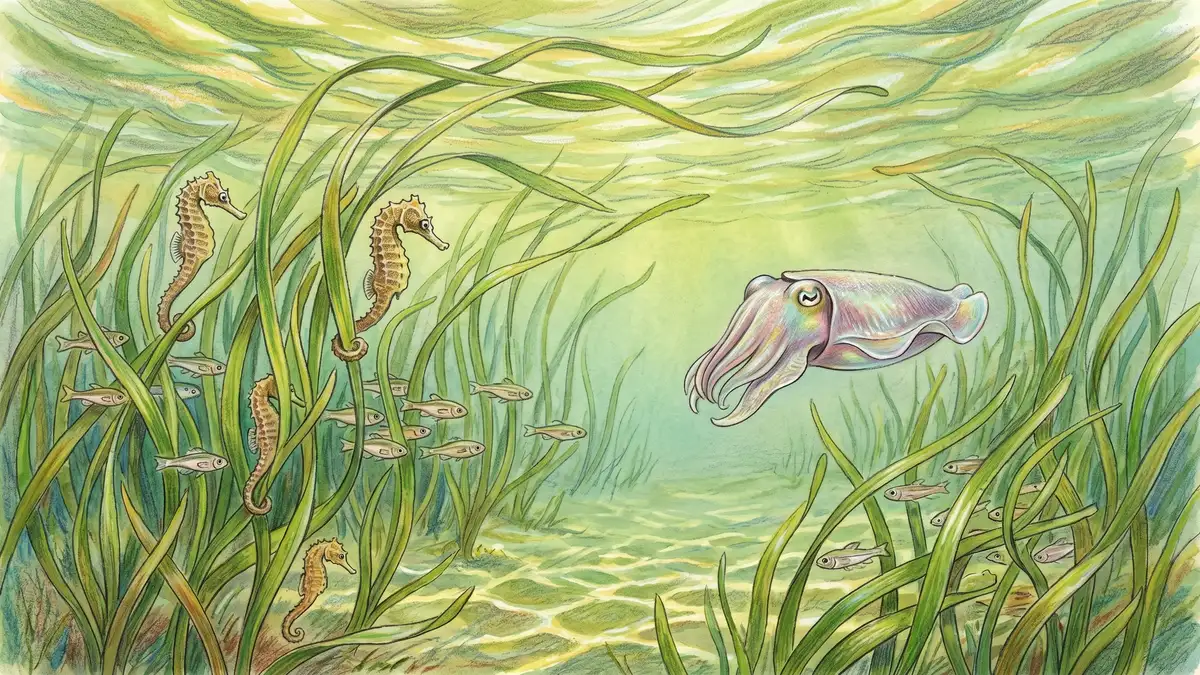
UK seagrass beds have declined by over 40 per cent since the 1930s due to coastal development, pollution and physical disturbance. The Dale seagrass restoration project in Pembrokeshire — the UK's first major seagrass restoration initiative — planted two hectares of Zostera marina through collaboration between Swansea University, WWF and Project Seagrass. The ReMEDIES project has planted a total of eight hectares within two Special Areas of Conservation. Studland Bay Marine Conservation Zone in Dorset protects seagrass beds alongside long-snouted seahorse populations through a voluntary no-anchor zone established in 2021.
Kelp forests represent another vital but threatened ecosystem. In Sussex, more than 96 per cent of kelp has been destroyed since 1987. The Sussex Inshore Fisheries and Conservation Authority proposed a byelaw prohibiting bottom trawling to allow recovery, and the first ever UK Kelp Summit in 2025 attracted over 200 participants to develop evidence-based restoration strategies.
What Does the High Seas Treaty Mean for Conservation?
The High Seas Treaty (BBNJ Agreement) entered into force on 17 January 2026 after achieving the required 60 ratifications in September 2025, following nearly two decades of international negotiation. The treaty covers two-thirds of the world's ocean area lying beyond national boundaries, establishing legally binding rules to conserve marine biodiversity, create protected areas and share benefits from marine genetic resources equitably.
If all prospective priority areas identified under the High Seas Treaty were implemented — alongside proposals under the Commission for the Conservation of Antarctic Marine Living Resources — a further 9.9 per cent of the high seas could be protected, potentially increasing total global ocean protection by approximately 6 per cent. The Convention on Migratory Species COP15 in March 2026 adopted new protections for 40 migratory species including 33 marine animals, formally recognising marine flyways to coordinate conservation across national boundaries.
Deep-sea mining represents an emerging threat to high seas marine biodiversity. The International Seabed Authority has approved 22 exploration contracts for minerals in the Clarion-Clipperton Zone, while 40 countries and dozens of organisations are calling for a moratorium until sufficient scientific data can ensure mining does not cause irreversible harm to deep-sea ecosystems and migratory species.
What Can Individuals Do?
Individual and community engagement complements policy and scientific conservation efforts. The Marine Conservation Society mobilises volunteer "Sea Champions" for beach cleans and monitoring. Citizen science initiatives including Seasearch (underwater survey data) and the Big Seaweed Search (monitoring seaweed distribution and non-native species) generate invaluable data tracking the impacts of rising sea temperatures on UK coastlines.
Sustainable seafood choices — looking for the Marine Stewardship Council (MSC) blue label — support responsible fisheries and fish stock recovery. Emerging technologies including eDNA monitoring, satellite surveillance of illegal fishing and AI-powered species identification are transforming conservation capacity, enabling real-time monitoring at lower cost than traditional vessel patrols. The Ocean Family Foundation awards grants of £3,940 to £100,000 to organisations protecting the marine environment, supporting everything from local restoration projects to international policy campaigns.
Frequently Asked Questions
How much of the ocean is currently protected?
More than 10.2 per cent of the world's ocean is protected under various MPA designations as of April 2026. However, only 3.3 per cent is fully or highly protected where extraction and destructive activities are entirely prohibited. The international 30x30 target aims to protect 30 per cent by 2030, but current progress suggests only around 10 per cent will be reached by that date.
What is the High Seas Treaty?
The High Seas Treaty (BBNJ Agreement) is a legally binding international agreement that entered into force on 17 January 2026. It covers two-thirds of the world's ocean beyond national boundaries, establishing rules to conserve marine biodiversity, create protected areas, share benefits from marine genetic resources and strengthen scientific cooperation. It took nearly 20 years to negotiate.
How many Marine Protected Areas does the UK have?
The UK has 374 Marine Protected Areas covering 38 per cent of its waters. England has designated three Highly Protected Marine Areas (the most stringent category), while Scotland manages 247 MPAs covering 37 per cent of Scottish seas. The UK government has a legally binding target for 70 per cent of protected features to reach favourable condition by 2042.
What are blue carbon ecosystems?
Blue carbon ecosystems are coastal and marine habitats — primarily seagrass meadows, salt marshes and mangroves — that absorb and store carbon up to five times more effectively than terrestrial forests. UK seagrass beds have declined over 40 per cent since the 1930s, but restoration projects in Pembrokeshire and Dorset are actively replanting these vital habitats.
Why is deep-sea mining controversial?
Deep-sea mining targets mineral deposits on the ocean floor, particularly polymetallic nodules in the Clarion-Clipperton Zone. Scientists warn that mining could cause irreversible damage to poorly understood deep-sea ecosystems and harm migratory species through sediment plumes and contamination. Forty countries and dozens of organisations are calling for a moratorium until sufficient scientific evidence confirms it can be done safely.
What is the 30x30 ocean target?
The 30x30 target is an international commitment under the Kunming-Montreal Global Biodiversity Framework to protect 30 per cent of the ocean by 2030. Currently 10.2 per cent is protected, and progress since 2022 has been 0.8 per cent. Achieving the target would require protecting an additional area roughly equivalent to the Indian Ocean within four years.
Conclusion
Ocean conservation has achieved remarkable milestones — the High Seas Treaty entering into force, over 10 per cent of the ocean under protection, the UK completing its MPA network, and blue carbon restoration gaining momentum along British coastlines. Yet these accomplishments must be measured against the scale of the crisis: only 3.3 per cent of the ocean is genuinely protected, coral reefs have suffered consecutive record-breaking bleaching events, and the 30x30 target appears increasingly out of reach at current rates. The gap between designating marine protected areas and effectively managing them — between ambition and enforcement — will determine whether the ocean's extraordinary biodiversity can be sustained for future generations.
Further reading: Marine biodiversity · Plastic pollution in the ocean · Biodiversity and conservation · Ecosystem services