Key Takeaway
The United Kingdom supports approximately 55,000 species across its terrestrial and freshwater ecosystems, yet wild bird populations have declined by 19 per cent since 1970 and farmland birds by a staggering 62 per cent. Understanding where biodiversity thrives — and where it is collapsing — across England, Scotland, Wales and Northern Ireland is the first step toward reversing these losses.
The United Kingdom is home to roughly 55,000 multicellular species spanning mammals, birds, invertebrates, plants, fungi and fish — one of the most comprehensively documented biotas on Earth. Despite this richness, the State of Nature 2023 report confirmed that the UK is among the most nature-depleted countries globally, with only 53 per cent of its biodiversity intactness remaining. This article maps the UK's biodiversity profile across habitats, regions and taxonomic groups, examines the drivers reshaping it, and highlights the conservation frameworks designed to reverse decades of decline.
~55,000
Species Recorded
Terrestrial & freshwater
19%
Bird Population Decline
Since 1970
2,890
Priority Species
Across UK nations
13.5%
Woodland Cover
3.28 million hectares
Sources: GOV.UK Species Abundance Indicators 2024, JNCC Priority Species 2025, Woodland Trust State of Woods & Trees 2025
Species Richness and Global Context
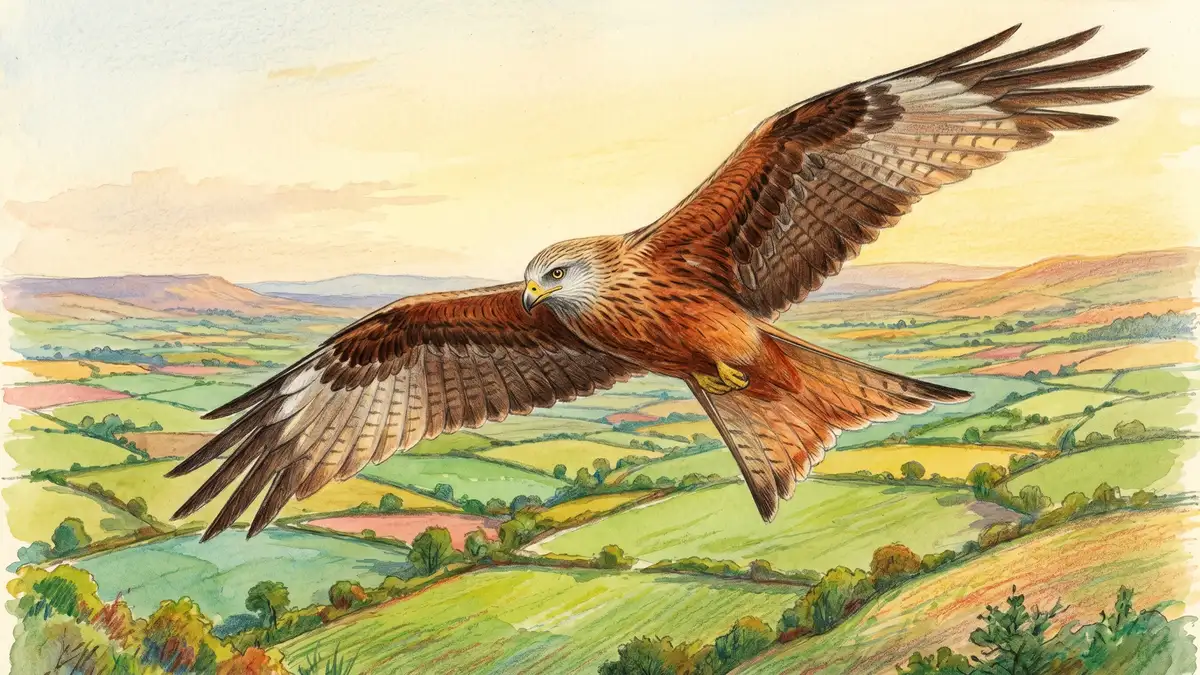
The UK's approximately 55,000 recorded terrestrial and freshwater species span an extraordinary range of life forms: from the 574 bird species on the British List to an estimated 27,000 insect species, over 3,000 fungi and more than 1,600 native vascular plants. Invertebrates dominate the species count — beetles, flies, moths and butterflies collectively represent the lion's share of UK biodiversity, yet remain comparatively understudied relative to charismatic vertebrates.
How does the UK rank globally? With only 0.16 per cent of the world's land area, Britain supports a disproportionately well-documented biota thanks to a recording tradition stretching back centuries. However, in terms of biodiversity intactness — the proportion of natural biodiversity remaining — the UK ranks in the bottom 10 per cent of nations worldwide. Remarkably, more than 90 per cent of the UK's endemic species (those found nowhere else on Earth) are located not on the British mainland but in the UK Overseas Territories, from the Falklands to the Pitcairn Islands.
The UK's 2,890 formally designated priority species — listed under Section 41 (England), Section 7 (Wales), the Scottish Biodiversity List and Northern Ireland equivalents — represent those taxa most in need of conservation action. In England, priority species have declined to approximately 23 per cent of their 1970 abundance, representing a 77 per cent contraction in just over five decades.
Habitat Types and Distribution
The UK's biodiversity is fundamentally shaped by its diverse habitat mosaic. Roughly 76 per cent of UK land is under intensive human management (agriculture, urban areas, commercial forestry), leaving only 24 per cent in natural or semi-natural condition. Marine ecosystems, by contrast, represent 100 per cent natural coverage across approximately 73 million hectares of the UK Exclusive Economic Zone.
| Habitat Type | UK Extent | Condition | Key Concern |
|---|---|---|---|
| Woodland | 3.28M ha (13.5%) | 7% in good condition | 80% lack adequate deadwood; plant richness down 22% in 50 years |
| Peatland | ~3M ha (10%) | 80% degraded | Stores more carbon than all UK forests combined; drainage ongoing |
| Grassland | Largest farmland type | Stabilised at reduced levels | 97% of wildflower meadows lost since 1930s |
| Freshwater | Rivers, lakes, wetlands | Mixed — improving water quality | Atlantic salmon declined 63% over three generations; European eel down 80% |
| Coastal & Marine | ~73M ha (EEZ) | 20%+ of rocky reefs not in good condition | Kelp forests (10,300 ha) and seagrass (18,800 ha) declining |
Sources: Woodland Trust 2025, IUCN UK Peatland Programme 2024, JNCC Natural Ecosystems 2025
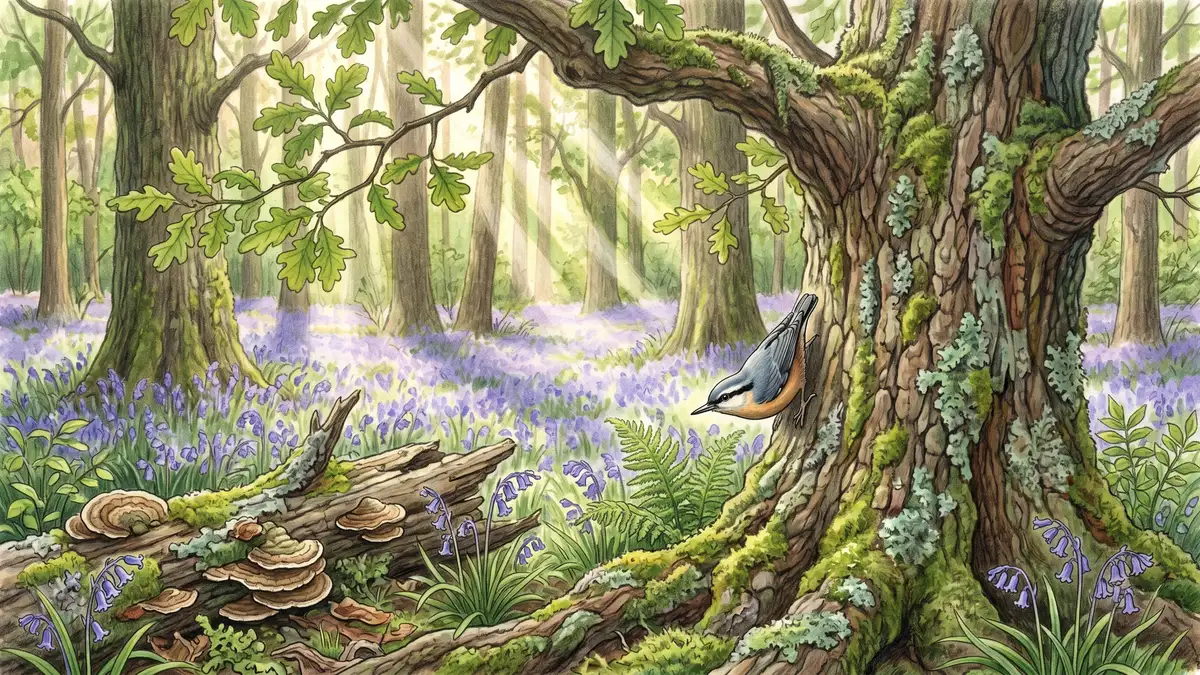
Woodland warrants particular attention. The Woodland Trust's State of UK Woods and Trees 2025 report revealed that only 7 per cent of Britain's native woodland is in good ecological condition. Eight in ten native woodlands scored unfavourably for deadwood — a critical habitat feature supporting one quarter of all forest species. Only 1 in 50 native woodlands contains more than one veteran tree per 200,000 square metres, despite ancient trees being irreplaceable reservoirs of ecological value.
Peatland, covering approximately 10 per cent of UK land, stores more carbon than all UK forests combined, yet 80 per cent is in some degree of degradation. Restoring peatland is now recognised as one of the highest-impact conservation interventions available, simultaneously addressing biodiversity loss, carbon sequestration, water regulation and flood mitigation.
Regional Biodiversity Patterns
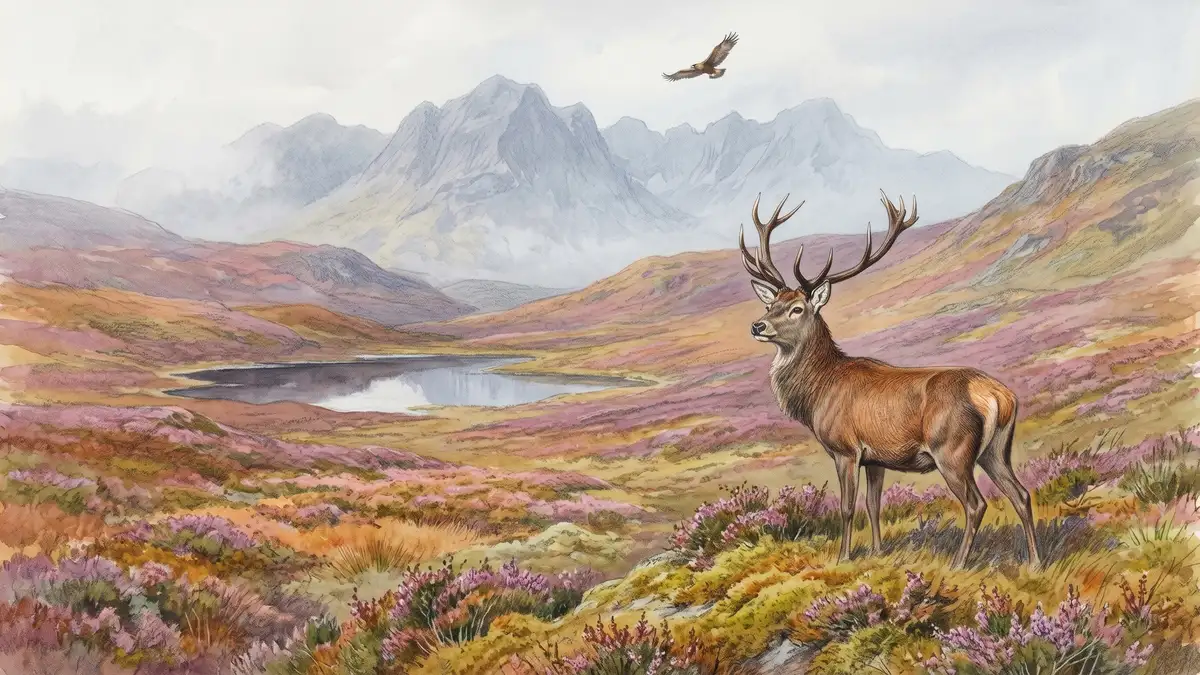
Biodiversity varies substantially across the UK's four nations, reflecting differences in habitat extent, land use history and conservation policy.
Scotland
Contains the majority of the UK's blanket bog and montane habitats. Protected areas cover 22.7 per cent of terrestrial land and 17.6 per cent of marine waters. Nearly 79 per cent of designated features are in favourable or recovering condition. The Highlands represent one of Western Europe's last large-scale wilderness areas.
England
The most intensively managed landscape in the UK. Species abundance has declined to 67 per cent of its 1970 value. Priority habitats span 1.86 million hectares (14 per cent of land area), with 62 per cent in appropriate management. Chalk grasslands in the south support globally rare calcareous plant communities.
Wales
Over 1,000 SSSIs cover 267,500 hectares (12 per cent of land area). New biodiversity legislation in 2025 empowers Welsh Ministers to set ambitious recovery targets. However, 99 per cent of sensitive habitats exceed critical nitrogen loads, driven by agricultural ammonia emissions.
Northern Ireland
Distinctive habitats at the junction of Atlantic maritime and lowland agricultural landscapes. The Department of Agriculture, Environment and Rural Affairs (DAERA) published updated protected area condition assessments in 2024/25. Conservation frameworks run in parallel with the rest of the UK.
Within these nations, several UK biodiversity hotspots stand out. The Scottish Highlands maintain internationally significant peatlands and montane habitats. East Anglian fens, though reduced to small remnants, retain exceptional fen-specialist plant communities. Southern chalk grasslands support ancient calcareous communities maintained through traditional extensive grazing. The New Forest creates a heterogeneous mosaic of heathland and ancient woodland supporting distinctive species assemblages. And global biodiversity hotspots in the UK Overseas Territories harbour species found nowhere else on the planet.
Population Trends and State of Nature
The aggregate picture is sobering. According to the GOV.UK wild bird population statistics, 29 per cent of UK bird species have declined since 1970, while a similar proportion (28 per cent) has increased. However, the short-term picture is more troubling: between 2019 and 2024, 42 per cent of bird species declined compared to only 25 per cent increasing, suggesting that the rate of loss may be accelerating.
The Farmland Crisis
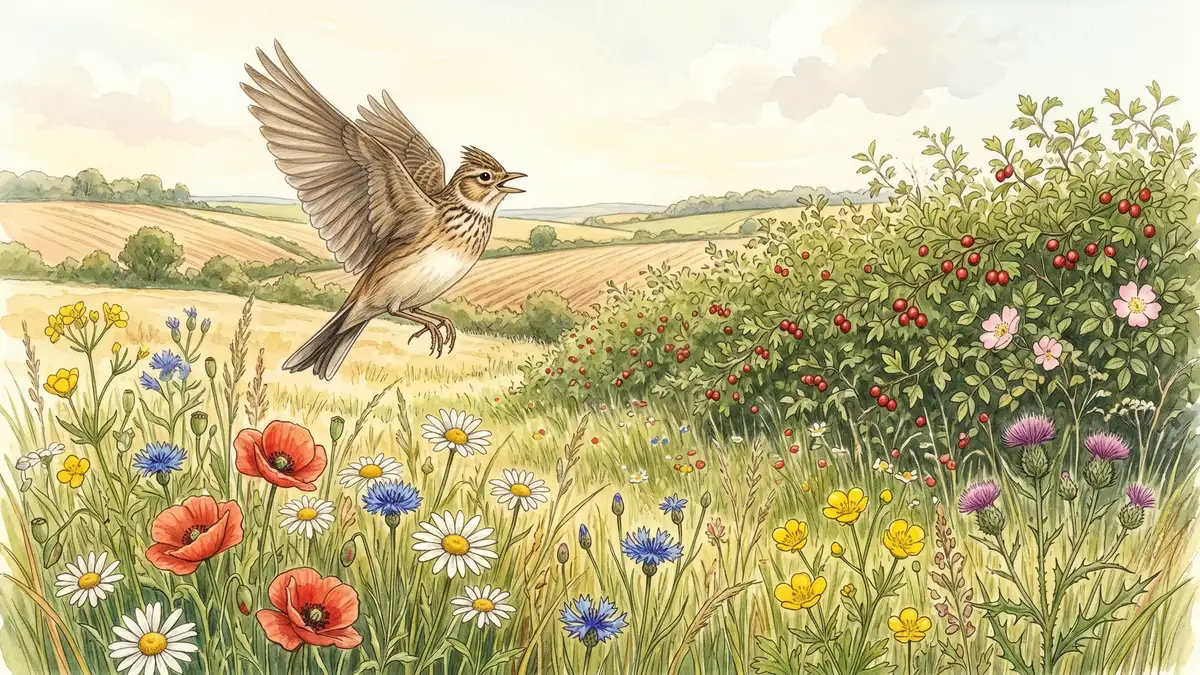
Farmland birds have declined by 62 per cent since 1970 — the most severe habitat-based decline of any group. Turtle dove and tree sparrow populations have collapsed to tiny fractions of their former numbers.
The majority of these declines occurred between the late 1970s and early 1980s, corresponding precisely with Common Agricultural Policy intensification across Europe. The farmland bird index is now the UK's starkest measure of biodiversity loss.
Woodland birds have declined by 32 per cent across the UK and 36 per cent in England since 1970, though recent data shows signs of stabilisation. Some woodland species are thriving: chiffchaff populations have doubled since 1970, nuthatch numbers have more than tripled, and both blackcap and great spotted woodpecker have more than quadrupled — likely driven by climate warming enabling range expansion.
Pollinators paint a mixed picture. The UK's pollinating insect indicator, tracking 393 species of bees and hoverflies, shows a 23 per cent decrease in distribution since 1980. Bees are faring better than hoverflies: 31 per cent of bee species have become more widespread versus only 12 per cent of hoverflies. The reasons for this divergence remain under investigation.
In freshwater ecosystems, Atlantic salmon abundance has dropped by 63 per cent over three generations. The European eel has suffered a catastrophic 80 per cent decline in four decades. The vendace — Britain's rarest native freshwater fish — now survives naturally only in Derwent Water and Bassenthwaite Lake in the Lake District. Dormouse populations in surveyed woodlands have fallen by 70 per cent between 2000 and 2022.
Drivers of Biodiversity Loss
Five interconnected pressures drive the UK's biodiversity decline, with agricultural intensification the dominant factor. The transformation of diverse mixed farming into intensive monoculture production has removed hedgerows, ploughed permanent pastures, and applied herbicides and pesticides at unprecedented scales — directly generating the conditions behind the farmland bird collapse.
Habitat loss and fragmentation compounds these effects. Only 24 per cent of UK terrestrial land remains in natural or semi-natural condition, compressing wildlife into increasingly isolated patches. Climate change is driving species northward and disrupting the timing of ecological events — half of dragonfly and damselfly species have shifted both ranges and seasonal activity patterns in response to warming. Pollution from nitrogen, pesticides and ammonia affects even protected sites: in Wales, 99.1 per cent of sensitive habitats exceeded critical nitrogen loads in 2021. And invasive non-native species cause damage estimated at over £1 trillion — the highest estimated cost of any country worldwide.
The Global Footprint
The UK's biodiversity impact extends far beyond its borders. Annual UK consumption of crops, cattle and timber was associated with an estimated 29,000 hectares of deforestation worldwide in 2023, down from 65,000 hectares in 2005. The UK's LIFE score (predicted species extinctions) stands at 3.3 — improved from 5.1 in 2005 but still representing approximately 61 predicted regional species losses annually.
Conservation Framework and Targets
The UK has committed to the 30 by 30 target — protecting 30 per cent of land and sea for nature by 2030. Current progress varies sharply. England's total effectively protected area has expanded from 1.3 million to 3.5 million hectares between 2005 and 2025, a 170 per cent increase. However, terrestrial protection stands at only 8 per cent of England's land area, requiring a fourfold expansion to meet the target. Marine protection is far stronger at 49 per cent of inshore waters.
The UK's protected area network includes 10 National Parks, 46 Areas of Outstanding Natural Beauty (now National Landscapes), over 4,100 SSSIs, and hundreds of Special Areas of Conservation (SACs) and Special Protection Areas (SPAs). Scotland leads with 22.7 per cent terrestrial coverage, followed by Wales at approximately 12 per cent and England at 8 per cent.
Biodiversity Net Gain became mandatory for major development from February 2024, requiring developers to achieve at least 10 per cent measurable biodiversity gains. The Landscape Recovery Scheme, backed by £500 million in funding, supports large-scale nature recovery through farmer participation. And in Wales, new 2025 legislation empowers Ministers to set legally binding biodiversity recovery targets for the first time.
Recovery Success Stories
Despite the overall decline, targeted conservation action is delivering results that demonstrate biodiversity loss can be reversed.
White-Tailed Eagle Comeback
After 50 years of sustained reintroduction, approximately 200 breeding pairs now inhabit Great Britain. In 2023, a chick hatched in England for the first time in 250 years.
Beaver Reintroductions
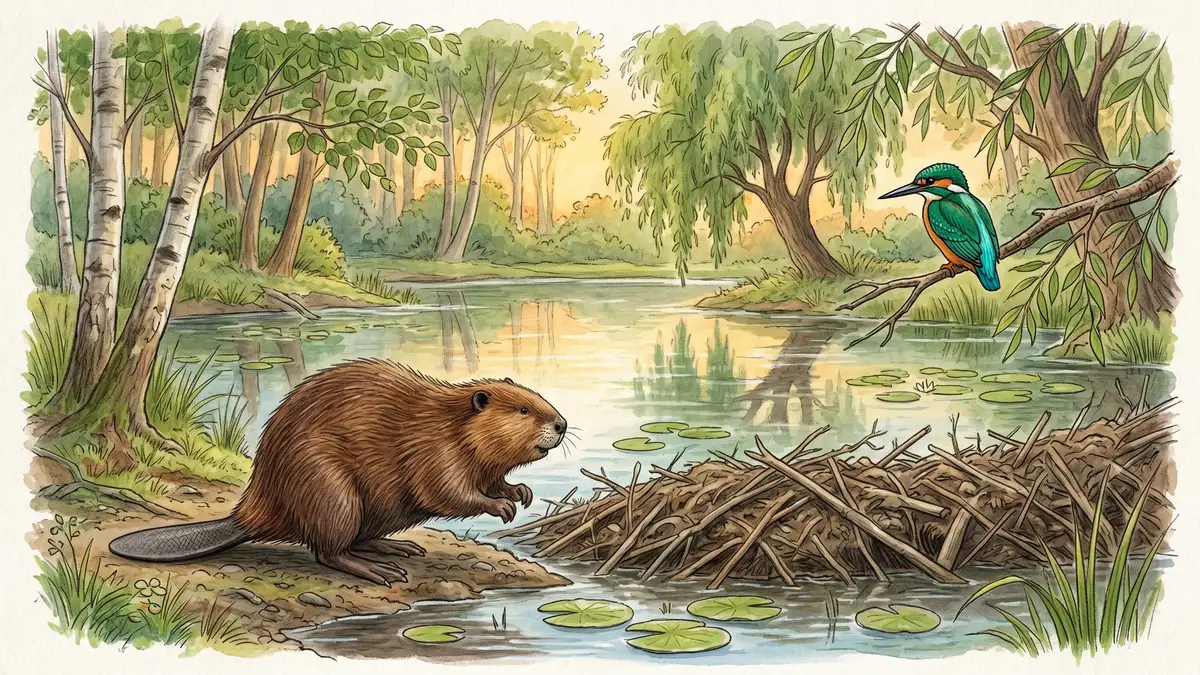
Beavers are now engineering landscapes across England and Scotland, building dams that create complex wetland mosaics benefiting dozens of dependent species, reducing flood risk and improving water quality downstream.
Knepp Castle Estate (3,500 acres) has documented profound ecosystem recovery since rewilding began. At Wild Ken Hill, invertebrate surveys recorded 875 species in 2024, up from 814 in 2019 — a 7.5 per cent increase including 63 species of conservation concern.
Temperate Rainforest Restoration
Cornwall Wildlife Trust, backed by £38 million from Aviva, is restoring temperate rainforest habitat — a globally rare ecosystem concentrated in western Britain characterised by luxuriant mosses and lichens.
Fungal Conservation Breakthrough
The Network for Fungal Conservation, launched in 2025, is the first UK initiative specifically targeting fungi. Over 1,300 fungal species now appear on the Global Red List, including 77 from the UK. Experimental translocations of critically endangered lichens and fungi are already underway.
These successes share a common thread: long-term commitment, adequate funding and willingness to allow ecological processes to operate at meaningful scales. The challenge now is to scale these approaches from individual projects to the landscape-wide transformation that the UK's biodiversity crisis demands.
Frequently Asked Questions
How many species are found in the United Kingdom?
The UK supports approximately 55,000 multicellular terrestrial and freshwater species, spanning mammals, birds, invertebrates, plants, fungi and fish. This makes the UK one of the most comprehensively recorded biotas in the world, with systematic species monitoring stretching back over a century.
What percentage of UK wildlife has declined?
Wild bird populations have declined by 19 per cent since 1970, with farmland birds falling by 62 per cent over the same period. In England, the overall species abundance indicator stands at approximately 67 per cent of its 1970 baseline, while priority species have declined to just 23 per cent of their 1970 levels.
Which UK habitats are most at risk?
Farmland habitats have suffered the greatest biodiversity losses, with 97 per cent of wildflower meadows lost since the 1930s. Only 7 per cent of native woodland is in good ecological condition. Approximately 80 per cent of UK peatland is degraded, and freshwater ecosystems face severe pressure, with Atlantic salmon declining by 63 per cent.
Is the UK meeting its 30 by 30 biodiversity target?
Progress is mixed. England's protected terrestrial area stands at only 8 per cent — far below the 30 per cent target for 2030. Marine protection is stronger at 49 per cent of inshore waters. Scotland leads with 22.7 per cent terrestrial coverage. Achieving the target will require a fourfold expansion of protected land in England within four years.
What is the biggest threat to UK biodiversity?
Agricultural intensification is the dominant driver of UK biodiversity loss. The shift to intensive monoculture production has removed hedgerows, ploughed permanent pastures and applied chemicals at unprecedented scales. Climate change, habitat fragmentation, pollution and invasive species compound these pressures across all ecosystems.
Are any UK species recovering?
Yes. White-tailed eagles have reached approximately 200 breeding pairs following 50 years of reintroduction. Beaver populations are expanding across England and Scotland. Chiffchaff numbers have doubled, nuthatch populations have tripled, and both blackcap and great spotted woodpecker have quadrupled since 1970 — largely driven by climate warming.
Further Reading
To explore the topics covered in this article in more depth, see our related guides:
- What Is Biodiversity? The Definitive Guide
- Causes of Biodiversity Loss: Five Major Drivers
- UK Wildlife Decline: Trends, Data and What Is Driving the Crisis
- Biodiversity Net Gain: What It Means and How It Works
- The UK Biodiversity Crisis
- Biodiversity Hotspots: Protecting Our Most Species-Rich Areas
Sources: GOV.UK Wild Bird Populations 2024, JNCC UK Biodiversity Indicators 2025, Woodland Trust State of UK Woods & Trees 2025, GOV.UK Protected Areas 2025, JNCC Pollinating Insects 2024, IUCN UK Peatland Programme 2024