Key Takeaway
Brazil's Amazon rainforest lost 5,796 km² in the year ending July 2025 — the lowest rate in eleven years — yet the forest remains perilously close to a tipping point at 20–25% cumulative loss. Cattle ranching drives 80% of deforestation, fire-driven degradation now exceeds deforestation as the primary carbon emission source, and the UK imports £243 million of Brazilian soy annually — roughly 60% of total UK soy imports — linking British consumers directly to this crisis.
What Is Happening to Brazil's Rainforest?
Brazil's Amazon rainforest is experiencing a complex deforestation crisis that sits at the intersection of economic development, environmental protection and global climate stability. The National Institute for Space Research (INPE) recorded 5,796 km² of deforestation in the Brazilian Legal Amazon for the year ending July 2025, an 11% decline from the previous year and the lowest annual rate in eleven years. The cumulative reduction between 2023 and 2025 reached 34%, demonstrating a significant reversal from the trajectory established during the Bolsonaro administration.
Yet this encouraging trend masks underlying vulnerabilities. The 2024 fire season shattered records, with fires releasing an estimated 791 million metric tonnes of CO₂ — a sevenfold increase from the previous two years. For the first time in recent analysis, fire-driven degradation surpassed deforestation as the primary driver of Amazon carbon emissions. The Amazon stores approximately 650 billion tonnes of CO₂ in its trees, and scientists warn the forest approaches a critical tipping point between 20 and 25% cumulative loss, beyond which self-reinforcing feedback loops could trigger irreversible transformation into savanna.
5,796 km²
Annual Deforestation
Lowest in 11 years (INPE 2025)
80%
Cattle Ranching
Share of Amazon deforestation
791 Mt
Fire CO₂ Emissions
Record fire season 2024
£243m
UK Soy Imports
~60% of UK total from Brazil
Sources: WWF Brasil / INPE PRODES 2025, Mongabay / EGU 2025, ECIU 2024
What Are the Main Causes of Deforestation in Brazil?
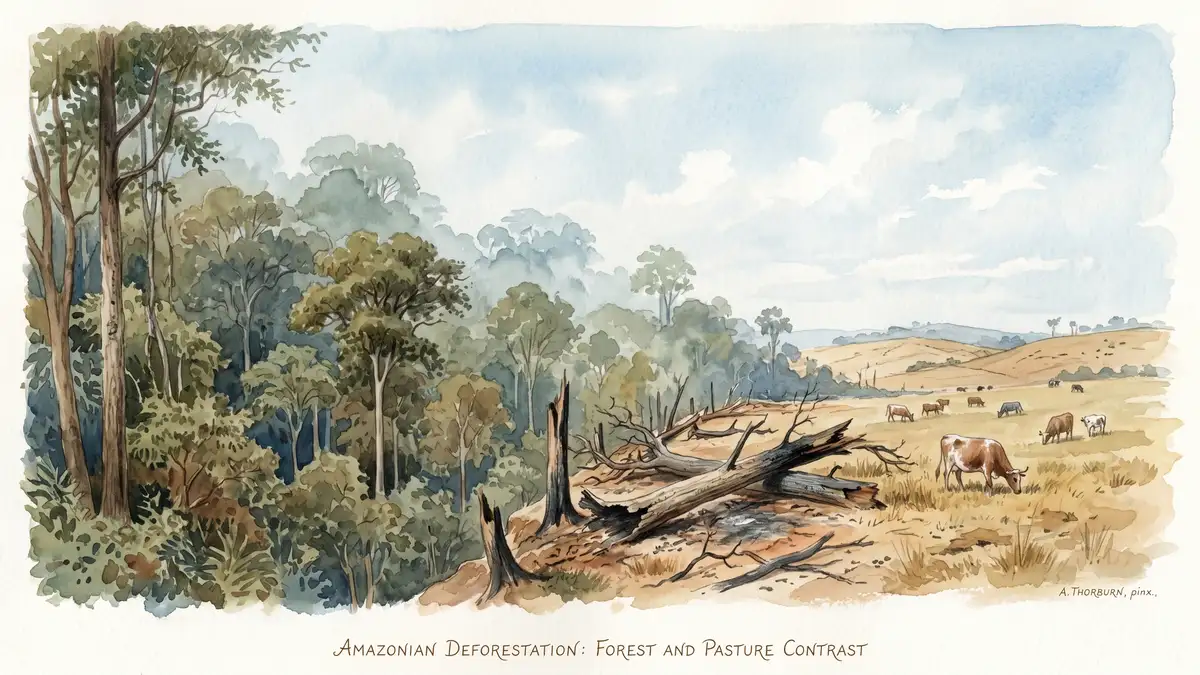
Cattle ranching is the single most significant driver of Amazon deforestation, accounting for approximately 80% of forest loss across the biome. Seventy percent of formerly forested Amazon land — and 91% of land deforested since 1970 — has been converted to livestock pasture. Brazil ranks as the world's largest beef exporter, generating over USD 26.2 billion in meat exports during 2024. More than half of these exports originate from states classified as high-risk for illegal forest clearing, and 91% of forest loss in the Brazilian Amazon is linked to illegal activity.
Soy cultivation represents the second-largest direct driver. Brazil produced USD 53.9 billion in soy exports during 2024, with approximately 90% of exported soy converted into livestock feed. The Amazon Soy Moratorium, established in 2006, reduced soy-driven Amazon deforestation from 30% of new fields to less than 4% by 2025. However, in January 2026, major commodity traders including Cargill and Bunge withdrew from the moratorium following removal of tax incentives in Mato Grosso, threatening nearly two decades of conservation progress.
Illegal logging and mining complete the picture. In the tri-border regions where Brazil, Colombia and Peru intersect, illegal timber trafficking overlaps with drug trafficking operations. Illegal gold mining generates annual flows exceeding USD 30 billion and has become more profitable than cocaine trafficking in several Amazonian border regions. Between 2019 and 2022, illegal mining in the Yanomami Indigenous Territory increased by 3,350%, causing mercury contamination, sexual violence and humanitarian crisis.
| Driver | Share of Loss | Key Mechanism | Economic Scale |
|---|---|---|---|
| Cattle Ranching | ~80% | Pasture conversion on forest frontier, land speculation | USD 26.2bn exports (2024) |
| Soy Agriculture | Second largest | Expansion into Cerrado savanna, 90% becomes livestock feed | USD 53.9bn exports (2024) |
| Illegal Logging | Significant | Selective harvest of high-value hardwoods, road network creation | >USD 1,000/m³ for ipê |
| Mining | 17% of Amazon affected | Mercury contamination, river pollution, Indigenous land invasion | >USD 30bn illegal gold annually |
| Infrastructure | Enabling factor | Roads open frontier for settlement and land-grabbing | BR-319 debate ongoing |
Sources: Climate Rights International 2025, WRI Nature Crime 2025
How Much of the Amazon Rainforest Has Been Lost?
Approximately 15% of the Amazon rainforest has been deforested as of 2025, with an additional 6% classified as significantly degraded through selective logging, fire and fragmentation. Between 2001 and 2025, Brazil lost 76 million hectares of tree cover — 15% of its 2000 baseline — equivalent to approximately 40 gigatonnes of CO₂ emissions. To put this in perspective, the total area cleared since 1970 exceeds the combined size of France and Germany.
The historical trajectory reveals both catastrophe and hope. From 2004 to 2012, Brazil achieved an extraordinary 80% reduction in annual deforestation through the PPCDAm action plan, falling from approximately 11,600 km² annually to around 4,000 km². This progress was systematically reversed under the Bolsonaro administration (2019–2022), which dissolved the PPCDAm and defunded the environmental agency IBAMA by 24%. Deforestation surged back to 11,600 km² annually — doubling the rates achieved during the successful conservation period.
President Lula's return to office in 2023 reversed the trajectory again. Annual deforestation dropped to 5,796 km² by 2025, with IBAMA increasing environmental violation notices by 81% and fines by 63% compared to the Bolsonaro period. The Roraima, Rondônia and Acre states saw reductions of 27–37%. Brazil accounted for a 42% decline in global primary forest loss in 2025, achieving the lowest rate of non-fire primary forest loss on record.
Why Does the Amazon Matter for Climate Change?
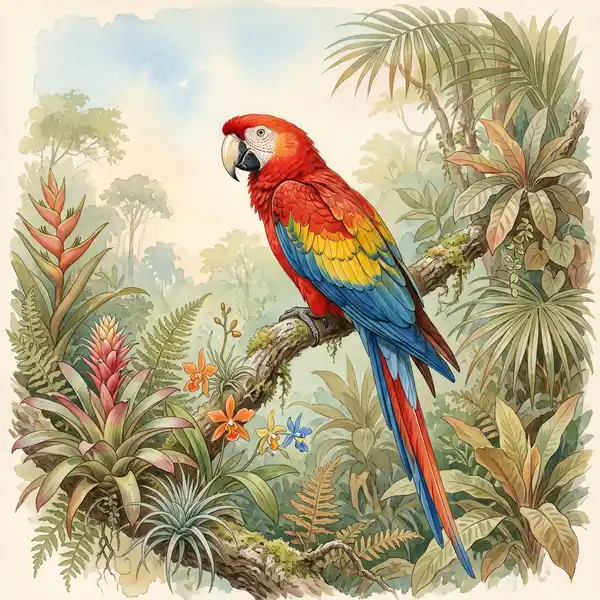
The Amazon rainforest functions as one of Earth's most critical carbon sinks, storing approximately 650 billion tonnes of CO₂ in its trees. Tropical forests collectively account for 55% of global forest above-ground carbon stock and 40% of total terrestrial carbon sink capacity. The Amazon generates roughly half of its own rainfall through evapotranspiration, with moisture recycled through the forest system and carried across South America by atmospheric circulation — a process vital to agriculture across the continent.
However, this carbon sink function is deteriorating. Research published in Nature provides direct evidence that more than three-quarters of the Amazon has been losing resilience since the early 2000s. The global forest carbon sink contracted to its lowest level in at least two decades during 2023–2024, with forests absorbing only approximately one-quarter of the CO₂ they typically sequester. The 2024 fire season released 791 million tonnes of CO₂ — surpassing Japan's entire annual carbon emissions — and for the first time, fire-driven degradation overtook deforestation as the primary driver of Amazon carbon emissions.
The implications for climate change are profound. Where the Amazon previously functioned as a reliable carbon sink, parts of the basin may already be transitioning toward carbon source status. Combined deforestation and fire-driven degradation in the Amazon during 2024 reached 1,416 million tonnes of CO₂ — exceeding the annual emissions of Japan, the world's fifth-largest emitter.
Learn how deforestation connects to the broader biodiversity crisis threatening ecosystems worldwide.
Explore Biodiversity Loss & ThreatsIs the Amazon Approaching a Tipping Point?
Scientists increasingly warn that the Amazon approaches critical thresholds beyond which self-reinforcing feedback loops would trigger irreversible ecosystem transformation. With approximately 20% already deforested, research suggests that upon reaching 20–25% cumulative loss, the forest could begin transitioning into degraded savanna — particularly in eastern, southern and central Amazonia. This process of savanisation would take decades to fully manifest, but once initiated would prove extremely difficult to reverse.
The mechanism involves moisture and rainfall feedbacks. When forest cover drops below critical thresholds, evapotranspiration decreases, moisture availability falls, rainfall diminishes, and the forest transitions from self-sustaining cycles toward alternative stable states. Research published in Nature Communications found that approximately 40% of the Amazon is at risk of becoming a savanna-like ecosystem due to reduced rainfall alone. Studies using hundreds of climate-model simulations concluded that even temporary passage through 1.5°C of global warming would trigger significant dieback risk, independent of deforestation levels.
The Tipping Point Debate
Common assumption: The entire Amazon will collapse simultaneously once a single threshold is crossed.
The reality: Yale researchers found no evidence of a single basin-wide tipping point, but rather wide variation in how different regions respond. The southeast faces climate-driven tipping risks, while most areas face repeated "hammer blows" from direct human activities. The Amazon remains surprisingly resilient — vast areas could recover if destructive activities cease — but this resilience cannot be taken for granted.
How Do Indigenous Territories Protect the Rainforest?
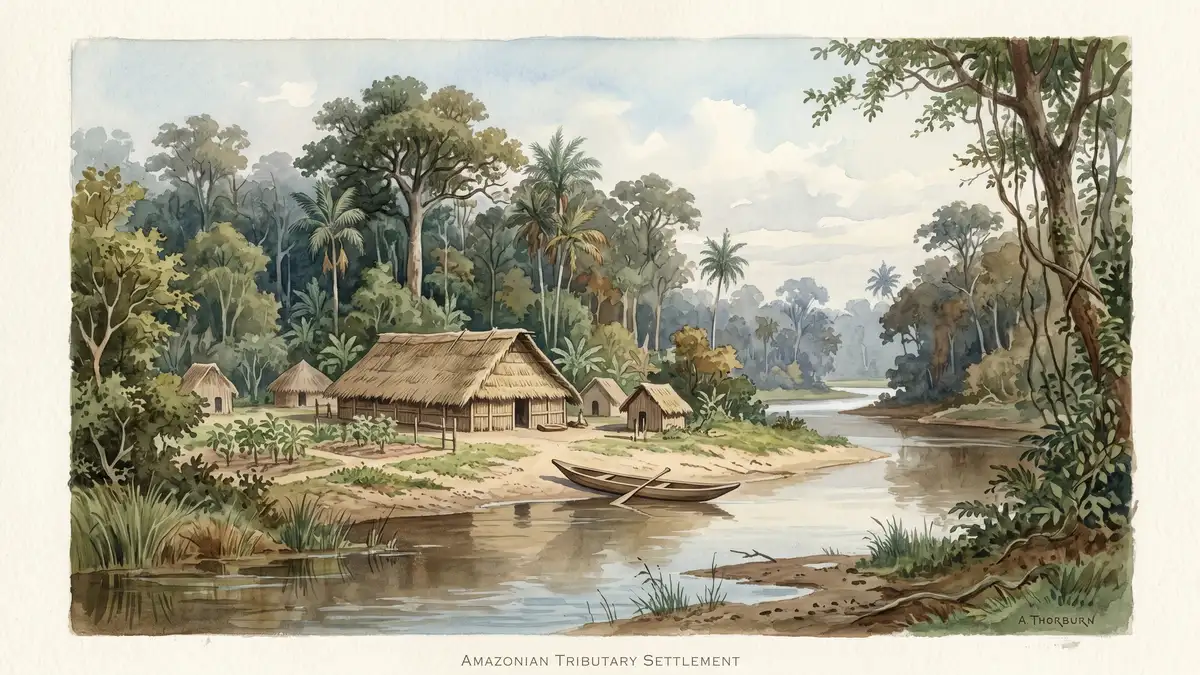
Indigenous territories function as the most effective institutional mechanism for forest conservation within the Brazilian Amazon. Between 1985 and 2020, 90% of Amazon deforestation occurred outside Indigenous lands, with just 1.2% of land within Indigenous territories deforested during this 35-year period. Deforestation in Indigenous territories runs nearly 50% lower than in comparable surrounding lands with similar accessibility and economic drivers.
From 2001 to 2024, forests in Indigenous territories absorbed carbon equivalent to France's annual fossil fuel emissions, whilst surrounding non-Indigenous lands were collectively net carbon sources. This establishes Indigenous territorial stewardship as among the highest-impact, lowest-cost investments for sustaining forest carbon sinks. Yet less than 2% of total forest funding flows directly to Indigenous peoples and local communities despite their demonstrated effectiveness.
Despite their conservation value, Indigenous territories face escalating pressure. As of 2020, invaders had sought to claim more than 120,000 km² of Indigenous lands — an area nearly three times the size of Switzerland. In April 2025, Brazil's Supreme Court ordered the federal government to seize private properties where owners cause illegal deforestation, but lawmakers in Rondônia simultaneously passed legislation granting amnesty to hundreds of cattle ranchers who had illegally cleared rainforest, demonstrating the political fragility of conservation commitments.
Indigenous Lands as Carbon Shields
Between 2001 and 2024, forests in Indigenous territories absorbed carbon equivalent to France's annual fossil fuel emissions, whilst surrounding non-Indigenous lands were collectively net carbon sources.
Conservation vs Commodity
Economic analysis suggests ecological losses from deforestation could reach seven times the value of all commodities produced through forest clearing, yet individual ranchers profit from conversion — a classic tragedy of the commons.
What Is the Cerrado Crisis?
Brazil's Cerrado — the world's most biodiverse tropical savanna — faces extensive destruction largely displaced from the Amazon by policies like the Soy Moratorium. At least 46% of the Cerrado's native vegetation has already been cleared, and in 2023, deforestation reached 1.1 million hectares, more than twice the Amazon's rate. The EU Deforestation Regulation (EUDR) does not classify the Cerrado as "forest" under FAO definitions, creating a regulatory gap that incentivises deforestation displacement from Amazon to Cerrado.
The economic case against Cerrado clearing is compelling. Research found that climate impacts from clearing reduce yields at regional scales and outweigh gains from new farmland by a ratio of 3 to 1. If no land had been cleared for soy in the Cerrado since 2008, the region would have produced an additional USD 9.4 billion of soy — nearly 8% of the region's output — because clearing reduces rainfall, undermines moisture recycling and damages productivity across neighbouring farms.
The Pantanal, the world's largest tropical wetland, suffered unprecedented fire devastation in 2024. INPE recorded a 3,910% increase in fires in August 2024 compared with August 2023, with emissions exceeding 350 megatonnes of carbon between May and November. The fires directly affected more than 18 million people in Brazil, worsening air quality to very unhealthy levels in cities including São Paulo. Attribution analysis confirmed that human-induced climate change made these fires four to five times more likely.
How Is the UK Connected to Brazilian Deforestation?
The United Kingdom's food supply chain is directly linked to Brazilian deforestation. In 2024, the UK imported approximately £243 million of Brazilian soy — roughly 60% of total UK soy imports — with approximately 90% used for animal feed. British livestock, poultry and salmon production depends on this supply chain, connecting UK consumers to forest destruction. The UK also imports substantial quantities of Brazilian raw cane sugar (£97 million in 2024, approximately 37% of UK sugar imports), coffee and beef.
The UK Environment Act (2021) introduced requirements banning forest risk commodities produced illegally, but four years after passage, secondary legislation remains untabled. The current Labour Government confirmed support but has not committed to an implementation timeline. Meanwhile, the EU's Deforestation Regulation (EUDR) has been delayed until December 2026, with further simplification reviews expected. This regulatory vacuum leaves UK supply chains substantially exposed to deforestation risk.
Deforestation and climate change combine to threaten the very commodities the UK imports. Climate change alone is projected to reduce soy yields by approximately 6% for every 1°C of warming, and forest loss is predicted to reduce dry-season rainfall across the Amazon basin by 21% by 2050, with beef productivity revenue losses reaching USD 180.8 billion. Continued Amazon deforestation threatens UK food security alongside global environmental stability.
Check Your Supply Chain
Look for deforestation-free certified products. WWF-UK soy scorecards rank supermarkets — Sainsbury's and Waitrose lead on deforestation-free soy sourcing, whilst Asda and Iceland score lowest.
Support Conservation Organisations
Organisations including Rainforest Trust UK, WWF-UK and Rainforest Foundation US fund Indigenous land protection, fire monitoring and enforcement — the most cost-effective interventions available.
Reduce Meat and Dairy Consumption
Since 90% of imported soy becomes livestock feed, reducing animal product consumption directly lowers demand for deforestation-linked commodities.
Advocate for Policy Implementation
The UK Environment Act's forest risk commodity provisions remain unimplemented. Contacting your MP and supporting campaigns for stronger due diligence legislation accelerates regulatory action.
What Solutions Are Working to Reduce Deforestation?
Brazil's own history provides the strongest evidence that deforestation is reversible. The PPCDAm action plan (2004–2012) achieved an 80% reduction in annual deforestation through coordinated enforcement, satellite monitoring and market mechanisms. The Rural Environmental Registry (CAR) required landowners to register holdings and calculate their "forest debt," whilst commodity traders required suppliers to join the CAR — combining regulatory and market enforcement. President Lula's revival of the PPCDAm in 2023 has already delivered a 34% cumulative reduction within two years.
Brazil has launched the Tropical Forests Forever Facility (TFFF), proposing USD 125 billion in total volume with USD 25 billion from donor countries mobilising USD 100 billion in private capital. The mechanism creates performance-based payments to tropical countries — rewarding measured forest preservation whilst penalising deforestation. Up to 74 countries with over one billion hectares of tropical forest are potential recipients, with 20% of resources designated specifically for Indigenous peoples and local communities.
Strengthening Indigenous territorial protection remains among the most cost-effective interventions. The Brazilian government has proposed protecting 63.4 million hectares of Amazon as Indigenous or protected land. Meanwhile, programmes like Conserv make direct payments to producers for conserving plots that could legally be cleared — preserving over 20,000 hectares with a stock of 600 tonnes of carbon since 2020. These initiatives demonstrate that preventing deforestation requires both enforcement and economic alternatives for forest communities.
Frequently Asked Questions
How much of the Amazon rainforest has been destroyed?
Approximately 15% of the Amazon rainforest has been deforested as of 2025, with an additional 6% classified as significantly degraded through selective logging, fire and fragmentation. Between 2001 and 2025, Brazil lost 76 million hectares of tree cover, equivalent to approximately 40 gigatonnes of CO₂ emissions.
What is the biggest cause of deforestation in Brazil?
Cattle ranching is the single largest driver, accounting for approximately 80% of Amazon deforestation. Seventy percent of formerly forested Amazon land has been converted to livestock pasture. Soy agriculture is the second-largest driver, with Brazil producing USD 53.9 billion in soy exports during 2024, approximately 90% of which becomes livestock feed.
Is deforestation in Brazil increasing or decreasing?
Annual deforestation in the Brazilian Amazon is currently decreasing. INPE recorded 5,796 km² in the year ending July 2025, an 11% decline and the lowest rate in eleven years. The cumulative reduction since 2023 reached 34%. However, monthly data from mid-2025 shows a 27% increase in deforestation alerts, suggesting the trend may be fragile.
What is the Amazon tipping point?
Scientists warn that at 20–25% cumulative forest loss, self-reinforcing feedback loops could trigger irreversible transformation of the Amazon into degraded savanna. The forest generates half its own rainfall through evapotranspiration; below critical thresholds, reduced moisture availability creates a drying cycle that forest ecosystems cannot reverse. Approximately 20% has already been lost.
How does Brazilian deforestation affect the UK?
The UK imported approximately £243 million of Brazilian soy in 2024 — roughly 60% of total UK soy imports — with 90% used for animal feed. UK livestock, poultry and salmon production depends on this supply chain. Climate change driven partly by deforestation is projected to reduce soy yields by 6% per degree of warming, threatening both UK food security and commodity prices.
What can I do to help stop deforestation in Brazil?
Check supermarket soy scorecards and choose retailers committed to deforestation-free supply chains. Reduce meat and dairy consumption to lower demand for soy-fed livestock. Support conservation organisations funding Indigenous land protection. Advocate for implementation of the UK Environment Act's forest risk commodity provisions, which remain untabled four years after passage.
Explore Our Deforestation Guides
From causes and impacts to practical solutions — explore our complete collection of deforestation guides and share them with your community.
Clwyd Probert
Founder, Pixcellence
Founder of Pixcellence, a conservation and biodiversity resource celebrating wildlife through photography and education. Passionate about connecting UK readers to global conservation challenges.
Sources: WWF Brasil / INPE PRODES 2025, Global Forest Watch 2025, Mongabay / EGU Fire Emissions 2025, ECIU UK Food Imports 2024, Environmental Defense Fund 2025, Climate Rights International 2025, Mongabay PPCDAm 2025, IEEP EU/UK Deforestation 2025