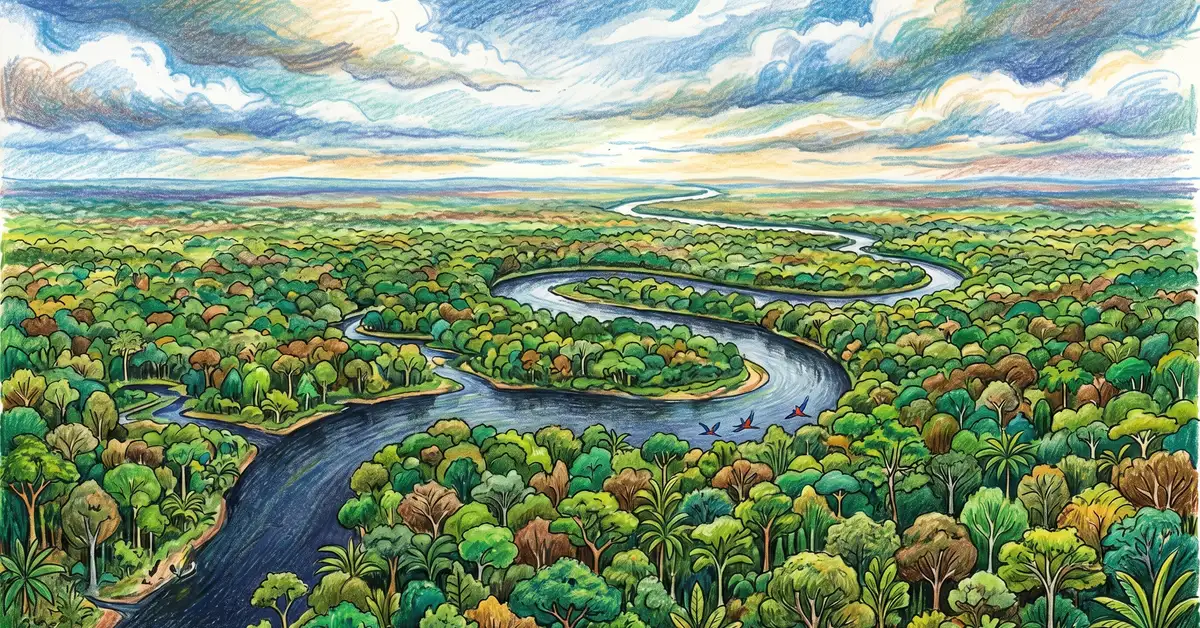
What Does It Take to Stop Deforestation?
Stopping deforestation requires coordinated action across government policy, corporate supply chains, community stewardship, and individual consumer choices — no single intervention works alone. Global deforestation has slowed from 17.6 million hectares per year in the 1990s to 10.9 million hectares annually between 2015 and 2025. Net forest loss, after regrowth and planting, was 4.12 million hectares a year (FAO Global Forest Resources Assessment 2025). Tropical primary forest loss fell 36 per cent in 2025 to 4.3 million hectares (WRI), yet that is still about eleven football pitches every minute. The evidence shows that where governments enforce environmental law, where corporations invest in transparent supply chains, and where communities hold stewardship rights over their forests, deforestation rates fall dramatically. This guide examines the practical solutions that are working right now — from UK legislation and EU regulation to Indigenous land management and consumer purchasing power — and what each of us can do to accelerate progress.
If you're looking for a broader overview of what deforestation is and why it matters, our guide to deforestation causes, impacts and solutions covers the fundamentals. This article focuses specifically on the interventions that demonstrably reduce forest loss.
Key Takeaway
Protecting existing forests is substantially more effective than planting new ones. Old-growth forests store vastly more carbon, harbour irreplaceable biodiversity, and provide ecosystem services that planted forests take decades to develop. The most cost-effective action is preventing forest loss first, then restoring degraded land with diverse native species — not monoculture plantations.
10.9M ha
Gross Deforestation
Per year, 2015–2025 (net loss 4.12M ha)
36%
Tropical Loss Decline
Tropical primary forest loss, 2025 vs 2024 (4.3M ha)
3,335 km²
Brazilian Amazon Clearing
PRODES, August 2025 to July 2026
Sources: FAO Global Forest Resources Assessment 2025, World Resources Institute 2025, NGO Forest Coalition 2026
How Are Governments Using Legislation to Stop Deforestation?
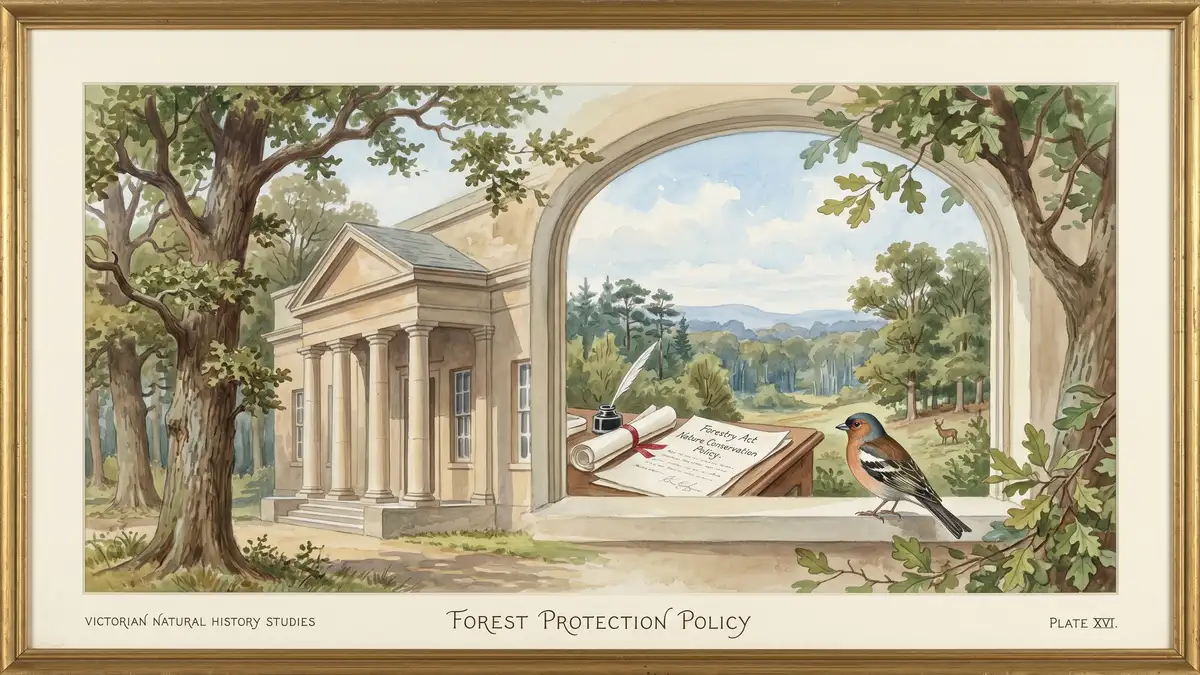
Government legislation represents the most powerful lever for stopping deforestation at scale, and two landmark pieces of law are reshaping global forest protection. The UK Environment Act 2021 includes Schedule 17, which mandates due diligence requirements for forest-risk commodities including beef, soy, palm oil, and wood products. However, this provision is not yet in force: the regulations needed to activate it had still not been made as of November 2026, and are now expected in 2027.
The EU Deforestation Regulation (EUDR) has moved further, requiring operators placing covered commodities on the EU market to demonstrate deforestation-free sourcing through supply chain traceability to specific land plots. The regulation covers cattle, cocoa, coffee, palm oil, rubber, soy, wood, and derived products including leather, chocolate, and furniture. The rules apply to large and medium-sized operators from 30 December 2026 and to micro and small operators from 30 June 2027.
Some major UK supermarkets have publicly called on the government to implement Schedule 17, signalling both compliance readiness and genuine business interest in deforestation-free supply chains. The regulatory gap between the UK and EU creates perverse incentives — non-compliant products can enter the UK market below EUDR-compliant prices, undermining companies that have invested in responsible sourcing.
Meanwhile, the UK has set ambitious domestic targets. England aims to increase tree canopy and woodland cover to 16.5 per cent of all land by 2050, with 5,250 hectares of new woodland created in England in 2025/26 (Forest Research). To understand how deforestation connects to broader environmental challenges, see our guide to climate change.
What Role Do Corporate Supply Chains Play?
Corporate supply chains connect consumer demand in developed nations directly to forest clearance in tropical regions. Agriculture is the main driver of tropical forest loss, led by cattle ranching, soy, palm oil, and cocoa cultivation. Stopping deforestation therefore requires transforming how companies source these commodities.
Certification schemes provide one mechanism. Forest Stewardship Council (FSC) certification has been linked to reduced degradation in tropical forests. However, FSC's impact on total deforestation remains contested — certification may relocate pressure to non-certified areas rather than eliminating it entirely.
Leading corporations have adopted zero-deforestation commitments with measurable results. Unilever achieved 97 per cent deforestation-free sourcing across palm oil, paper and board, tea, soy and cocoa in 2025, on its own definition. Yet Forest 500 analysis reveals that 14 companies (3 per cent of those assessed) backtracked on deforestation action between its 2024 and 2025 assessments.
| Intervention | Scale | Evidence of Impact | Limitation |
|---|---|---|---|
| FSC Certification | Voluntary, product-level scheme | Linked to reduced degradation in tropical forests | May relocate pressure; voluntary coverage limited |
| Corporate Commitments | Major brands (Unilever, Nestlé) | Unilever reports 97% deforestation-free volumes (2025) | 14 companies (3%) backtracked between assessments |
| Satellite Monitoring | Global real-time coverage | Enables traceability to specific land plots for EUDR compliance | Needs supplementary audits and field checks |
| Carbon Credits (REDD+) | Forest countries worldwide | Theoretical financial incentive for forest protection | Quality varies; additionality and permanence are contested |
Sources: Green Stars Project FSC Evaluation 2025, Carbon Credits 2025, Forest 500 Finance Report 2024
How Can Communities and Indigenous Peoples Protect Forests?
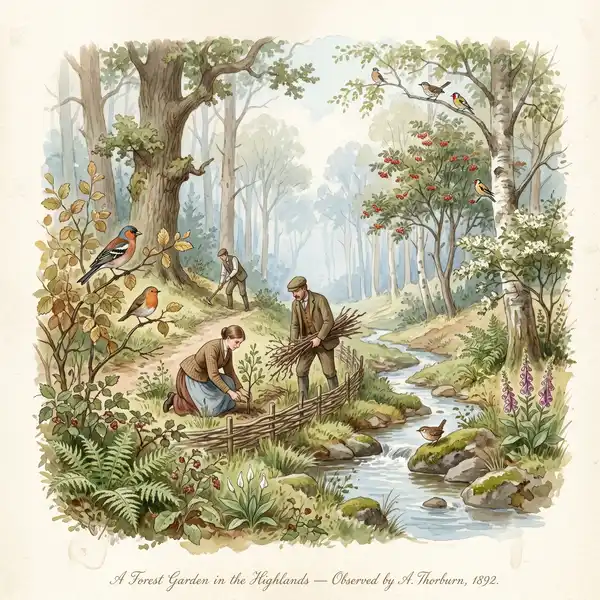
Lands managed by Indigenous Peoples consistently show significantly lower deforestation rates and store more carbon than other land management regimes. This finding has profound implications: supporting Indigenous land rights is one of the most cost-effective forest protection strategies available. Colombia recently recognised Indigenous Territorial Entities to self-govern portions of the Colombian Amazon, and the Tropical Forest Forever Facility, launched at COP30 in Belém in November 2025, is designed so that at least 20 per cent of payments go to Indigenous Peoples and local communities. It had attracted about US$7.8 billion in pledges by late October 2026 (Norway up to US$3 billion, conditional on co-financing; Brazil and Indonesia US$1 billion each; Germany €1 billion; France €500 million; the Netherlands up to US$500 million), well short of its US$25 billion sponsor-capital target, and it is not yet paying out.
Community-led restoration projects show what is possible at smaller scales.
In the UK, the Knepp Wilding project in Sussex has driven remarkable wildlife recovery over two decades — a 916 per cent increase in breeding bird abundance since the first survey in 2007. Dragonflies and damselflies increased by 871 per cent between 2005 and 2025. These results demonstrate that community-led restoration generates dramatic biodiversity recovery even within intensively managed agricultural landscapes. For more on UK conservation approaches, explore our conservation guide.
Agroforestry — integrating trees with crops or livestock — offers a market-based alternative to agricultural clearing. Combining trees with crops such as açaí and cacao can give farmers an income from land that would otherwise be cleared or left as degraded pasture.
Discover how forest loss connects to the wider biodiversity crisis in our guide to biodiversity loss and threats.
Explore Biodiversity ThreatsWhat Can Individuals Do to Help Stop Deforestation?
Individual consumers in developed nations contribute to global deforestation through purchasing decisions involving beef, soy-fed animal products, palm oil, cocoa, coffee, and paper. The UK's imported deforestation footprint is driven substantially by everyday retail purchases of these commodities. Three categories of individual action make the greatest difference.
Choose Certified Products
Look for FSC certification on wood and paper products, Rainforest Alliance or Fair Trade labels on coffee and cocoa, and RSPO certification on palm oil. FSC 100% certification provides the strongest assurance of responsible sourcing.
Reduce Beef Consumption
Cattle ranching is the single largest driver of Amazon deforestation. Global demand for beef directly connects to land-clearing decisions by Brazilian farmers. Reducing beef intake — even partially — is one of the highest-impact individual actions for forest protection.
Support Political Action
Advocate for UK government implementation of Schedule 17 of the Environment Act. Support organisations like the Woodland Trust and Rainforest Foundation that fund Indigenous-led forest protection and ancient woodland conservation.
Which Countries Have Successfully Reduced Deforestation?

Costa Rica presents the most compelling global success story. By the late 1980s, deforestation had reduced forest cover to roughly a fifth of the country. Through a government-led initiative combining a deforestation ban with Payments for Ecosystem Services (PES) — funded by a fossil fuels tax — forest cover has recovered to more than half of the country. Costa Rica's booming ecotourism sector now reinforces the economic value of intact forests, creating a self-sustaining cycle of protection.
Brazil demonstrates both the potential and fragility of policy-driven forest protection. Under President Lula da Silva, Brazilian Amazon deforestation fell to 3,335 square kilometres in the 2025–26 PRODES year (August to July), the lowest figure in the PRODES series, following the relaunch of the federal anti-deforestation plan and increased penalties for environmental crimes. However, wildfire-driven forest degradation remains elevated, and some Amazon states have passed legislation weakening environmental protections. In January 2026, the soy industry association ABIOVE also withdrew from the Amazon Soy Moratorium, a voluntary agreement not to buy soy grown on land cleared after July 2008. Progress depends on sustained political commitment.
Why Tree Planting Alone Isn't Enough
Common assumption: Massive tree-planting programmes can offset continued deforestation elsewhere.
The evidence: Planting trees in the wrong places, or in single-species blocks, can harm water supplies and wildlife. Research consistently shows that mixed-species forests outperform monocultures, which generally support more wildlife. Protecting existing forests first, then restoring with diverse native species, delivers far greater ecological and climate benefits.
How Is the UK Protecting and Expanding Its Woodlands?
UK woodland cover stands at about 14 per cent of total land area (31 March 2026) — well below the European average — with England at about 10 per cent. The government's target of 16.5 per cent by 2050 requires substantial acceleration, but recent progress is encouraging. The Forestry Commission reports that 5,250 hectares of new woodland were created in England in 2025/26.
Ancient woodland — land continuously wooded since at least 1600 — requires particular protection. These irreplaceable habitats harbour specialist species, complex soil systems, and rare organisms that planted forests cannot replicate. Wales has strengthened ancient woodland protections through enhanced planning policy. The Woodland Trust recommends a national rescue plan including increased protection priority, enhanced enforcement against illegal felling, and scaled investment in restoration.
Disease poses an emerging threat to UK forests. Ash dieback threatens a large share of the UK's ash trees, though Forest Research's Living Ash Project has identified naturally tolerant individuals that may provide genetic resources for breeding programmes. Enhanced biosecurity to prevent future pathogen introductions remains critical. For more on how healthy soils support forest ecosystems, see our soil conservation guide.
UK Woodland Carbon Code
Validated projects are predicted to sequester 13 million tonnes of CO₂ over their lifetime.
Quality Over Quantity
Scientific evidence shows mixed-species forests outgrow monocultures, store more carbon, and withstand drought and disease more effectively. UK planting must prioritise native species diversity and long-term resilience over hectare targets alone.
Sources: Forest Research Provisional Woodland Statistics 2025, Woodland Carbon Code 2024
Frequently Asked Questions
What is the most effective way to stop deforestation?
The most effective approach combines government regulation of forest-risk commodity supply chains with support for Indigenous land rights. Evidence shows that Indigenous-managed lands have significantly lower deforestation rates, whilst legislation like the EU Deforestation Regulation forces companies to trace products to specific land plots and verify deforestation-free sourcing.
Does planting trees stop deforestation?
Tree planting alone does not stop deforestation — it addresses symptoms rather than causes. Protecting existing old-growth forests provides substantially greater climate and biodiversity benefits than planting new ones. When trees are planted, diverse native species mixtures generally outperform monocultures for biodiversity. Effective forest policy prioritises preventing loss first, then restoring degraded land.
How does the UK contribute to global deforestation?
The UK contributes through importing forest-risk commodities — beef, soy, palm oil, cocoa, and wood products. UK demand for these commodities is linked to deforestation overseas. Schedule 17 of the Act would require due diligence on these imports, but the regulations needed to bring it into force have not yet been made and are now expected in 2027.
What are carbon credits and do they help stop deforestation?
Carbon credits under schemes like REDD+ pay countries to protect forests based on verified emission reductions. In theory, they create financial incentives for forest protection. In practice, the quality of credits varies widely, with persistent concerns around additionality, permanence, and double-counting.
Which country has been most successful at reversing deforestation?
Costa Rica is the most successful example, having recovered forest cover from about a fifth of the country in the late 1980s to more than half today. The government combined a deforestation ban with Payments for Ecosystem Services funded by a fossil fuels tax, paying landowners to protect and restore forests. A thriving ecotourism sector now reinforces the economic case for conservation.
How can I check whether products I buy are deforestation-free?
Look for FSC certification on wood and paper products (FSC 100% is the strongest standard), Rainforest Alliance or Fair Trade labels on coffee and cocoa, and RSPO certification on palm oil products. Check retailer sustainability reports for supply chain transparency commitments. Supporting supermarkets that have publicly called for Schedule 17 implementation helps create market pressure for deforestation-free sourcing.
Want to Learn More About Protecting Nature?
Explore our growing library of evidence-based guides on conservation, biodiversity, and the natural world. Every reader who understands these issues becomes an advocate for change.
Clwyd Probert
Founder, Pixcellence
Clwyd writes Pixcellence's evidence-led guides to UK biodiversity and climate, illustrated in the tradition of Victorian natural-history watercolour.
Sources: FAO Global Forest Resources Assessment 2025, WRI Tropical Forest Analysis 2025, NGO Forest Coalition 2026, UK Environment Act Target Delivery Plan 2025, Forest Research 2025, Vote Earth Now Costa Rica 2025
More Pixcellence guides