Updated March 2026. A Pixcellence guide to protecting Britain's wildlife and habitats. what biodiversity means
What Is Conservation and Why Does It Matter in the UK?
Conservation is the active protection and restoration of wildlife, habitats, and ecosystems UK ecosystems and habitats. In the UK, we invest over £1.07 billion in public conservation spending annually, yet species decline continues at alarming rates. At Pixcellence, we believe understanding why conservation matters is the first step toward meaningful action for our shared natural heritage.
The UK's biodiversity underpins everything we value: clean air and water, pollination, soil health, and cultural identity. Two-thirds of UK species have declined since 1994. Urgent, science-led conservation is not optional—it's essential for ecosystems and human wellbeing alike. Our Pixcellence resource library explores the importance of biodiversity and how biodiversity systems work across British habitats.
Key Takeaway
Conservation directly tackles the two-thirds decline in UK species abundance. Whether through legal protection, habitat restoration, or community action, every conservation effort restores balance to ecosystems that humans and wildlife both depend on. Pixcellence tracks the science behind these interventions so you can understand what works.
What Laws Protect Wildlife and Habitats in the UK?
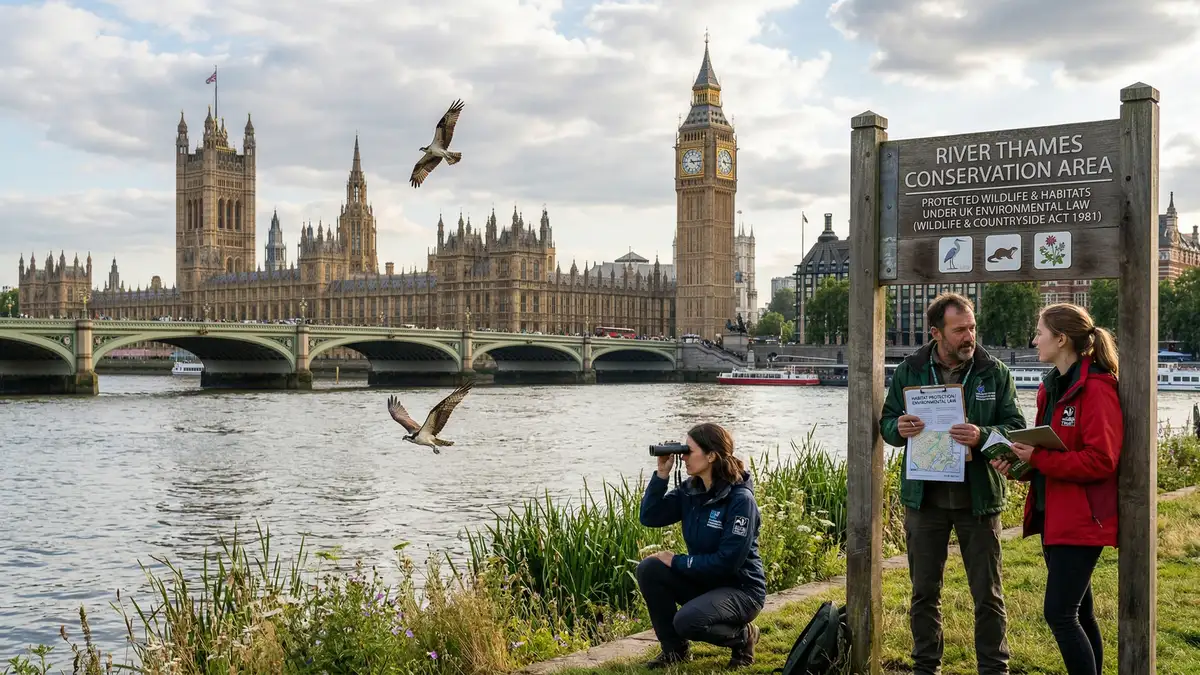
The legal foundation of UK conservation rests on four key pillars. The Environment Act 2021 represents the modern evolution of conservation law, embedding three legally binding biodiversity targets: halt species decline by 2030, create 500,000 hectares of habitat by 2042, and reduce extinction risk by 2042. The foundational Wildlife and Countryside Act 1981 (containing 17 schedules of protected species and habitats) remains central to day-to-day enforcement.
The Conservation of Habitats and Species Regulations 2017 transpose EU law protecting designated sites (SACs, SPAs, and MCZs). The Natural England and Rural Communities Act 2006 (NERC Act) imposes a biodiversity duty on public bodies to actively enhance nature. Together, these laws create a legal ecosystem where protection is mandatory, not discretionary—meaning even small-scale development must respect habitats and species.
How Much of the UK Is Currently Protected?
On paper, the UK looks well-protected: 7.8% of our land area and 49.1% of our marine environment have formal legal protection status. England alone contains over 4,100 Sites of Special Scientific Interest (SSSIs), plus 256 Special Areas of Conservation (SACs), 88 Special Protection Areas (SPAs), and 92 Marine Conservation Zones (MCZs). Yet only 62% of SSSIs are in favourable or recovering condition—the rest face management backlogs.
The paradox is stark: legal designation does not equal effective management. Many protected sites lack funding for habitat work. This reality underpins why Pixcellence advocates for understanding the difference between "protected" and "actively managed." Explore biodiversity hotspots to learn where protection is working strongest.
| Designation Type | England Count | Coverage / Status |
|---|---|---|
| Sites of Special Scientific Interest (SSSI) | 4,100+ | 62% favourable/recovering |
| Special Areas of Conservation (SAC) | 256 | Habitat protection (EU law) |
| Special Protection Areas (SPA) | 88 | Bird species protection (EU law) |
| Marine Conservation Zones (MCZ) | 92 | Marine biodiversity (Seas & marine life) |
What Is the 30x30 Target and How Close Is the UK?
The 30x30 target—protect 30% of land and sea by 2030 for nature recovery—is the international conservation commitment Britain signed at COP15 (Montreal 2022). Yet only 5.98% of the UK is "effectively protected for nature" under strict management. This gap between formal designation and effective conservation remains the central challenge Pixcellence seeks to illuminate.
Scotland leads with 12.63% effective protection; England trails at 2.83%, Wales at 2.4%, and Northern Ireland at 4%. Public support for 30x30 is overwhelming across all regions. Meeting the target by 2030 requires both expanding protected area networks and dramatically improving management of existing sites. This is why understanding why biodiversity conservation matters is so critical—the political will must follow scientific urgency.
| UK Nation | Effective Protection % | Progress to 30x30 |
|---|---|---|
| Scotland | 12.63% | On track (ahead of most) |
| Northern Ireland | 4.0% | Needs acceleration |
| Wales | 2.4% | Critical gap (7.6x expansion needed) |
| England | 2.83% | Critical gap (10.6x expansion needed) |
Which UK Species Have Been Saved by Conservation?
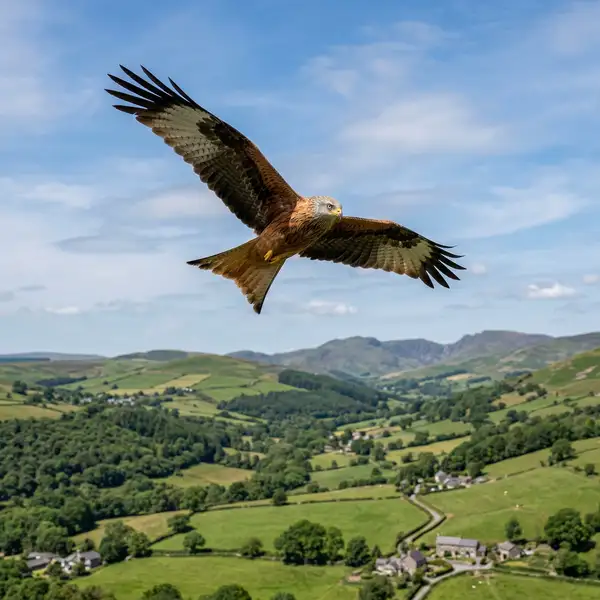
Conservation's greatest victories prove that species recovery is possible. These successes inspire Pixcellence's mission: showcase the science and strategies that actually work. Red kites epitomise this triumph: extinct in England by 1989, now numbering over 2,000 pairs thanks to the Red Kite Reintroduction Programme—a 2,464% increase. Ospreys rebounded from zero breeding pairs in the 1970s to 240+ pairs today, a 1,032% range expansion.
The large blue butterfly, believed entirely extinct in 1979, was reintroduced and now thrives in 300+ sites. Beavers returned to England for the first time in 400 years when wild populations were released in 2025. Otters recovered from near-extinction (1950s) to 10,000–11,000 individuals. Bitterns bred nowhere in Britain (1994) and now recover in reedbed reserves. These are not flukes—they're proof that legal protection, habitat work, and species-focused programmes drive real recovery.
Three Species Saved by UK Conservation
Red Kite
Extinct in England by 1989. Reintroduction programme begun 1989. Now 2,464% increase—over 2,000 pairs nationwide. Symbol of conservation success.
Large Blue Butterfly
Declared extinct in Britain in 1979. Reintroduced 1982 from Swedish populations. Now established in 300+ sites across England and Wales.
Beaver
Hunted to extinction 400+ years ago. First wild populations released in England 2025. Ecosystem engineers restoring wetland habitats.
These victories must inspire urgency: 66% of priority species still decline. Pixcellence documents the full spectrum of conservation science—both wins and ongoing battles. See biodiversity loss explained to understand the scale of what remains undone.
Take Action Now: Join a local Wildlife Trust, participate in citizen science (Big Garden Birdwatch, Butterfly Count), or support species recovery projects. Every contribution strengthens the evidence base that conservation works—and Pixcellence celebrates those efforts.
What Is Biodiversity Net Gain and How Does It Work?
Biodiversity Net Gain (BNG) became mandatory for all development in England in February 2024. Every qualifying project must deliver a minimum 10% net gain in biodiversity units—an economic mechanism that prices nature into development decisions. Instead of "minimize harm," BNG demands "improve nature." This paradigm shift embeds conservation into planning law, making it a legal requirement, not an afterthought.
Developers can achieve BNG through three methods: on-site habitat creation (restoring woodland, wetland, or grassland on the development footprint); off-site contributions (funding conservation elsewhere); or purchasing credits from licensed habitat banks (33 now operational across the UK). By January 2026, 21,000 acres had been allocated to BNG projects. Private investment has surged from £200 million (2021) to £324.7 million (2025), with projections of a £3 billion market by 2035.
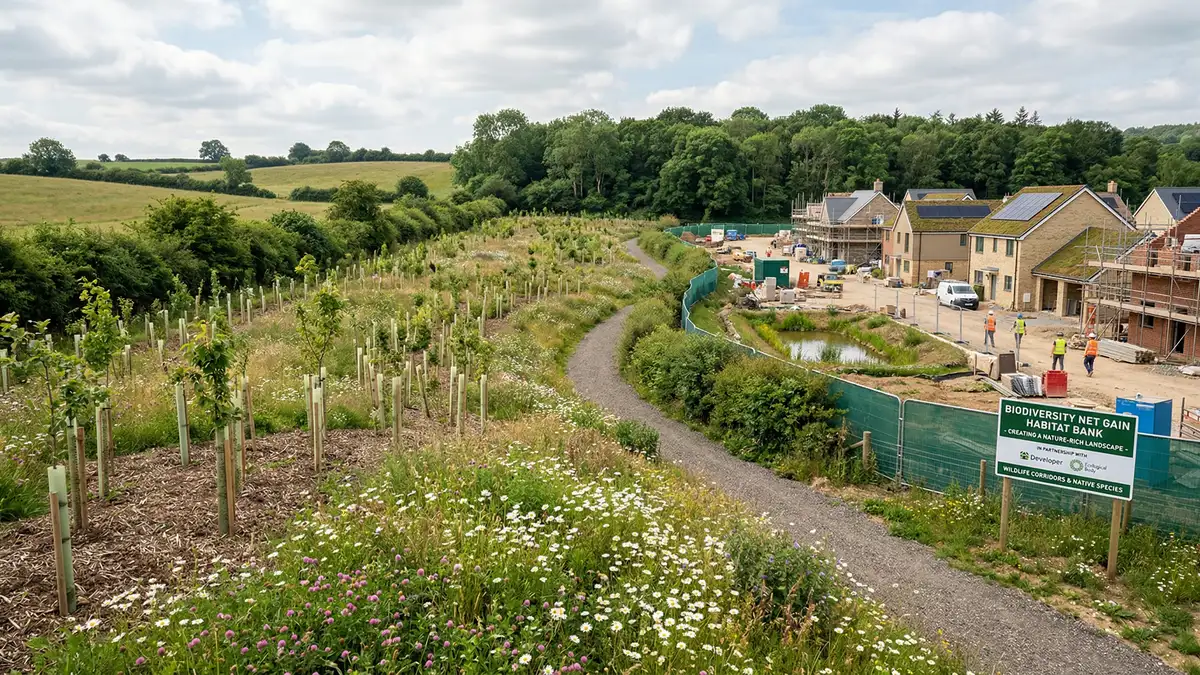
BNG's success depends on rigorous monitoring and transparent accounting. Pixcellence tracks BNG implementation because it represents a fundamental shift: conservation is no longer a cost—it's an integrated business requirement. Explore how BNG works in detail to understand its mechanisms and impacts.
How Are Local Communities Driving Conservation?
Top-down legislation matters, but on-the-ground conservation happens through communities. Local Nature Recovery Strategies (LNRs)—collaborative, locally-led plans for habitat restoration—are transforming how Britain plans for nature. By January 2026, 26 of 48 LNRs had been published, each mapping habitat recovery priorities, species targets, and community actions. These strategies empower local decision-making over conservation priorities, a democratic shift from centralised policy.
Citizen science underpins local conservation. The Big Garden Birdwatch (run by RSPB, engaging 300,000+ households annually) provides crucial population monitoring. Butterfly Count monitors butterfly abundance. FreshWater Watch tracks freshwater health. These programmes generate the data that drives conservation policy—volunteers are field scientists. The Species Survival Fund (£25 million, 20 projects, 11,493 people engaged) directly supports species-focused conservation through community partnerships.
The Wildlife Trusts network—46 independent trusts managing 2,300 nature reserves—represents the backbone of British conservation delivery. These organisations combine land management expertise, scientific research, and community engagement. Pixcellence celebrates their work because it proves that conservation thrives when communities own the mission.
Key Takeaway
Local Nature Recovery Strategies, citizen science, and Wildlife Trust reserves show that conservation at scale requires community leadership. When people understand the stakes—declining species, fragmented habitats, climate impacts—they mobilise. Pixcellence exists to strengthen that movement by providing the evidence and context communities need to advocate for nature.
What Role Does Rewilding Play in UK Conservation rewilding in the UK and beyond?
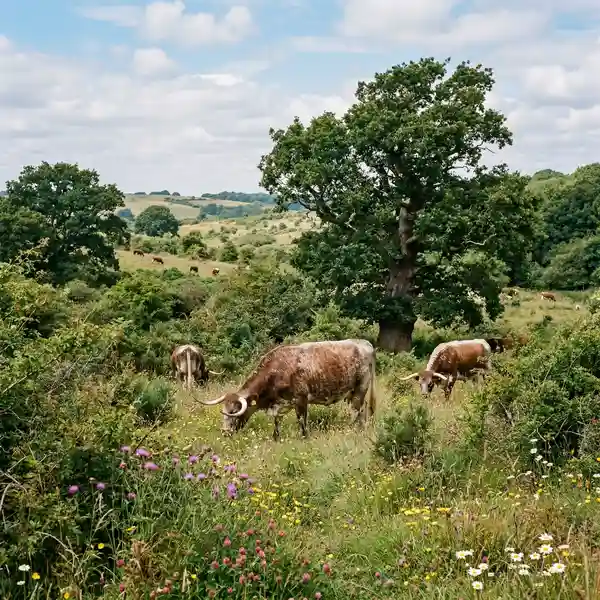
Rewilding—restoring ecosystems to natural processes by removing human control—unlocks explosive biodiversity recovery. Knepp Estate in West Sussex demonstrates this power: after transitioning from intensive agriculture to "passive rewilding" (removing sheep, letting natural succession occur), breeding bird abundance increased 916%, dragonfly abundance rose 871%, and nightingale populations grew 511%. In one count, 283 purple emperor butterflies appeared in a single day—species that were virtually absent under conventional farming.
Turtle doves increased 600% at Knepp, recovering from near-extinction trends. Mar Lodge Estate in the Scottish Highlands documented moth biodiversity recovery in just 10–20 years through woodland restoration and reduced management intensity. LiDAR monitoring (laser-based habitat surveying) now allows rewilding projects to track habitat structure, vegetation density, and heterogeneity at landscape scale—turning subjective assessments into quantifiable metrics.
Rewilding is not abandonment; it's design-led restoration. Projects balance active intervention (removing invasive species, restoring water tables) with space for natural processes (seed dispersal, succession, predator–prey dynamics). As climate change reshapes UK ecosystems, rewilding builds adaptive capacity. Pixcellence tracks rewilding outcomes because they prove that moving beyond industrial land use unlocks nature recovery at scale.
What Are the Biggest Threats to UK Conservation?
Despite conservation wins, systemic threats accelerate species decline. Climate change is the overarching driver: 70%+ of UK species face habitat unsuitability at 4°C warming. Invasive species cost £4 billion annually in damage and control—Asian hornets decimate honeybees, grey squirrels exclude native reds, Japanese knotweed suffocates native vegetation. Agricultural intensification (monocultures, pesticide use, drainage) destroys invertebrate populations and breeding habitat. Development pressure fragments remaining wild spaces.
A critical data gap reveals the scale of the challenge: only 38,877 hectares have been restored since January 2023. To stay on track with the 30x30 target and Environment Act biodiversity targets, the UK needs 56,000 hectares annually—a 44% shortfall. Funding gaps, skills shortages, and competing land-use demands constrain conservation delivery. Without acceleration, Britain's biodiversity targets will fail.
⚠ Critical Warning
The UK faces a funding and delivery crisis. Current conservation spending cannot close the gap to 30x30 or meet Environment Act targets. Habitat restoration is falling 44% short of annual need. Without urgent policy and funding reform, legal conservation commitments will be missed by 2030. Pixcellence advocates for transparency on this deficit—communities must know what is being promised and what is actually being delivered.
Explore threats to UK biodiversity in detail to understand the human impacts driving decline and the interventions most likely to succeed.
How Can You Get Involved in UK Conservation?
Individual and collective action drives conservation. Here are four pathways to meaningful involvement, each grounded in how real change happens across British conservation.
Participate in Big Garden Birdwatch, Butterfly Count, FreshWater Watch, or iRecord. Your observations feed conservation research and policy. No expertise required—just care and curiosity about wildlife.
Join, donate, or volunteer with one of 46 Wildlife Trusts. These organisations manage 2,300 reserves and drive habitat restoration. Membership funds on-the-ground conservation and community engagement.
Plant native trees, shrubs, and wildflowers. Leave wild corners (piles of wood, stone). Avoid pesticides. Gardens create connectivity between fragmented habitats and provide crucial feeding and breeding space.
Engage with Local Nature Recovery Strategies, planning consultations, and local council wildlife policies. Demand protection for local green spaces. Vote for candidates prioritising conservation. Political pressure drives policy change.
Learn more about practical biodiversity protection strategies you can implement today.
Frequently Asked Questions
What is the most important conservation law in the UK?
The Environment Act 2021 is the modern foundation, embedding three legally binding biodiversity targets. But the Wildlife and Countryside Act 1981 remains the day-to-day enforcement tool—together, they form Britain's legal conservation framework.
How much of the UK is protected for nature?
7.8% of land and 49.1% of marine areas have formal protection status. But only 5.98% is "effectively protected" under active management—a critical gap. Legal designation without funding and management does not translate to species recovery.
What is Biodiversity Net Gain and when did it become mandatory?
Biodiversity Net Gain requires all new development to deliver a minimum 10% net gain in biodiversity units. It became mandatory in England in February 2024. Developers can achieve this through on-site habitat creation, off-site contributions, or purchasing credits from habitat banks.
Which species have been saved from extinction in the UK?
Red kites (extinct in England 1989, now 2,000+ pairs), large blue butterflies (extinct 1979, reintroduced, now 300+ sites), ospreys (zero pairs 1970s, now 240+), beavers (first wild releases 2025), and bitterns all demonstrate that species recovery is possible with focused legal protection and habitat work.
What are Local Nature Recovery Strategies and how do they work?
LNRs are locally-led collaborative plans for habitat restoration, species recovery, and community engagement. Each of 48 LNRs maps habitat priorities, species targets, and funding needs. By January 2026, 26 had been published. They represent a shift from top-down conservation to community-led planning.
How can I help conservation in the UK?
Join citizen science programmes (Big Garden Birdwatch, Butterfly Count), support your local Wildlife Trust, create a wildlife garden, and advocate for nature in planning consultations. Every action contributes to the data and political will driving conservation policy.
What is the 30x30 target and when is it due?
30x30 means protecting 30% of land and sea for nature by 2030. The UK committed to this at COP15 (Montreal 2022). Currently only 5.98% is effectively protected—England at 2.83%, Wales at 2.4%. Achieving 30x30 requires both expanding protected areas and dramatically improving management of existing sites.
How much does the UK spend on conservation?
Public spending: £1.07 billion annually. NGO spending (Wildlife Trusts, RSPB, etc.): approximately £452 million. Private investment in BNG has risen from £200 million (2021) to £324.7 million (2025). Total spending is rising, but remains insufficient to meet 30x30 and Environment Act targets—a 44% annual shortfall in habitat restoration.
Why This Matters: The Pixcellence Perspective
Conservation in 2026 sits at an inflection point. We have proven that species can recover: red kites, ospreys, and beavers are back. We have laws requiring biodiversity gains: the Environment Act 2021 and BNG embed nature into planning. We have community mobilisation: 300,000 citizen scientists, 46 Wildlife Trusts, local strategies published across Britain. Yet species decline continues. Habitats fragment. Funding gaps widen.
Pixcellence exists because understanding conservation science—what works, what's failing, why—is the foundation for action. We document the full picture: wins and gaps, innovation and resistance, science and policy. We believe that informed communities drive informed decisions. When you understand the scale of what's at stake (67% species decline), the clarity of what's possible (2,464% red kite recovery), and the urgency of what's needed (56,000 hectares restoration annually), you're equipped to act.
Conservation is not a spectator sport. Every person—through citizen science, wildlife gardening, community advocacy, or professional work—shapes whether Britain's biodiversity future is recovery or collapse. Pixcellence celebrates that power and provides the knowledge to exercise it wisely.
Take the Next Step
Explore Pixcellence's full conservation resource library. From Wildlife Trusts to the State of Nature report, from Knepp's rewilding data to Rewilding Britain's network, the evidence base for recovery is solid. Now it's your turn to act.
Major CTA: Join the Conservation Movement
Conservation at scale requires millions of informed people taking action. Pixcellence connects you to citizen science, Wildlife Trusts, rewilding projects, and policy campaigns. Whether you have 5 minutes or a lifetime, there's a role for you.
Find Your Local Wildlife Trust → | Explore BNG Opportunities → | Read the State of Nature Report →
About the Author
Pixcellence Conservation Editor
Pixcellence is a non-commercial conservation and biodiversity resource site built by conservationists, scientists, and community advocates. Our mission is to provide accurate, current, and actionable information on UK wildlife conservation. We track legislation, species recovery, habitat restoration, and community initiatives to help citizens understand and protect British nature. This guide is updated quarterly as new data becomes available.
Sources & Further Reading
This guide draws on: Environment Act 2021 | DEFRA Biodiversity Indicators | IUCN Red List | State of Nature 2023 | RSPB Research | Knepp Rewilding Project | Rewilding Britain | BNG Statutory Guidance | Wildlife Trusts Network. All data current to March 2026. Updated quarterly.