Key Takeaway
The UK has 59 regularly occurring butterfly species (57 resident and 2 regular migrants), and 80% of them have declined in abundance, distribution or both since the 1970s. Habitat loss is the main driver: Plantlife estimates that about 97% of wildflower meadows have been lost since the 1930s. Targeted conservation work by Butterfly Conservation and volunteers has delivered real successes, including the reintroduction of the Large Blue from extinction, proving that decline is not inevitable when evidence-based action is taken.
What Is Butterfly Conservation and Why Does It Matter in the UK?
Butterfly conservation is the protection and restoration of butterfly populations and the habitats they depend on. In the UK, this work has become urgent. The State of the UK's Butterflies 2022 found that 80% of species have declined in abundance, distribution or both since the 1970s, and the 2022 GB Red List classes 24 of the 58 species still found in Great Britain as threatened. The UK index of butterfly abundance fell by 18% between 1976 and 2024, and habitat specialists fell by 39% (JNCC).
The UK has 59 regularly occurring butterfly species: 57 residents and two regular migrants, the Painted Lady and Clouded Yellow. These species are not simply beautiful — they are sensitive indicators of environmental health. When butterfly populations fall, it signals wider problems across entire ecosystems. Insect pollinators contribute over £600 million per year to the UK economy according to UKRI research, and artificially replacing insect pollination would cost approximately £1.9 billion — making conservation both an ecological and economic necessity.
59
Regular UK Species
57 resident, 2 migrants
80%
Species Declined
Since the 1970s (2022 report)
97%
Meadows Lost
Wildflower meadows since the 1930s (Plantlife)
£600m+
Annual Economic Value
UK insect pollinators (UKRI)
Sources: JNCC Official Statistics (2026 release), State of the UK's Butterflies 2022, Plantlife, WWF UK Grasslands Report, UKRI Pollinator Research
How Have UK Butterfly Populations Changed Over Time?
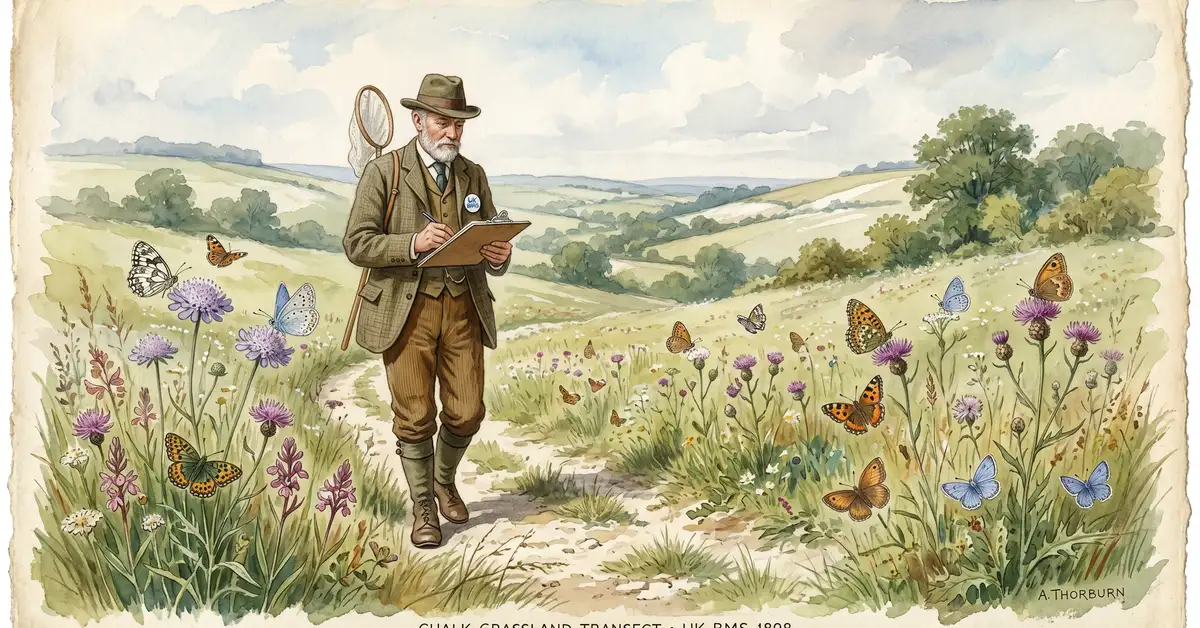
The UK Butterfly Monitoring Scheme (UKBMS), established in 1976, is one of the world's longest-running invertebrate monitoring programmes. Over 50 years, volunteer surveyors have walked more than 950,000 miles at more than 7,000 sites and recorded over 41 million individual butterflies — providing an unparalleled dataset for tracking population trends.
The picture this data reveals is sobering. In the 2026 official statistics, covering 1976 to 2025, 20 of 58 monitored species show a significant long-term decline in abundance and 18 show a significant increase. Counting the direction of change alone, JNCC's 50-year summary puts 33 species down and 25 up. England fares worse than Scotland: 22 of 55 monitored species show a significant long-term decline in England, against 3 of 27 in Scotland. JNCC links long-term declines to the loss and fragmentation of habitats through farming, forestry and development, while a warming climate is helping some southern species spread north.
In the UKBMS, 2024 was the fourth worst year since monitoring began, and 51 of 58 monitored species fell compared with 2023. The Big Butterfly Count that summer recorded an average of just 7 butterflies per count, its lowest ever, and Butterfly Conservation declared a national butterfly emergency. In 2025, after the sunniest spring and hottest summer on record, the count rose to 10.3 per count, which Butterfly Conservation called only broadly average by modern standards. The UKBMS agreed: 2025 ranked 20th of 50 years, and no species had its best year. The hot, dry summer of 2026 gave the second-best Big Butterfly Count in its 16 years, but Butterfly Conservation warns that drought-stressed caterpillars could mean a population crash in 2027.
Habitat specialists — species dependent on particular plant communities or management regimes — have suffered most. The UKBMS 50-year results show the Pearl-bordered Fritillary down 70% since 1976 and the White-letter Hairstreak, whose caterpillars feed only on elm, down 80%. Even a once-common garden species, the Small Tortoiseshell, has fallen by 87% since 1976. Some species have done well: the Red Admiral is up 330%, and the Black Hairstreak is up 844% since 1995 after decades of targeted conservation work.
What Are the Main Threats to UK Butterflies?
Four interconnected pressures drive butterfly decline across the UK, each requiring different conservation responses. Understanding these threats is essential for anyone interested in protecting biodiversity more broadly.
| Threat | Impact on Butterflies | Scale in the UK |
|---|---|---|
| Habitat loss | Eliminates breeding sites, nectar sources, and larval food plants; fragments populations into isolated remnants | About 97% of wildflower meadows lost since the 1930s (Plantlife estimate) |
| Agricultural intensification | Insecticides can kill caterpillars and adults; herbicides remove larval food plants; fertilisers favour vigorous grasses over wildflowers | About 70% of UK land is farmland; JNCC notes that herbicide use has a direct impact on butterfly abundance |
| Climate change | Can cause timing mismatches: spring species are emerging progressively earlier and may fly before their food sources are ready | Species ranges shifting northward; southern species are increasingly found further north (JNCC) |
| Urbanisation | Directly eliminates habitat; creates movement barriers; light pollution disrupts circadian rhythms and behaviour | Continued suburban expansion; light pollution increasingly recognised as a driver of nocturnal insect decline |
Sources: JNCC 2025, Butterfly Conservation Europe, WWF UK Grasslands
Conservation Warning
The threat: Species-rich wildflower meadows are among the most biodiverse habitats in the British Isles, and Plantlife estimates that about 97% have been lost since the 1930s.
What this means: Without flower-rich grassland, specialist butterflies like the Marsh Fritillary and Adonis Blue lose their breeding grounds entirely. Restoring even small patches of meadow habitat can make a measurable difference to local butterfly populations.
Which Conservation Successes Prove Butterfly Decline Can Be Reversed?
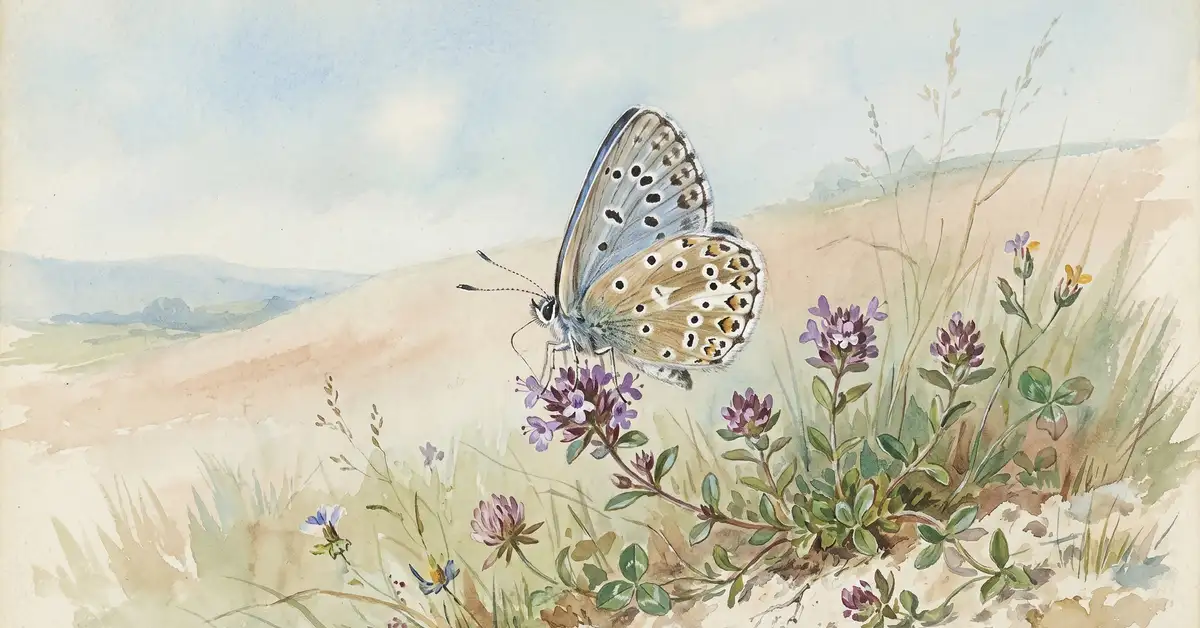
The most powerful argument for butterfly conservation is that it works. Targeted intervention has brought species back from the brink — and in one case, back from complete extinction in Britain.
The Large Blue (Phengaris arion) was declared extinct in Britain in 1979 after populations collapsed through habitat loss and the decline of the red ant (Myrmica sabuleti) whose nests the caterpillars depend on. Reintroductions using butterflies from continental Europe began in the 1980s on carefully grazed grassland. The Large Blue has now been reintroduced at more than 11 sites, with more than 10,000 adults on reserves in Gloucestershire and Somerset, and JNCC reports its numbers up 1,866% since 1983.
The Chequered Skipper, extinct in England since 1976, was reintroduced to Rockingham Forest, Northamptonshire, in 2018 using butterflies from Belgium, which share the same caterpillar food plants as the English woods; the first English-born adult in over 40 years was seen in 2019. The Heath Fritillary increased in abundance by 236% across the UK in 2025, a rise JNCC attributes to Butterfly Conservation's habitat work. And on heathland, the Silver-studded Blue has bucked the decline among specialists thanks to intensive conservation effort.
Explore more of our conservation guides and share them with your community.
Browse All GuidesHow Does Butterfly Conservation Work in Practice?
Butterfly Conservation, the UK charity dedicated to butterflies and moths, coordinates a nationwide programme of research, habitat restoration, and citizen science. Its 2021–2026 strategy aims to halve the number of the UK's threatened butterfly and moth species and improve the condition of 100 of the country's most important landscapes for these insects.
The UK Butterfly Monitoring Scheme provides the scientific backbone. The UKBMS completed its 50th survey season in 2025 and now monitors over 3,000 sites a year, mostly through weekly transect walks, generating official statistics published by the Joint Nature Conservation Committee. This data enables conservationists to identify which species need help, which habitats are most important, and whether interventions are working.
The Big Butterfly Count — which Butterfly Conservation describes as the world's largest butterfly survey — drew 101,565 participants in 2026. It runs for about three weeks each summer and asks for just 15 minutes of counting in any sunny outdoor space; the 2027 count runs from 9 July to 1 August. While the count provides valuable population data, its broader impact lies in connecting people with nature and building public understanding of why biodiversity loss matters.
In September 2025, Butterfly Conservation co-led the Declaration on UK Insect Declines alongside Buglife and the Bumblebee Conservation Trust, supported by more than 50 signatories. The declaration calls for legally enforced reductions in pesticide use, restoration of insect-rich habitats across farmland and urban areas, and increased investment in ecological monitoring.
What Legal Protections Do UK Butterflies Have?
The Wildlife and Countryside Act 1981 provides the primary legal framework for butterfly protection in England, Scotland, and Wales. Butterflies listed on Schedule 5 receive different levels of protection: a few, such as the Large Blue, are fully protected against killing, taking and disturbance, while most listed species, such as the Chequered Skipper, are protected against sale only. Northern Ireland has its own law, the Wildlife (Northern Ireland) Order 1985.
Beyond species-level protection, the Natural Environment and Rural Communities Act 2006 (Section 41) lists species of principal importance for conservation in England, including the Large Blue. Progress for these priority species is tracked through official distribution and abundance indicators.
The Biodiversity Net Gain requirement, introduced under the Environment Act 2021 and effective from February 2024, mandates that new developments in England deliver a measurable 10% net gain in biodiversity, secured for 30 years. This represents a shift from preventing habitat loss to actively requiring habitat improvement as a condition of planning permission.
Government investment is also scaling up. In April 2026, the UK government announced its largest ever investment in threatened species recovery: £60 million over three years for the Species Recovery Programme, plus £30 million for species recovery on the national forest estate in England. Natural England's programme has helped protect over 1,000 species and prevented the national extinction of at least 35 species over the past three decades.
How Can You Help Butterflies in Your Garden?
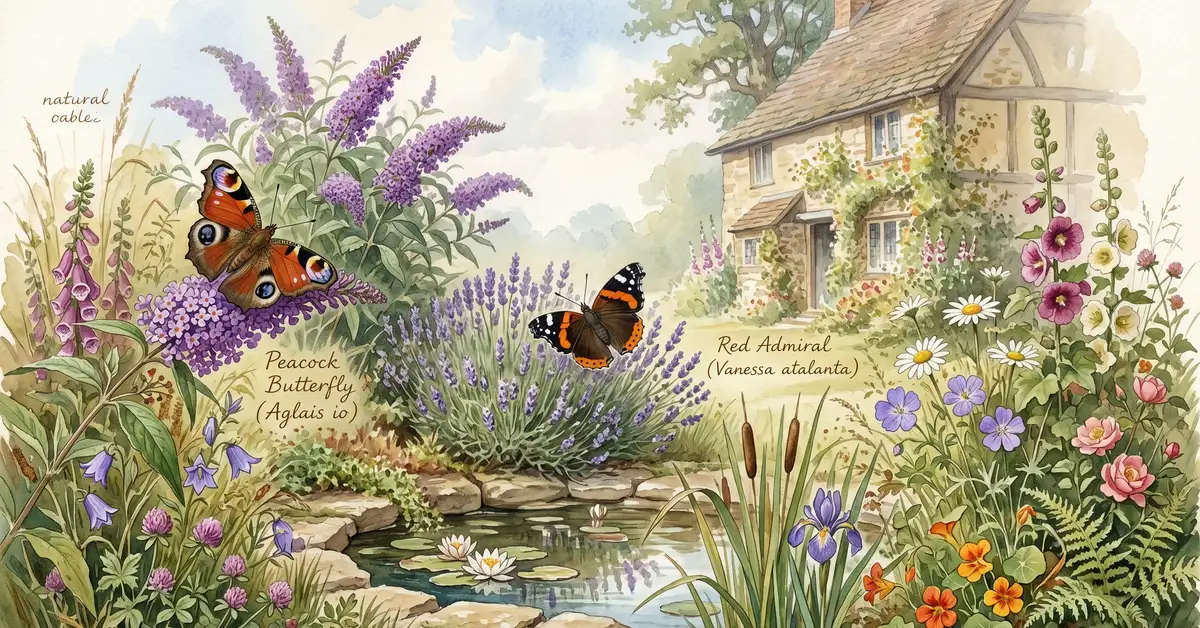
Gardens collectively cover a substantial area of the UK and can provide genuine value for butterfly populations when managed with wildlife in mind. The key is providing both nectar for adult butterflies and food plants for caterpillars — two quite different requirements.
For nectar, the Royal Horticultural Society's expanded 2025 list includes over 10,000 evidence-based plant recommendations. Native wildflowers are particularly effective: common knapweed attracts meadow browns and common blues from mid-summer onwards; viper's bugloss provides nectar-packed flowers that draw an abundance of butterflies; and ox-eye daisies attract multiple pollinator species with flowers that remain open well into the evening.
For caterpillars, many butterfly species depend on specific host plants. Common Blues need bird's-foot trefoil or white clover. Green-veined Whites use garlic mustard and cuckooflower. Brimstones depend on buckthorn or alder buckthorn. Providing these plants alongside nectar sources supports the entire butterfly lifecycle.
One of the most useful changes is to stop using pesticides, as the RHS also advises. Systemic insecticides are taken up into the whole plant, so they can harm insects that feed on its leaves, pollen or nectar. Beyond pesticides, simple measures make a real difference: mow less often to allow lawn wildflowers to bloom, create a small pond with shallow edges for drinking, and choose open single-petalled flowers over complex double blooms that insects find harder to access.
Stop Using Pesticides
Eliminate synthetic pesticides and herbicides from your garden. Use organic methods to manage pests — Butterfly Conservation offers practical alternatives for common garden problems.
Plant Native Wildflowers
Grow a mix of nectar-rich flowers and caterpillar host plants. Common knapweed, viper's bugloss, bird's-foot trefoil, and garlic mustard are excellent choices for UK gardens.
Mow Less, Leave More
Reduce mowing frequency to let lawn wildflowers bloom. Even leaving patches of longer grass provides shelter for overwintering caterpillars and pupae.
Join the Big Butterfly Count
Spend 15 minutes counting butterflies each summer (9 July – 1 August in 2027). Your records contribute to real scientific data used to track population trends and guide conservation policy.
Record What You See
Use the iRecord app or iNaturalist to submit butterfly sightings year-round. Every observation contributes to the national biological records database and helps identify species distribution changes.
Why Do Hedgerows and Woodlands Matter for Butterflies?
Research from the University of Oxford and Butterfly Conservation, published in 2025, demonstrated that hedgerows and small woodlands have a significant positive effect on butterfly populations in agricultural landscapes. The study found that having more hedgerows and trees in the landscape increased numbers of Meadow Brown, Gatekeeper, Speckled Wood, Ringlet, and Comma butterflies. These features were especially important in more arable landscapes where habitat diversity is lowest.
The study also found that areas of ancient woodland were positively associated with Speckled Wood and Ringlet populations, and that the relatively lower numbers of butterflies on intensively managed grassland compared to arable land was striking — given that improved grassland covers over a quarter of UK land area. With 70% of the UK's land being farmland, the researchers emphasised that farmers and landowners play a vital role in butterfly recovery through protecting and restoring hedgerows and trees.
Agri-environment schemes, including England's Sustainable Farming Incentive, have paid farmers to manage hedgerows and sow wildflowers, and the government has committed £11.8 billion to nature-friendly farming over this Parliament. Understanding the relationship between UK habitats and the species they support is essential for effective conservation planning.
What Does the Future Hold for UK Butterfly Conservation?
The outlook combines genuine grounds for hope with urgent warnings. On the positive side, the UK government's £60 million Species Recovery Programme investment, the success of targeted reintroduction programmes, and the growing scientific evidence base all support optimism that butterfly decline can be reversed where resources are committed.
But the broader trajectory remains alarming. The Buglife Bugs Matter survey found that flying insects sampled on vehicle number plates fell by 63% between 2021 and 2024. The BeeWalk monitoring scheme recorded 2024 as the worst year for bumblebees since records began, with numbers declining by 22.5% compared to the 2010–2023 average. The Natural History Museum projects that in the least sustainable scenario, seven butterfly species, 31 birds and 196 plants could be lost from Great Britain by 2080, with the Large Heath and Mountain Ringlet among the butterflies at risk.
As Butterfly Conservation's chief executive Julie Williams said when the Declaration on UK Insect Declines was issued: "Until we take action to improve the health of our environment by restoring habitat and reducing pesticide use, we will never see a great recovery in our insect population." The evidence is clear that conservation interventions work — the challenge is scaling them from individual sites to the entire landscape through changes in agricultural policy, pesticide regulation, and land management practice. Every contribution matters, from planting wildflowers in a window box to supporting landscape-scale habitat restoration. Understanding the ecosystems butterflies depend on — and how climate change is reshaping them — is the first step towards meaningful action.
Frequently Asked Questions
How many butterfly species are there in the UK?
The UK has 59 regularly occurring butterfly species: 57 residents and two regular migrants, the Painted Lady and Clouded Yellow. The UK Butterfly Monitoring Scheme produces population trends for 55 species in England, 32 in Wales, 27 in Scotland and 14 in Northern Ireland. Southern England, especially its chalk and limestone grassland, holds the greatest variety.
Why are butterflies declining in the UK?
The primary drivers are habitat loss (about 97% of wildflower meadows lost since the 1930s), agricultural intensification including pesticide and herbicide use, climate change causing mismatches between butterfly emergence and food plant availability, and urbanisation. The State of the UK's Butterflies 2022 found that 80% of species have declined since the 1970s, and habitat specialists have fared worst: their UK index fell by 39% between 1976 and 2024.
What is the Big Butterfly Count?
The Big Butterfly Count is the world's largest citizen science butterfly survey, run by Butterfly Conservation each summer. Participants count butterflies for 15 minutes during sunny weather and submit their sightings online or via a smartphone app. The 2027 count runs from 9 July to 1 August. In 2026, 101,565 people took part and recorded almost 1.4 million butterflies and moths.
Has any extinct butterfly been successfully reintroduced to the UK?
Yes. The Large Blue (Phengaris arion) was declared extinct in Britain in 1979 but has been reintroduced, using butterflies from continental Europe, to more than 11 sites; more than 10,000 now fly on reserves in Gloucestershire and Somerset. The work depended on understanding the species' ecology: its caterpillars live in the nests of a particular red ant. The Chequered Skipper, lost from England in 1976, was also reintroduced, to Rockingham Forest in Northamptonshire in 2018.
What plants should I grow to help butterflies?
Grow a mix of nectar plants and caterpillar host plants. For nectar: common knapweed, viper's bugloss, meadow cranesbill, ox-eye daisy, and lavender. For caterpillars: bird's-foot trefoil (Common Blue), garlic mustard (Green-veined White), buckthorn (Brimstone), and stinging nettles (Red Admiral, Peacock, Small Tortoiseshell). Choose single-petalled flowers over doubles, and eliminate synthetic pesticides from your garden.
Are any UK butterflies legally protected?
Yes. In Great Britain, the Wildlife and Countryside Act 1981 fully protects a few butterflies, such as the Large Blue, from killing, capture and disturbance, and protects most other listed species against sale. See our guide to protected species in the UK. Additional protections come through Section 41 of the Natural Environment and Rural Communities Act 2006, which lists priority species for conservation action in England. The Biodiversity Net Gain requirement (2024) requires most new developments in England to deliver a 10% net gain in biodiversity, further supporting butterfly habitat protection.
Every Person Who Understands Biodiversity Becomes an Advocate
We publish free, evidence-based guides on UK biodiversity and climate. Spotted an error or have a question? Let us know.
Sources: JNCC Official Statistics on UK Butterflies 2025, Butterfly Conservation Annual Impact Report 2024/25, UKBMS at 50, WWF UK Grasslands Report, University of Oxford Hedgerow Research 2025, Declaration on UK Insect Declines 2025, UK Government Species Recovery Programme 2026
Clwyd Probert
Founder, Pixcellence
Clwyd writes Pixcellence's evidence-led guides to UK biodiversity and climate, illustrated in the tradition of Victorian natural-history watercolour.
More Pixcellence guides