Key Takeaway
The statutory biodiversity metric is DEFRA's standardised calculation tool that measures how development affects habitats in England. Since February 2024, all major developments must deliver a minimum 10% biodiversity net gain (BNG) using this metric. After two years of mandatory implementation, over 95% of BNG is delivered on-site — far exceeding expectations — yet the policy has achieved only 13% of projected habitat targets, raising questions about whether paper compliance translates into genuine ecological recovery.
What Is the Statutory Biodiversity Metric?
The statutory biodiversity metric is a government-approved calculation tool managed by the Department for Environment, Food and Rural Affairs (DEFRA) that measures changes in biodiversity caused by development within England's planning system. The current version, DEFRA Metric 4.1, provides a standardised methodology for evaluating habitat loss and calculating required biodiversity gains, making it the quantitative foundation for all mandatory biodiversity net gain assessments.
The metric works by assessing development sites both before and after proposed construction to determine whether the required 10% net gain can be achieved. It measures biodiversity value through a habitat-based approach, examining four core quality components: distinctiveness (species richness and rarity of the habitat type), condition (ecological quality rated from poor to good), size (measured in hectares or kilometres), and strategic significance (local importance based on location and conservation priorities). These components are multiplied together to produce biodiversity units — the standard currency for measuring net gain throughout the planning process.
The metric calculates three distinct types of biodiversity units in separate modules. Area habitat units cover larger habitat parcels such as grassland, woodland and wetland. Hedgerow units are calculated separately for linear features including hedgerows and treelines that function as important connectivity corridors. Watercourse units cover rivers and streams, incorporating additional quality components measuring how much the watercourse channel has been modified or constrained. Each module operates according to its own calculation formula, and the 10% net gain must be achieved within each unit type present on the baseline — you cannot compensate hedgerow loss with extra grassland creation.
10%
Minimum Net Gain
Required for all major developments
30 years
Management Period
Minimum habitat maintenance required
95%
On-Site Delivery
Far exceeding 50% expectation
£42k–£650k
Statutory Credit Price
Per unit, varying by habitat type
Sources: DEFRA Statutory Credit Prices 2025-2026, Local Government Association BNG Guidance
How Does the Environment Act 2021 Require Biodiversity Net Gain?
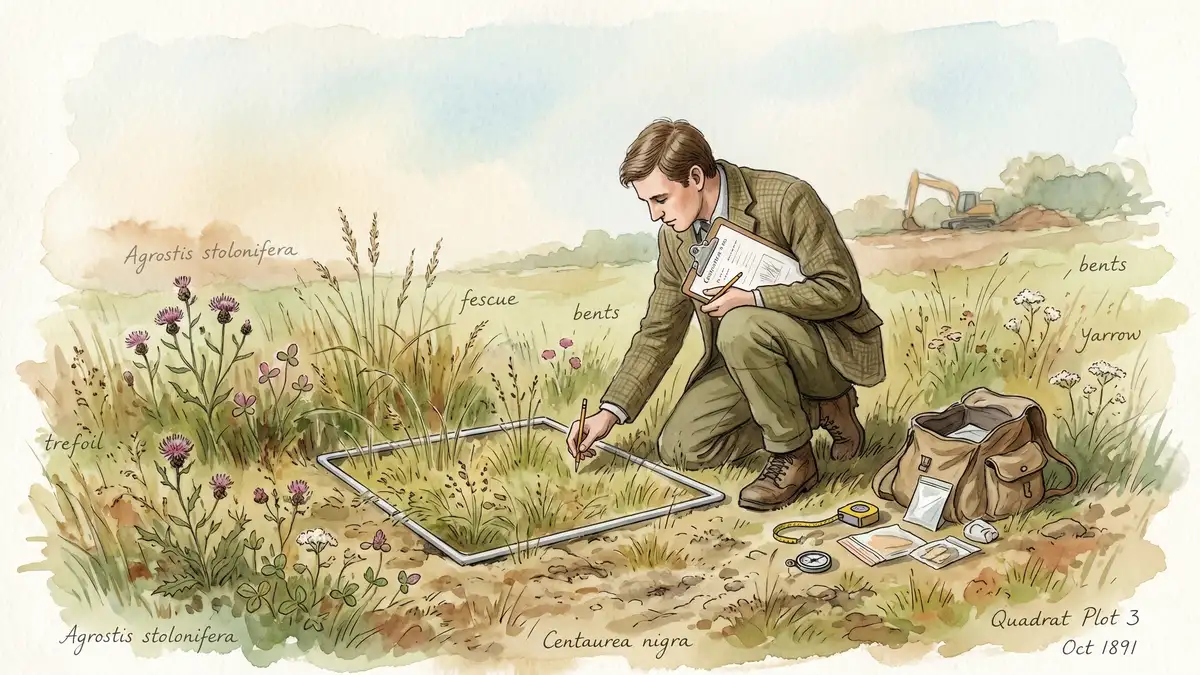
The Environment Act 2021 fundamentally reformed England's planning system by making biodiversity net gain a statutory requirement for the first time. The Act amended the Town and Country Planning Act to establish that all planning permissions granted in England must deliver at least a 10% biodiversity net gain measured using DEFRA's metric. This means the post-development biodiversity value must be at least 110% of the pre-development baseline value — a significant policy shift toward prioritising nature recovery alongside development.
Implementation occurred in two phases. For major developments (typically 10 or more dwellings, or commercial developments exceeding 1,000 square metres), BNG became mandatory from 12 February 2024. The requirement extended to small sites — residential developments of 1 to 9 dwellings on sites of 1 hectare or less — from 2 April 2024. This staged approach was intended to allow local planning authorities to develop capacity progressively, though many reported significant strain even with the phased timeline.
The Act established several critical requirements beyond the headline 10% figure. All habitats secured through BNG must be maintained for a minimum of 30 years, preventing gains from being temporary or easily reversed. BNG outcomes must be secured through legal mechanisms — planning conditions for on-site habitats, Section 106 planning obligations, or conservation covenants. The National Register of Biodiversity Credits, maintained by Natural England, provides a public record of all registered biodiversity units, enabling transparency and verification across the system.
What Are the Exemptions from Biodiversity Net Gain?
The government designed BNG exemptions to be narrow and focused, maintaining the policy's ambition whilst easing burdens on very small or special cases. The principal exemptions include the de minimis threshold, which exempts developments disturbing less than 25 square metres of non-priority habitat and under 5 metres of hedgerow. Householder applications for home improvements — extensions, conservatories, loft conversions — are generally exempt, though this does not apply to proposals changing a building's use or increasing dwelling numbers.
Self-build and custom housebuilding projects are exempt where no more than 9 dwellings are involved and the site occupies 0.5 hectares or less. Temporary planning permissions of 5 years or less received a specific exemption, recognising that land must be restored to its previous condition for temporary uses. Biodiversity gain site enhancements — projects undertaken solely to create habitat for another development's BNG requirement — are exempt from delivering their own additional 10% net gain.
A significant policy development occurred in December 2025 when the government announced a new area-based exemption for all development on sites of 0.2 hectares or less. Government estimates indicate this change will exempt approximately 50% of residential planning permissions previously requiring BNG compliance, reducing costs for small SME developers and saving local planning authorities time and resources. The exemption does not apply where on-site priority habitats are impacted, maintaining protection for the most ecologically valuable sites.
How Is the Biodiversity Metric Applied in Practice?
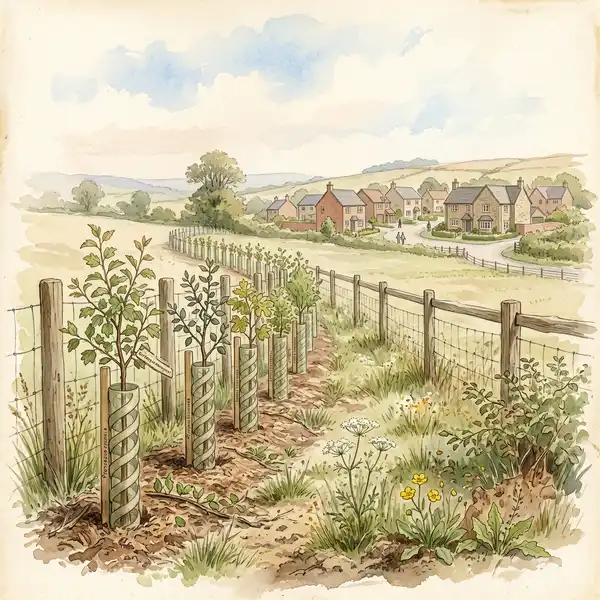
Applying the biodiversity metric begins with a baseline ecological survey, typically conducted by an experienced ecologist. The survey involves mapping habitats using the standardised UK Habitat (UKHab) classification system, assessing habitat condition against statutory criteria, and measuring each habitat parcel in hectares or kilometres. Professional ecologists charge variable fees for BNG surveys — typically starting from £399 plus VAT for straightforward sites, with more complex sites costing substantially more. Most surveys can be completed in one to two days of fieldwork, with reporting and metric analysis requiring 5 to 10 additional working days.
Once baseline data is collected, developers must prepare a biodiversity gain plan detailing how the 10% net gain will be achieved. The plan must specify baseline biodiversity values, proposed post-development habitat outcomes, locations of on-site habitat creation or enhancement, details of any off-site units to be purchased, management and monitoring arrangements for 30 years, and the legal mechanisms securing the gains. Local planning authorities have 8 weeks to review and approve or reject biodiversity gain plans.
Developers must follow a sequential hierarchy of preference established in national planning policy. First, prioritise on-site delivery through enhancing existing habitats or creating new ones within the development site. Only if on-site delivery cannot meet the full requirement should developers consider off-site solutions — purchasing biodiversity units from habitat banks or landowners who have created biodiversity value elsewhere. As an absolute last resort, developers can purchase statutory biodiversity credits from the government, but these are deliberately and prohibitively expensive to incentivise the preferred on-site approach.
| Habitat Distinctiveness | Private Market Price | Statutory Credit Price | Example Habitats |
|---|---|---|---|
| Low | £10,000–£15,000/unit | Higher (last resort) | Improved grassland, arable land |
| Medium | £20,000–£25,000/unit | Higher (last resort) | Semi-improved grassland, freshwater |
| High | £30,000–£35,000+/unit | £42,000–£48,000/unit | Reedbeds, traditional orchards, calcareous grassland |
| Very High | £35,000+/unit | £66,000–£650,000/unit | Wet woodland, upland oakwood, alkalinity lakes |
Sources: DEFRA Statutory Credit Prices 2025-2026, BNG Unit Costs Guide 2026
Is Biodiversity Net Gain Actually Working?
After two years of mandatory implementation, substantial evidence indicates a significant gap between BNG's policy ambitions and real-world outcomes. The most critical finding is that mandatory BNG has delivered only approximately 13% of projected habitat targets, a fundamental shortfall driven by limited local planning authority monitoring capacity, regulatory loopholes, and enforcement constraints.
The unexpected pattern of delivery compounds these concerns. Over 95% of BNG is being delivered on-site through habitat enhancement within development sites — far exceeding the 50% or more off-site delivery anticipated by government and policy advisers. Whilst on-site delivery sounds positive, this dispersal across thousands of small development sites reduces efficiency in achieving landscape-scale habitat connectivity. Instead of concentrating habitat creation in strategically identified areas optimal for nature recovery — as envisioned through Local Nature Recovery Strategies — biodiversity enhancements are scattered across individual building sites.
The concept of "paper biodiversity" has emerged as a central concern among conservation scientists. The metric calculates projected biodiversity units based on assumptions about habitat condition, maturation and long-term persistence that may not materialise in practice. A habitat recorded as grassland in good condition may support very different species assemblages depending on soil type, nutrient status and management history — distinctions the metric's categorical classification cannot capture. Many habitat creation projects fail to achieve specified ecological targets through inadequate initial design, insufficient establishment funding, or changed environmental conditions.
The Enforcement Gap
Common assumption: The 30-year management requirement ensures long-term biodiversity protection.
The reality: Local planning authorities often lack resources to conduct comprehensive botanical surveys and condition assessments throughout the 30-year period. Where habitats fail to establish or decline from target conditions, authorities frequently lack both the legal mechanisms (step-in rights) and financial resources to compel corrective action. A development may complete on-site habitat creation that initially meets specifications, then gradually decline in ecological condition with no practical enforcement route available.
How Do Statutory Biodiversity Credits Work?
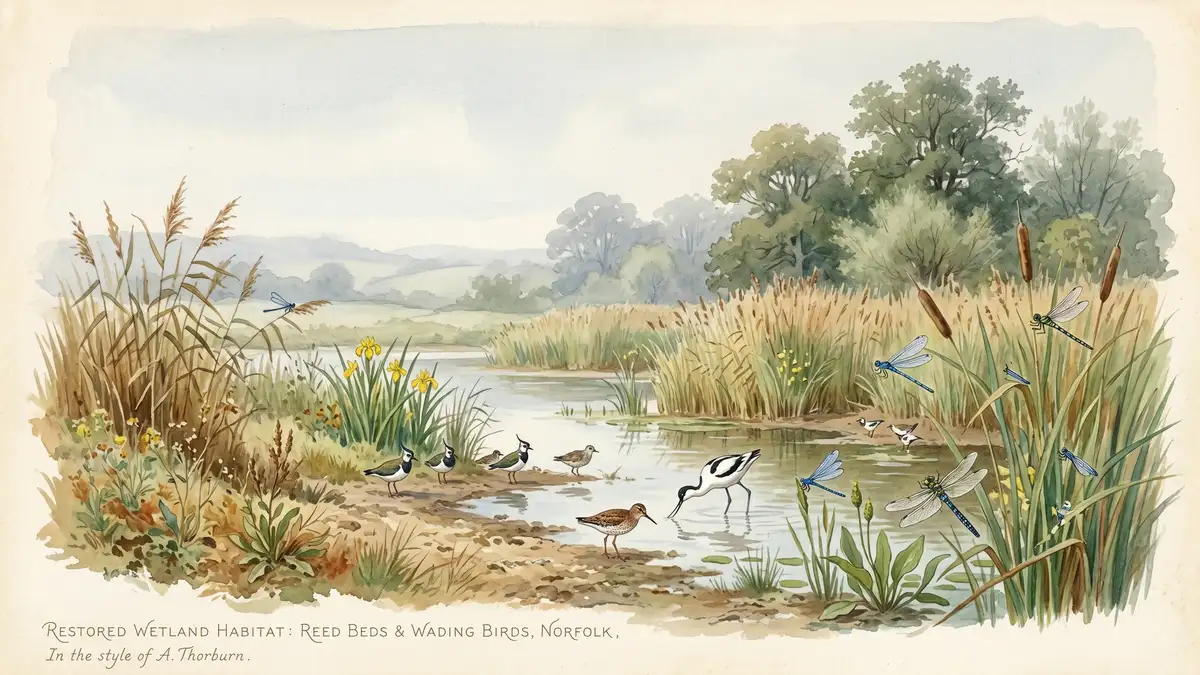
Statutory biodiversity credits are a last-resort mechanism maintained by the government for developers unable to achieve BNG requirements through on-site delivery or off-site private market purchases. DEFRA publishes official statutory credit prices that are deliberately set at levels preventing them from undercutting the private off-site market. The pricing is tiered by habitat distinctiveness and type, reflecting the different costs and complexity of creating, maintaining and monitoring different habitats.
At the lower end, reedbeds and traditional orchards carry statutory credit prices of £42,000 per unit. Lowland calcareous grassland costs £48,000 per unit. Hedgerow statutory credits are priced at £44,000 per unit across all categories. At the very top, wet woodland costs £66,000 per unit, upland oakwood and lowland mixed deciduous woodland £125,000 per unit, and high and low alkalinity lakes reach £650,000 per unit — reflecting the extreme difficulty and timescales involved in creating these habitats.
These prices represent approximately twice the cost of equivalent private market units. A hypothetical 1-hectare residential development requiring 0.5 biodiversity units of lowland meadow creation through statutory credits would cost approximately £24,000. For developments on sites containing mixed habitats including woodland, the BNG requirement could be substantially larger, potentially adding tens of thousands of pounds to development costs. The global biodiversity credit market is expanding rapidly, valued at $2.8 billion in 2025 and projected to reach $18.6 billion by 2034 — a compound annual growth rate of 23.4%.
Commission a Baseline Ecological Survey
Engage a qualified ecologist to map habitats using the UKHab classification system and assess condition. Costs typically start from £399 plus VAT. Surveys are valid for 12–24 months.
Calculate Biodiversity Units Using the Metric
Input baseline habitat data into DEFRA Metric 4.1 to establish the pre-development biodiversity value. Then model post-development scenarios to determine whether 10% net gain is achievable on-site.
Prepare a Biodiversity Gain Plan
Submit a plan to the local planning authority detailing baseline values, proposed habitat outcomes, management arrangements for 30 years, and the legal mechanisms securing the gains. Authorities have 8 weeks to review.
Secure and Maintain Biodiversity Gains
Implement on-site habitat creation or purchase off-site units from registered habitat banks. All gains must be legally secured through planning conditions, Section 106 obligations or conservation covenants and managed for at least 30 years.
Understand how biodiversity net gain connects to the broader threats facing UK biodiversity and why habitat protection matters.
Explore Biodiversity Loss & ThreatsWhat Are the Main Criticisms of the Biodiversity Metric?
The trading rules embedded within the metric have drawn significant concern from ecologists. High distinctiveness habitats such as ancient woodlands, lowland heathlands and traditional orchards are extremely difficult — or impossible — to replace. Ancient woodland cannot be recreated; only ancient habitat can be preserved. Yet the metric permits habitat trading where specified conditions are met, meaning that loss of high distinctiveness habitat can be compensated through creation of other habitat types if distinctiveness conditions are satisfied. This potentially represents net ecological loss despite achieving the required 10% uplift on paper.
Additionality presents another fundamental challenge. A habitat enhancement project receiving funding through agri-environment schemes and then subsequently credited toward a developer's BNG requirement may not represent a net addition to biodiversity if that enhancement would have occurred through alternative funding. Similarly, if a conservation trust had already identified priority habitat restoration but lacked funding, BNG unit revenues funding the project may represent relabelling of existing conservation priorities rather than genuine acceleration of nature recovery.
The capacity of local planning authorities to enforce BNG compliance has proven substantially more limited than anticipated. Many authorities lack in-house ecology expertise, particularly in rural areas. Some have contracted with external consultants to review biodiversity gain plans, increasing costs and delaying planning determinations. Enforcement of long-term management requirements is even more problematic — authorities have limited funding for monitoring habitats after creation and often lack clear legal mechanisms to compel corrective action when habitats fail to establish or decline from target conditions.
The Metric's Limitations
The statutory metric treats habitats categorically using broad classes, assuming all grassland of a given condition is ecologically equivalent regardless of soil chemistry, nutrient status or floristic composition. This pragmatic simplification enables national-scale deployment but sacrifices the ecological precision needed for genuine conservation outcomes.
The Scale Challenge
BNG prevents an estimated 6,000 to 10,000 hectares of habitat loss annually — meaningful but covering only a fraction of England's 13 million hectares. The State of Nature 2023 report documented a 20% decline in average species abundance across UK vertebrate and invertebrate species, requiring habitat restoration at scales far exceeding what BNG alone can deliver.
How Does BNG Connect to Local Nature Recovery Strategies?
Local Nature Recovery Strategies (LNRS), established under the Environment Act 2021 alongside BNG, represent locally determined priorities for nature recovery based on ecological analysis of each region's biodiversity assets, threats and restoration opportunities. All local planning authorities within nature catchment areas collaborate to identify priority habitats, species, ecological networks and restoration locations, establishing a spatial framework for targeting biodiversity investments. The statutory metric includes a strategic significance multiplier encouraging developers to prioritise off-site habitat creation in areas identified as important through LNRS processes.
However, the actual implementation pattern — with over 95% on-site delivery — has reduced BNG's effectiveness in supporting strategically targeted nature recovery. Proposed policy reforms include assessing spatial risk based on LNRS areas rather than individual local planning authority boundaries, intended to increase flexibility for off-site BNG and better align with landscape-scale conservation priorities. The connection between BNG and species recovery targets has proven complex: the metric's habitat-based approach focuses on habitat restoration rather than species-specific targets, meaning restored habitat may not provide conditions for particular priority species.
England's BNG policy represents a pioneering approach internationally. The Kunming-Montreal Global Biodiversity Framework includes 2030 targets for restoring 30% of degraded areas and protecting 30% of land and ocean. The UK's mandatory 10% net gain contributes to these global targets, though achieving them will require substantially more ambitious restoration extending far beyond development impact mitigation. Australia, France and several other jurisdictions are now developing similar mandatory offset or net gain frameworks, often drawing on lessons from England's two years of implementation experience.
What Changes Are Coming to Biodiversity Net Gain Policy?
The December 2025 policy announcement signals government recognition that some development types experience disproportionate compliance costs relative to achievable biodiversity gains. Beyond the 0.2 hectare site-area exemption, government has indicated plans to consult on an additional targeted exemption for brownfield residential development. Brownfield sites — often comprising previous industrial land — frequently support open mosaic habitats of high ecological value, creating technically complex and expensive BNG requirements that may discourage development on sites the government prioritises for housing delivery.
The expansion of nationally significant infrastructure projects into the mandatory BNG system beginning May 2026 will subject major energy, transport and utilities developments to the same 10% net gain requirement, extending the policy's scope significantly. Further updates to the statutory metric are likely, building on version 4.1's improvements for urban habitats. The High Court case of Save Bristol Gardens Alliance v Bristol City Council (2025) highlighted that the earlier Metric 3.0 significantly undervalued urban tree habitats — the same site showed a 4.53 unit gain under version 3.0 but a 12.52% net loss under version 4.0, demonstrating how metric refinements can fundamentally change biodiversity assessments.
The effectiveness of BNG in reversing England's documented biodiversity decline will depend substantially on implementation improvements that enhance monitoring, enforcement and habitat creation success rates. Local planning authorities require increased capacity for monitoring long-term habitat establishment, potentially through environmental DNA monitoring or remote sensing approaches that reduce field survey costs. Clearer step-in rights and adequate funding for corrective management where habitat creation fails would strengthen real-world outcomes. Integration with LNRS and species recovery targets could improve alignment between development-driven habitat creation and strategically identified priority restoration locations.
Frequently Asked Questions
What is the statutory biodiversity metric?
The statutory biodiversity metric is DEFRA's government-approved calculation tool (currently version 4.1) that measures changes in biodiversity caused by development in England. It calculates biodiversity units across three categories — area habitats, hedgerows and watercourses — using factors including habitat distinctiveness, condition, size and strategic significance. All major developments must use this metric to demonstrate at least 10% biodiversity net gain.
Does biodiversity net gain apply to all developments?
BNG applies to most planning permissions in England but has specific exemptions. Householder applications, self-build projects of 9 or fewer dwellings on 0.5 hectares or less, temporary permissions of 5 years or less, and developments disturbing less than 25 square metres of non-priority habitat are exempt. From December 2025, a new exemption covers all development on sites of 0.2 hectares or less, estimated to exempt approximately 50% of residential planning permissions.
How much do biodiversity credits cost?
Private market biodiversity units range from £10,000 to £35,000 or more per unit depending on habitat distinctiveness. Government statutory credits — available only as a last resort — are deliberately more expensive: £42,000 per unit for reedbeds and traditional orchards, £48,000 for lowland meadow, up to £650,000 per unit for high and low alkalinity lakes. Hedgerow credits cost £44,000 per unit.
How long must biodiversity gains be maintained?
All habitats secured through biodiversity net gain must be managed and monitored for a minimum of 30 years. This requirement applies to both on-site and off-site habitat creation and enhancement. Gains must be secured through legal mechanisms including planning conditions, Section 106 obligations or conservation covenants to ensure long-term protection.
Is biodiversity net gain achieving its targets?
After two years of mandatory implementation, evidence suggests BNG has delivered only approximately 13% of projected habitat targets. Over 95% of BNG is delivered on-site — far exceeding the 50% off-site delivery expected — which disperses habitat creation across individual development sites rather than concentrating it in strategic locations optimal for nature recovery. Monitoring and enforcement capacity at local planning authority level remain significant constraints.
Do I need an ecologist for a BNG assessment?
Yes. The baseline ecological survey and biodiversity metric calculation should be conducted by a competent person — typically a qualified ecologist with experience in habitat condition assessment and the UKHab classification system. Professional fees start from approximately £399 plus VAT for straightforward sites. The resulting biodiversity gain plan must demonstrate the 10% net gain calculation to the local planning authority's satisfaction.
Explore Our Biodiversity Guides
From understanding what biodiversity means to exploring UK habitats and conservation efforts — discover our complete collection of guides.
Clwyd Probert
Founder, Pixcellence
Founder of Pixcellence, a conservation and biodiversity resource celebrating wildlife through photography and education. Passionate about connecting UK readers to the policies and science shaping biodiversity protection.
Sources: DEFRA Biodiversity Metric 4.1 Guidance 2025, Environment Act 2021, Local Government Association BNG Guidance, DEFRA Statutory Credit Prices 2025-2026, PMC BNG Implementation Analysis 2025, DEFRA BNG Consultation Response 2025