The species most affected by climate change include polar bears, coral reefs, amphibians, Arctic species, and mountain wildlife. Recent analysis shows that 5% of the 70,000+ assessed species face direct climate threats, with 9% of terrestrial species at high extinction risk at 1.5°C warming. This unprecedented crisis demands our urgent attention and action.
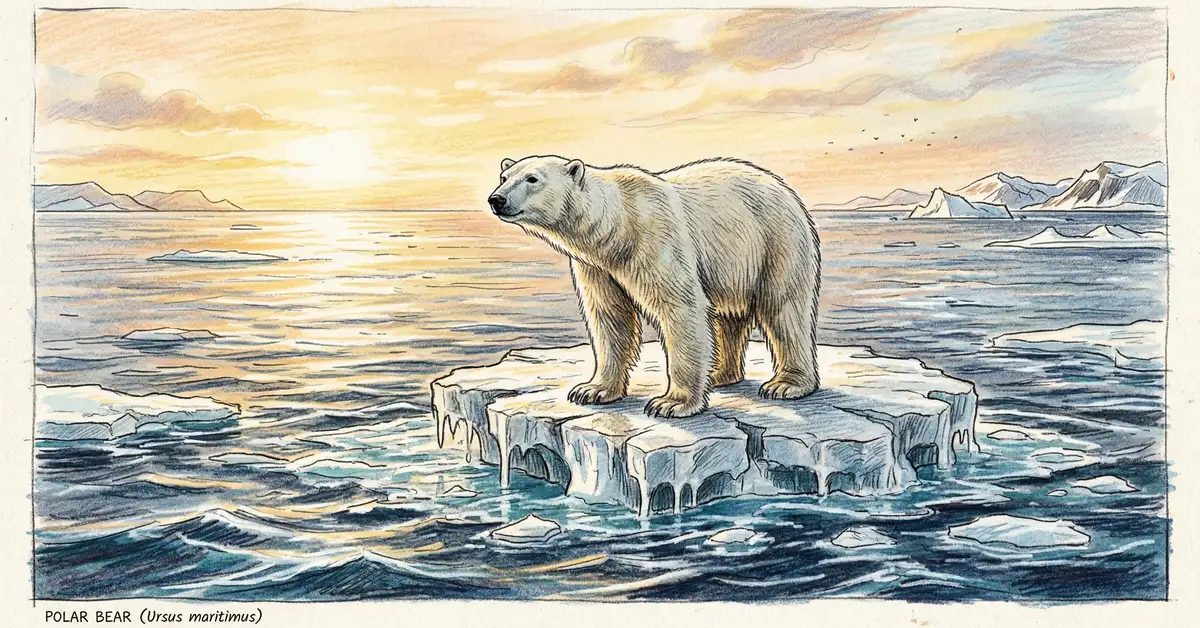
Arctic species like polar bears face rapid habitat loss as sea ice melts at unprecedented rates
We are living through a period of profound ecological transformation. As global temperatures rise, species across every continent face unprecedented challenges to their survival. The planet's creatures—from the tiniest amphibians to the mightiest marine mammals—are responding to climatic shifts by shifting their ranges, altering their breeding patterns, and in many cases, struggling to adapt fast enough to survive. Understanding which species are most vulnerable and why is essential if we're to mount effective conservation efforts in the coming decades.
Our changing climate acts as a multiplier of existing threats. Species already stressed by habitat loss, pollution, and overharvesting face the additional burden of rapid environmental change. Some populations are responding through migration; others through phenological shifts—adjusting their breeding and migration timing. Yet many are simply unable to keep pace. We've gathered the latest research to help you understand the scale of this challenge and the mechanisms driving these critical changes.
5%
of 70,000+ assessed species face direct climate threats
9%
of terrestrial species at high extinction risk at 1.5°C warming
29%
of terrestrial species at high extinction risk at 3°C warming
84%
of coral reefs experienced bleaching-level heat stress (2023–2025)
Which Species Are Most Vulnerable to Climate Change?
Climate vulnerability varies dramatically across species, but certain groups face disproportionate risk. Arctic and polar species are amongst the most threatened, as their habitats warm faster than any other region on Earth. The Arctic has warmed at more than twice the global rate since 2006, fundamentally altering ecosystems that evolved over millennia within narrow temperature ranges.
Amphibians—frogs, toads, and salamanders—represent one of the most vulnerable groups globally. These creatures depend on specific moisture and temperature conditions, and many species occupy isolated habitats from which escape is impossible. Warmer, drier conditions stress their skin and disrupt breeding cycles. Tropical mountain species face a particular double squeeze: unable to move further upslope indefinitely, they find their suitable climate zones contracting from all sides.
Marine species, particularly those in polar and tropical waters, face rapid habitat transformation. Ocean acidification, warming, and deoxygenation create a triple threat to fish, molluscs, echinoderms, and countless other species that have shaped themselves around stable oceanic conditions. Species with long lifespans and slow reproduction—such as large whales, sea turtles, and slow-growing fish—struggle to adapt within the timeframes required.
Specialist species are particularly at risk. Creatures that depend on a narrow range of food sources, specific host plants, or particular climatic zones cannot easily adjust. This is in stark contrast to generalist species, which can exploit a wider range of resources and habitats, allowing them to thrive even as conditions shift.
Source: IPCC Sixth Assessment Report; Nature Climate Change 2024 analysis of 70,000+ species vulnerability datasets
How Does Climate Change Affect Marine Species?
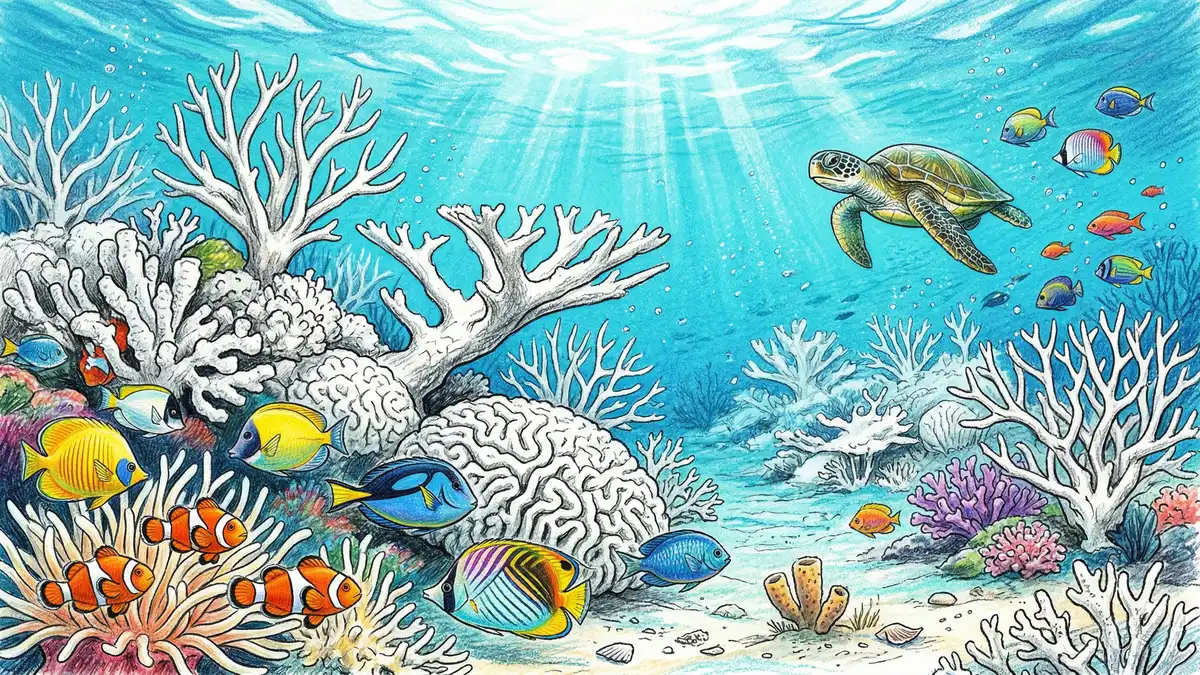
Bleached coral reefs lose their symbiotic algae and suffer catastrophic ecosystem collapse
Our oceans are changing faster than at any time in millions of years. Warming water, acidification, and oxygen loss are fundamentally transforming marine ecosystems. Coral reefs, often called the rainforests of the sea, are experiencing catastrophic bleaching events with unprecedented frequency. These vibrant ecosystems house 25% of all marine species despite covering less than 1% of the ocean floor.
Coral Bleaching and Reef Collapse
When sea temperatures rise above critical thresholds—typically just 1–2°C above average summer highs—corals expel their symbiotic algae. These zooxanthellae provide up to 90% of the coral's energy. Without them, corals starve within weeks or months. Between January 2023 and March 2025, 84% of the world's coral reefs experienced bleaching-level heat stress. The Great Barrier Reef experienced mass bleaching in five of the last eight years, threatening ecosystems that support over 1,500 fish species and thousands of other creatures.
The recovery window for coral reefs continues to shrink. Individual reefs need years between bleaching events to rebuild their tissue and zooxanthellae populations. Yet bleaching events now occur so frequently that many reefs never fully recover before the next stress event strikes. Some coral species have already shifted towards heat-tolerant symbiotic partners, but this adaptation may be too slow for reefs facing repeated bleaching within months.
| Marine Species Group | Primary Climate Threat | Current Impact | Risk Level |
|---|---|---|---|
| Corals | Ocean warming + acidification | 84% experienced bleaching stress | Critical |
| Sea turtles | Temperature-dependent sex determination; nesting beach erosion | Female-biased hatchling ratios | High |
| Polar species (seals, whales) | Sea ice loss; prey decline | Range compression; hunting failure | High |
| Fish populations | Habitat shrinkage; prey availability | Poleward migration; stock collapse | High |
| Pteropods & molluscs | Ocean acidification | Shell dissolution; food web disruption | High |
Source: Global Coral Bleaching Monitoring 2025; NOAA Ocean Acidification Program
Ocean Acidification and Food Web Disruption
As the ocean absorbs 25–30% of anthropogenic carbon dioxide, it becomes progressively more acidic. This chemical change has profound implications for creatures with calcium carbonate shells and skeletons. Pteropods—tiny molluscs that form the base of many marine food webs—are amongst the first casualties. Their shells begin to dissolve in waters already experiencing acidification, threatening species that depend on them, from sea birds to whales.
Fish are responding to warming by shifting their distributions towards cooler waters. Some populations are moving poleward or into deeper waters, whilst others face dead-end habitat compression where they can no longer retreat. Atlantic salmon, for instance, have experienced warming river temperatures that reduce survival rates, particularly during the vulnerable early life stages.
Which UK Species Are Threatened by Climate Change?
The United Kingdom's rich biodiversity faces significant climate pressures, even as we maintain our temperate climate advantage. We've already documented population declines in species uniquely adapted to our cooler conditions. As our article on the UK's biodiversity crisis highlights, several native species are already under severe stress.
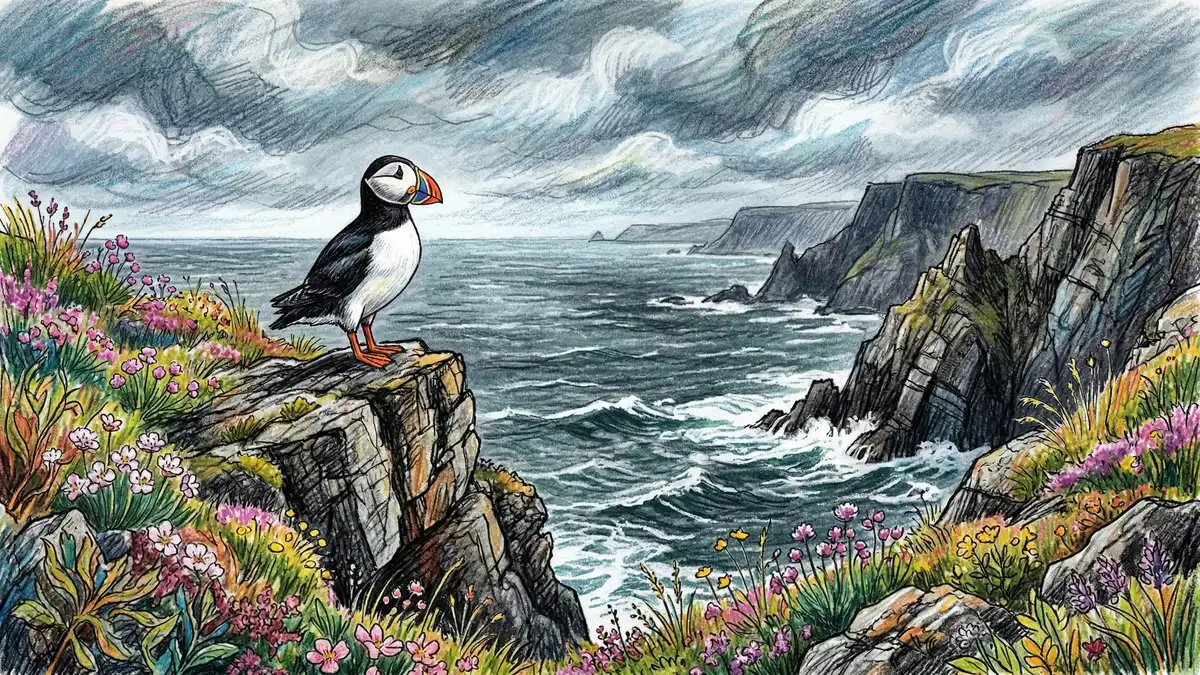
UK puffins depend on sand eels, populations hit hard by warming North Sea temperatures
Puffins and Sand Eel Collapse
The Atlantic puffin has become a symbol of climate change impacts on UK wildlife. These iconic seabirds depend almost entirely on sand eels for food—a fish that thrives in cool waters. Warming of the North Sea has caused sand eel distributions to shift, and in some years, availability has collapsed entirely. Puffin colonies around the UK have experienced breeding failures in recent years, with some islands seeing nearly zero chicks fledged. The species faces a precarious future unless ocean temperatures stabilise.
Mountain Hares and Camouflage Mismatch
Mountain hares, which turn white in winter across their Scottish and Lake District range, face a particularly quirky climate threat: phenological mismatch with snow cover. Hares begin their autumn moult to white fur on a photoperiod cue—the length of daylight—rather than snow cover. As winter snow arrives later and departs earlier, hares increasingly stand out against brown landscapes, making them conspicuous to predators. This mismatch between the timing of coat changes and actual snow cover is already driving population declines in some areas.
Red Squirrels Under Competitive Pressure
Native red squirrels face an indirect climate threat through their grey squirrel competitors. As UK temperatures warm, grey squirrels—native to North America but now established across much of the UK—expand their range northwards and into higher altitudes. Red squirrels, restricted to conifer woodlands particularly in Scotland, face increasingly compressed habitat as warming shifts the competitive balance further against them.
Atlantic Salmon and Warming Rivers
Atlantic salmon are experiencing direct impacts from warming freshwater systems. Many UK rivers now exceed the thermal thresholds optimal for salmon survival, particularly during summer months. Juvenile survival has declined in response to warmer water temperatures, reduced oxygen availability, and altered algal growth patterns that affect food availability.
Source: BTO British Trust for Ornithology; JNCC Joint Nature Conservation Committee
Key Takeaway
UK species face a dual threat: direct climate impacts (warming, altered precipitation) and indirect pressures through range shifts in competitors, predators, and prey. The rate of change is outpacing many species' capacity to adapt, making proactive conservation essential.
What Is Phenological Mismatch and Why Does It Matter?
One of the most insidious climate impacts involves the misalignment of biological events within food webs. Phenological mismatch occurs when species that depend on one another for survival shift their life cycles at different rates in response to climate change. A classic example involves migratory birds and their insect prey.
Many spring-migrating birds navigate by photoperiod (day length)—an unchanged cue despite climate shifts. Meanwhile, insects respond directly to temperature, emerging progressively earlier as springs warm. In some regions, peak insect availability now precedes bird arrival by weeks. Parent birds cannot feed their newly hatched chicks on caterpillars if those caterpillars have already pupated. The result is reproductive failure, population decline, and potential local extinction.
Cascading Food Web Impacts
Phenological mismatch creates cascading effects through entire food webs. Plant flowering times shift differently than pollinator emergence. Predators and prey develop temporal separation. These mismatches are most severe in systems where multiple steps depend on precise synchronisation. Tropical cloud forests, boreal forests, and high-mountain ecosystems—characterised by tight predator-prey relationships—are particularly vulnerable to complete food web disruption.
Research demonstrates that phenological mismatch has already caused breeding failure in numerous bird species, reduced seed set in flowering plants, and altered insect population dynamics across Europe and North America. As climate change accelerates, the magnitude of these mismatches will likely intensify.
Source: Ecology Letters 2024; Biological Reviews special issue on phenological mismatch
How Are Mountain and Arctic Species Affected?
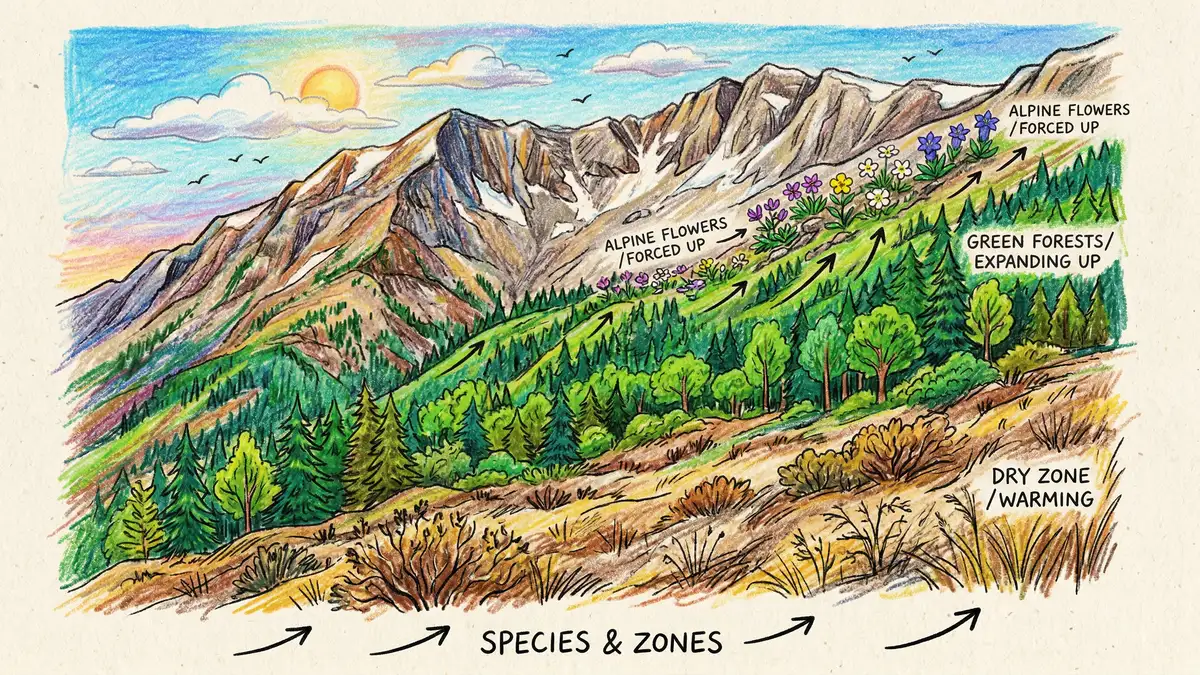
Alpine species have nowhere to retreat as suitable habitat contracts upslope and disappears
Nowhere Left to Climb
Mountain species face a uniquely constrained climate crisis. As temperatures warm, suitable climate zones shift upslope. Species attempt to track these shifts by moving to higher elevations, but this strategy has a hard limit: the summit. Species occupying high mountains have increasingly nowhere left to retreat. Alpine plants, mountain goats, pikas, and high-elevation birds all face habitat compression as their cool-season refugia shrink.
The vertical migration route is also far more difficult than horizontal movement. Steep slopes restrict migration corridors. Valley habitats between mountains may be unsuitable for specialist alpine species. Some high-altitude species have already been confined to tiny habitat patches where genetic diversity plummets and extinction risk soars.
Arctic Amplification and Rapid Change
The Arctic experiences climate change at more than twice the global rate—a phenomenon called Arctic amplification. Loss of reflective sea ice exposes darker ocean water, which absorbs more solar heat, accelerating further warming in a vicious feedback loop. This rapid change is outpacing Arctic species' adaptive capacity.
Polar bears are the most visible Arctic casualty. These apex predators depend entirely on sea ice as hunting platforms. As ice-free seasons lengthen and sea ice extent shrinks, bears must swim longer distances and find fewer seals to hunt. Population projections suggest a 30% decline in polar bear numbers by 2050 under current warming trajectories. Emperor penguins in Antarctica face a similarly dire situation, with complete breeding failure documented at some colonies in recent years as sea ice conditions have become unsuitable for chick-rearing.
Arctic and alpine specialists cannot simply relocate to lower latitudes or altitudes—the climate zones they require exist nowhere else on Earth. For these species, climate change is essentially an extinction sentence unless we rapidly stabilise global temperatures.
Source: IPCC AR6 Chapter 2; Polar Research journals 2024–2025
At What Temperature Do Mass Extinctions Accelerate?
Climate scientists have identified critical temperature thresholds where extinction risks escalate dramatically. These figures represent warming relative to pre-industrial baseline (approximately 1750) and are based on comprehensive assessment of ecosystem collapse scenarios and species range compression data.
Critical Climate Thresholds
At 1.5°C warming: 9% of terrestrial and freshwater species at high extinction risk; major coral bleaching becomes annual; permafrost thaw accelerates.
At 2°C warming: 18% of species at high extinction risk; Amazon rainforest tipping point approaches; tropical coral reefs essentially extinct.
At 3°C warming: 29% of species at high extinction risk; widespread ecosystem collapse; human food security severely compromised; mass migration and conflict likely.
The world has already warmed by approximately 1.2°C since pre-industrial times, with three-year average temperatures reaching 1.5°C above baseline in the period leading up to 2025. We are already experiencing the ecological impacts projected for 1.5°C warming. Every additional tenth of a degree of warming roughly doubles the number of species facing extinction risk.
Crucially, these thresholds are not sharp boundaries—species don't suddenly vanish at exact temperatures. Rather, extinction risk increases continuously with warming. Some species begin struggling at 0.5°C above their optimum; others persist until 3°C of change. The cumulative effect across millions of species, however, creates recognisable inflection points where ecosystem-wide disruption accelerates.
One of the most sobering findings concerns biodiversity tipping points. If warming reaches 2°C, we face a high probability of triggering self-reinforcing feedback loops—such as permafrost methane release, tropical forest dieback, and ice sheet destabilisation—that will drive warming beyond our control. This means that our window to prevent the worst outcomes continues to narrow by weeks, not years.
Source: IPCC Special Report on 1.5°C; Nature Climate Change meta-analysis 2024
What Conservation Strategies Protect Climate-Vulnerable Species?
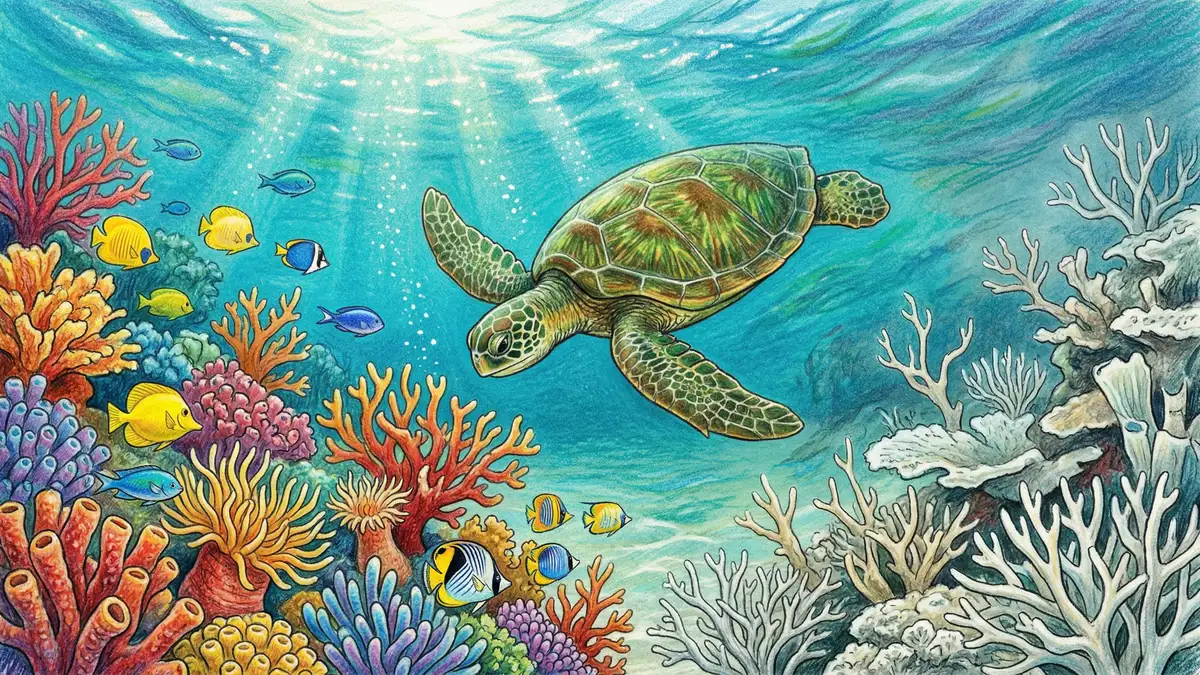
Conservation corridors allow species to shift ranges in response to changing climates
Climate Refugia and Microhabitat Networks
Forward-thinking conservation now focuses on identifying and protecting climate refugia—locations that will maintain suitable conditions longer than surrounding areas. These might be sheltered valleys, high-elevation plateaus, or coastal regions with moderating ocean influences. By protecting networks of refugia, we create stepping stones allowing species to persist through climate transitions.
Microhabitat management is equally important. Small adjustments to habitat structure—such as increasing shade, improving soil moisture retention, or creating wind breaks—can create locally cooler microclimates. For ground-nesting species facing heat stress, even a few degrees Celsius difference can mean the difference between breeding success and failure.
Habitat Corridors and Migration Routes
Species responding to climate change by shifting their ranges need continuous habitat corridors connecting current locations to suitable future climates. Fragmented landscapes, developed with roads, farms, and buildings, block this essential range shift process. Conservation corridors connecting protected areas—whether forests, wetlands, or marine reserves—enable genetic rescue and population replenishment as species track shifting climate zones.
The British Isles could benefit significantly from such corridor development. Linking upland nature reserves through managed green corridors, creating continuous hedgerow networks, and establishing marine protected area chains would facilitate species' adaptive responses to our changing climate.
Assisted Migration and Genetic Selection
For species unable to keep pace with climate change through natural migration, assisted migration—human-facilitated translocation to climatically suitable areas—is increasingly discussed. Breeding programmes that select for heat tolerance or other climate-adaptive traits represent another frontier in conservation. These approaches remain contentious because they involve unprecedented human intervention in natural systems, but for species facing extinction, they may represent the only viable alternative.
Addressing Underlying Drivers
All species-specific conservation measures pale beside the fundamental need to reduce greenhouse gas emissions. We can protect habitat, create corridors, and support breeding programmes, but unless we rapidly decarbonise our energy systems and transform our food production, these measures offer only temporary relief. For a comprehensive understanding of how climate change intersects with broader biodiversity loss, explore our resource on climate change and biodiversity.
We must also address the compounding threats that interact with climate change. Habitat destruction, pollution, and overexploitation leave species with reduced resilience. Conservation that simultaneously addresses these causes of biodiversity loss offers the best prospects for species persistence.
Source: Conservation Biology journal; IUCN Red List assessment frameworks 2025
Frequently Asked Questions
Which species are most affected by climate change?
Arctic species (polar bears, Emperor penguins), tropical coral reefs, amphibians, high-altitude mountain species, and marine creatures dependent on sea ice or cool water temperatures are amongst the most climate-vulnerable. Specialist species with narrow temperature tolerances face higher extinction risk than generalists.
How quickly are species going extinct due to climate change?
Current extinction rates are estimated at 100–1,000 times higher than background rates. Whilst few species have been formally declared extinct solely due to climate change, numerous populations have vanished and range reductions suggest thousands of species are on an extinction trajectory without rapid climate mitigation.
Can species adapt to climate change?
Some adaptation is occurring—species are shifting ranges, adjusting phenology, and exhibiting physiological acclimation. However, the rate of climate change significantly exceeds historical rates of species evolution. Adaptation is happening too slowly for many species, particularly those with long generation times or restricted habitats.
How does climate change harm coral reefs?
Warming triggers coral bleaching, where corals expel their symbiotic algae and starve. Ocean acidification weakens coral skeletons and makes it harder for larvae to settle. Combined with overfishing, pollution, and physical damage, climate change compounds existing stressors, with 84% of reefs experiencing bleaching-level heat stress in 2023–2025.
What is phenological mismatch?
Phenological mismatch occurs when species dependent on each other shift their life cycles at different rates. For example, if insects emerge earlier due to warming but migrating birds arrive on photoperiod cues, the birds may find no insects for feeding chicks, causing breeding failure.
What temperature increase would cause extinction-level impacts?
At 1.5°C, 9% of terrestrial species face high extinction risk. This escalates to 29% at 3°C warming. The 1.5°C threshold represents a critical tipping point beyond which ecosystem-wide disruptions accelerate. We have already reached 1.5°C in recent years, meaning extinction impacts are occurring now.
Conclusion: The Urgency of Action
The species affected by climate change represent the front line of a crisis unfolding across every continent and ocean. From polar bears to puffins, from coral reefs to mountain hares, wildlife faces unprecedented pressure to adapt to a rapidly transforming planet. We've detailed the mechanisms driving these impacts—range shifts, phenological mismatch, habitat compression, and ocean chemistry changes—and identified the most vulnerable species groups.
What emerges clearly from this analysis is that there are no isolated solutions. Protecting a single species or the ecosystem services they support cannot succeed if the underlying drivers of climate change continue. At the same time, species-specific conservation—habitat protection, breeding programmes, assisted migration where appropriate—remains essential for species unable to adapt through natural processes.
We encourage you to explore the broader context of these impacts. Learn more about the importance of biodiversity, understand the levels of biodiversity at risk, and discover what biodiversity and conservation strategies offer the most promise. The time to act is now—every decision we make about energy, agriculture, and land use echoes through ecosystems that have taken millions of years to evolve.
Our species, alongside countless others, faces a critical choice. We can continue our current trajectory, accepting the extinction of species we've never met, ecosystems we've never explored, and genetic diversity we can never reclaim. Or we can mobilise the collective will to rapidly transform our civilisation toward carbon neutrality, regenerative land use, and genuine biodiversity restoration. The species affected by climate change cannot make this choice themselves. The responsibility rests with us.
Last updated: April 2026 | Topic: T06-s02 (Climate Change & Biodiversity) | URL: /blog/climate-species-affected