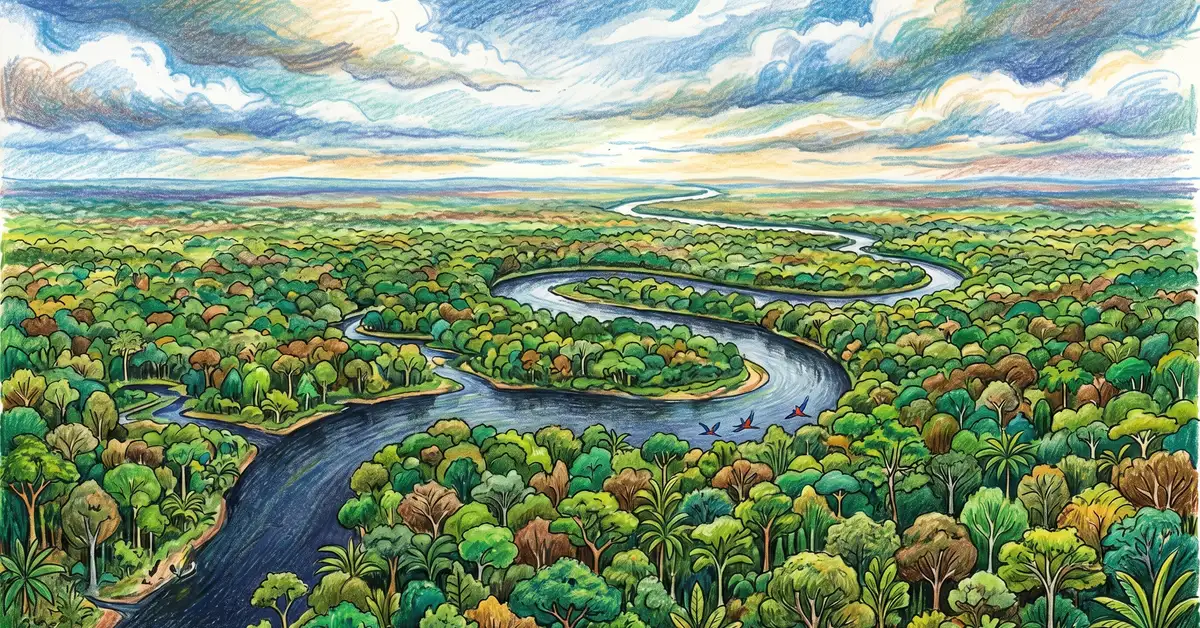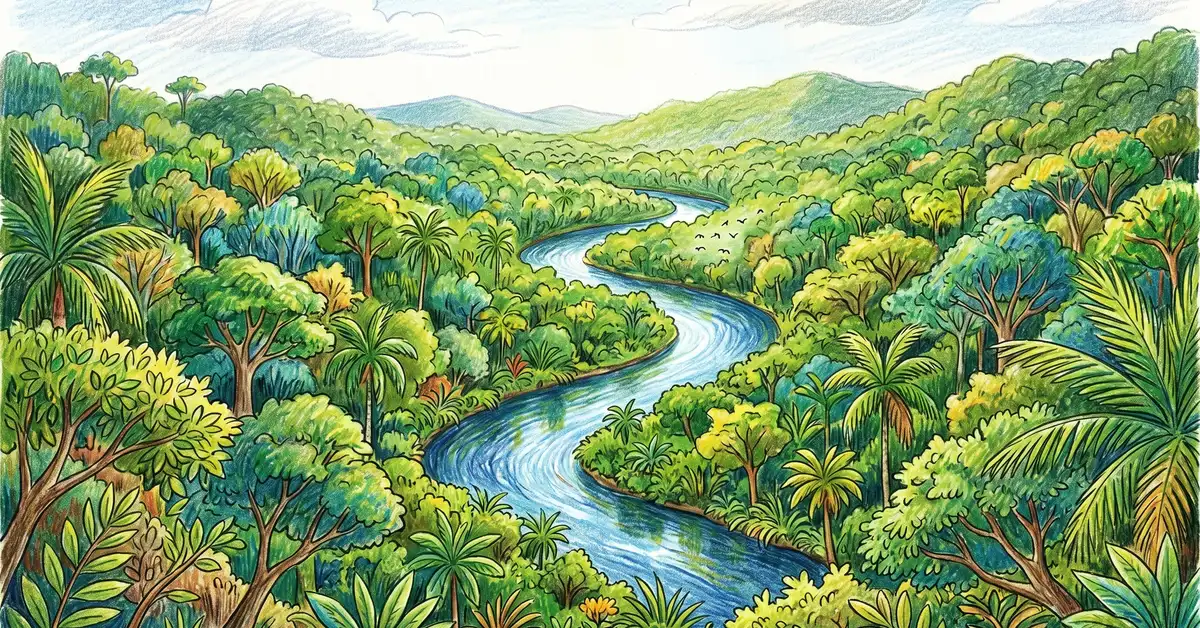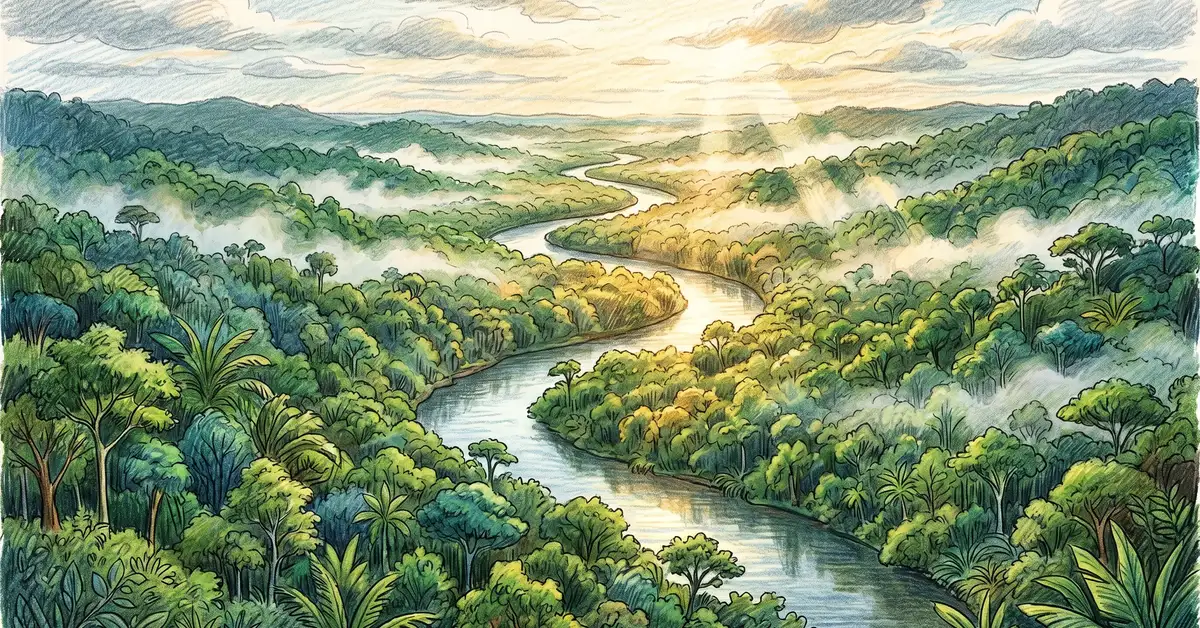
Deforestation is the permanent removal of forest cover for another land use. In 2025, the world's tropical primary forests lost 4.3 million hectares, down 36% from the record 6.7 million hectares lost in 2024 (WRI). The main causes are agriculture (about 90% of deforestation worldwide, according to FAO), commercial logging, mining, and fire. The UK is implicated through its imported deforestation footprint of over 39,300 hectares via beef, soy, and palm oil supply chains.
This 2026 guide covers what deforestation is, why it happens, where it's worst, the UK's hidden role, what international policy is doing about it, and what restoration can — and cannot — achieve.
In this guide
What deforestation is · How much forest has been lost · The main causes of deforestation · Environmental impacts · The UK's hidden footprint · International policy · Solutions that work · Can deforested land recover? · FAQs
What Is Deforestation? Definition and 2026 Statistics
Deforestation is the permanent removal of forest cover and its conversion to another land use such as agriculture, mining, or urban development. Between 2015 and 2025, the world lost approximately 10.9 million hectares of forest every year — an area roughly the size of Iceland — according to the UN Food and Agriculture Organization's Global Forest Resources Assessment 2025. Net of regrowth and planting, the loss was 4.12 million hectares a year. Whilst gross deforestation has declined from the 17.6 million hectares lost annually during the 1990s, tropical primary forests — the planet's most biodiverse and carbon-rich ecosystems — hit a record loss in 2024 before falling 36% in 2025.
Deforestation differs from forest degradation, which reduces a forest's quality without removing cover entirely. Think of deforestation as demolishing a house and building a car park, whilst degradation is more like a house suffering from years of neglected maintenance — the structure remains but its functionality declines. This distinction matters because degraded forests retain some ecological function and may recover through restoration, whereas permanently converted land loses its forest characteristics for decades or centuries.
Key Takeaway
Tropical primary forests lost 4.3 million hectares in 2025, down 36% from the 2024 record of 6.7 million hectares, when fires drove nearly half of the loss. The UK contributes through its imported deforestation footprint of over 39,300 hectares via beef, soy, and palm oil supply chains.
How Much Forest Has the World Lost?
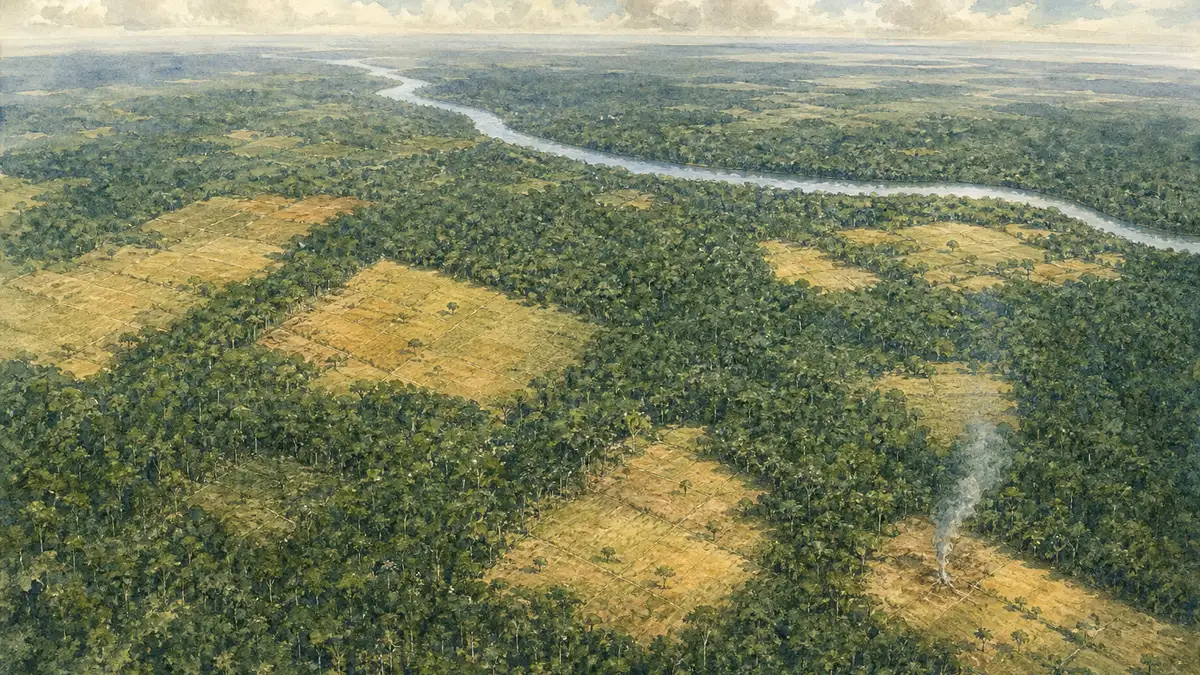
The scale of contemporary forest loss is staggering. According to WRI's Global Forest Watch data, the tropics lost 4.3 million hectares of primary forest in 2025, equivalent to 11 football pitches a minute. That is 36% less than in 2024, but still 46% higher than a decade earlier. The 2024 loss of 6.7 million hectares, roughly 18 football pitches cleared every minute, released an estimated 3.1 gigatonnes of greenhouse gas emissions.
Today, forests cover 4.14 billion hectares, about 32% of the world's land area (FAO). Whilst overall deforestation rates have declined from historical peaks, the world remains off track to meet the Glasgow Leaders' Declaration commitment to halt and reverse forest loss by 2030.
4.3M ha
Tropical Primary Forest Lost 2025
Down 36% from the 2024 record
3.1 Gt
CO₂ Emissions Released
From 2024 tropical primary forest loss
42%
Brazil's Share of 2024 Loss
Largest tropical contributor
39,300 ha
UK Imported Footprint
Larger than the New Forest
Sources: Global Forest Watch Forest Pulse 2024, FAO Global Forest Resources Assessment 2025, WWF UK 2025
What Are the Main Causes of Deforestation?
The five main causes of deforestation are: (1) agricultural expansion, (2) commercial logging, (3) mining, (4) infrastructure and urban development, and (5) fire. Of these, agriculture is by far the largest — responsible for about 90% of deforestation worldwide (FAO, 2021). Three commodity groups dominate: cattle ranching, soybean cultivation, and palm oil production.
Cattle ranching drives deforestation predominantly in South America, where cattle pasture replaces cleared forest. Commercial logging, both legal and illegal, facilitates subsequent agricultural expansion through new roads and weakened land tenure. Mining is a smaller driver overall but locally severe.
Climate feedback loops increasingly intensify the crisis: in 2024, fires became the primary driver of tropical primary forest loss for the first time, accounting for nearly half (48%) of the loss as intentional clearing burns spiralled out of control in drought-stressed forests. Brazil's PRODES satellite monitoring recorded a preliminary 3,335 km² of Amazon deforestation for 2025–26. For the wider mechanistic picture, see Pixcellence's piece on the five drivers of biodiversity loss — deforestation is the most visible expression of the first driver, land-use change.
| Country | Primary Forest Loss | Primary Driver | Key Trend |
|---|---|---|---|
| Brazil | 42% of tropical loss in 2024; down 42% in 2025 | Cattle ranching, fire (66% of 2024 loss) | Still the largest loss in 2025; non-fire loss at a record low |
| DRC | Record loss in 2024; down 5% in 2025 | Small-scale shifting cultivation (86% of loss, 2002–2025) | Third-largest loss in 2025; non-fire loss at a record high |
| Bolivia | Second-largest loss in 2025, after severe fires in 2024 | Fire and agricultural clearing | Second-highest loss on record |
Sources: Global Forest Watch Forest Pulse 2024, World Resources Institute 2025
What Are the Environmental Impacts of Deforestation?

Deforestation triggers cascading environmental consequences that extend far beyond the loss of trees. Forests are home to a large share of the world's land-based wildlife and plants, which makes deforestation a major driver of terrestrial habitat loss.
Forests store vast amounts of carbon, and deforestation is a major source of greenhouse gas emissions. The Amazon rainforest drives precipitation patterns affecting agriculture across South America. Scientists warn that if forest loss exceeds 20–25% of the Amazon biome, it may reach a tipping point and degrade irreversibly into savanna-like grassland.
Deforestation also disrupts hydrological cycles, accelerates soil erosion, and creates interfaces between human and wildlife populations that elevate zoonotic disease spillover risk.
Explore more of our biodiversity loss and threats guides and share them with your community.
Browse All GuidesWhat Is the UK's Hidden Deforestation Footprint?
Despite woodland covering only about 14% of its land area, the United Kingdom carries a substantial imported deforestation footprint. Since the Environment Act 2021 became law, the UK's total imported deforestation footprint has exceeded 39,300 hectares — an area larger than the New Forest — through supply chains for beef, soy, palm oil, cocoa, and coffee, according to WWF UK. Beef and soy imported from Brazil are among the supply chains linked to Amazonian clearing.
The soy supply chain is particularly revealing. Most global soy production becomes animal feed, and the UK imports substantial quantities to feed domestically reared pigs, chickens, and farmed salmon.
Domestically, Forest Research reports 15.58 thousand hectares of newly created woodland across the UK in 2024–25, of which 5,765 hectares were in England. Ancient woodland remains irreplaceable and faces ongoing threats from development.
Common Misconception
"Deforestation only affects tropical countries." In reality, the UK imports deforestation through its consumption of beef, soy, and palm oil. Every kilogram of Brazilian beef or soy-fed chicken purchased in the UK has a hidden forest footprint.
What this means: Addressing deforestation requires both protecting tropical forests and transforming UK supply chains through legislation like Schedule 17 of the Environment Act 2021, for which regulations have not yet been made; legislation for Great Britain is expected in 2027.
What International Policies Address Deforestation?
Several international frameworks target deforestation, though implementation remains inconsistent. The Glasgow Leaders' Declaration on Forests (COP26, 2021) was signed by leaders of 145 countries, who promised to halt and reverse forest loss by 2030, yet 17 of the 20 countries with the largest primary forest areas currently experience higher loss than when the declaration was signed. The Kunming-Montreal Global Biodiversity Framework (2022) established deforestation prevention as central to its 23 targets for 2030.
The most ambitious regulatory approach is the EU Deforestation Regulation (EUDR), which prohibits companies from placing seven primary commodities (cattle, cocoa, coffee, palm oil, rubber, soya, and wood) on the EU market unless they can prove these products are deforestation-free. Application has been delayed more than once; it now applies from 30 December 2026 for large and medium operators and 30 June 2027 for micro and small operators. REDD+ (Reducing Emissions from Deforestation and forest Degradation) provides a complementary approach through financial incentives for forest protection in developing countries, and forest certification schemes like the Forest Stewardship Council (FSC) raise management standards across certified supply chains.
The UK's own approach remains incomplete. Schedule 17 of the Environment Act 2021 provides powers for forest-risk commodity due diligence requirements, but the secondary legislation needed to activate this regime is not yet in place. The government has said it will consult on a Great Britain regime, with legislation expected in 2027 (GOV.UK), so UK companies remain without a clear legal duty to verify their supply chains avoid illegally deforested lands.
What Solutions Can Stop Deforestation?
Addressing deforestation requires action at every scale — from international agreements to individual consumer choices. Research consistently shows that indigenous land rights can produce strong conservation outcomes. An Environmental Defence Fund analysis found that protecting 63.4 million hectares of Brazilian Amazon as indigenous or protected land could substantially curb deforestation from land grabs.
Agroforestry — growing crops alongside trees and shrubs — can ease pressure on remaining forest by helping farmers earn more from land they already use. Forest restoration through the Bonn Challenge targets 350 million hectares globally. Research from lowland Ecuador shows tropical forests can recover much biological richness within 30 years, though full species composition recovery takes considerably longer.
Choose Deforestation-Free Products
Look for FSC-certified wood and paper, RSPO-certified palm oil, and sustainably sourced soy. Eating less meat also reduces demand for cattle pasture and animal feed.
Support Indigenous Land Rights
Evidence from several regions shows that indigenous-managed territories often keep forest standing. Support organisations campaigning for legal recognition of indigenous territories.
Advocate for UK Policy Implementation
Schedule 17 of the Environment Act 2021 has no regulations yet. Contact your MP to advocate for due diligence legislation on forest-risk commodities. A WWF UK poll found a majority of Britons back government action.
Plant and Protect Trees Locally
Support UK woodland creation through the Woodland Carbon Code and England Woodland Creation Offer (grants for capital costs and annual maintenance). Protect existing ancient woodland from development threats.
Invest in Restoration and Agroforestry
Support agroforestry initiatives that reduce farmer pressure on forests. Fund restoration projects through the Bonn Challenge and UN Decade on Ecosystem Restoration.
How Can Deforestation Be Reversed Through Restoration?
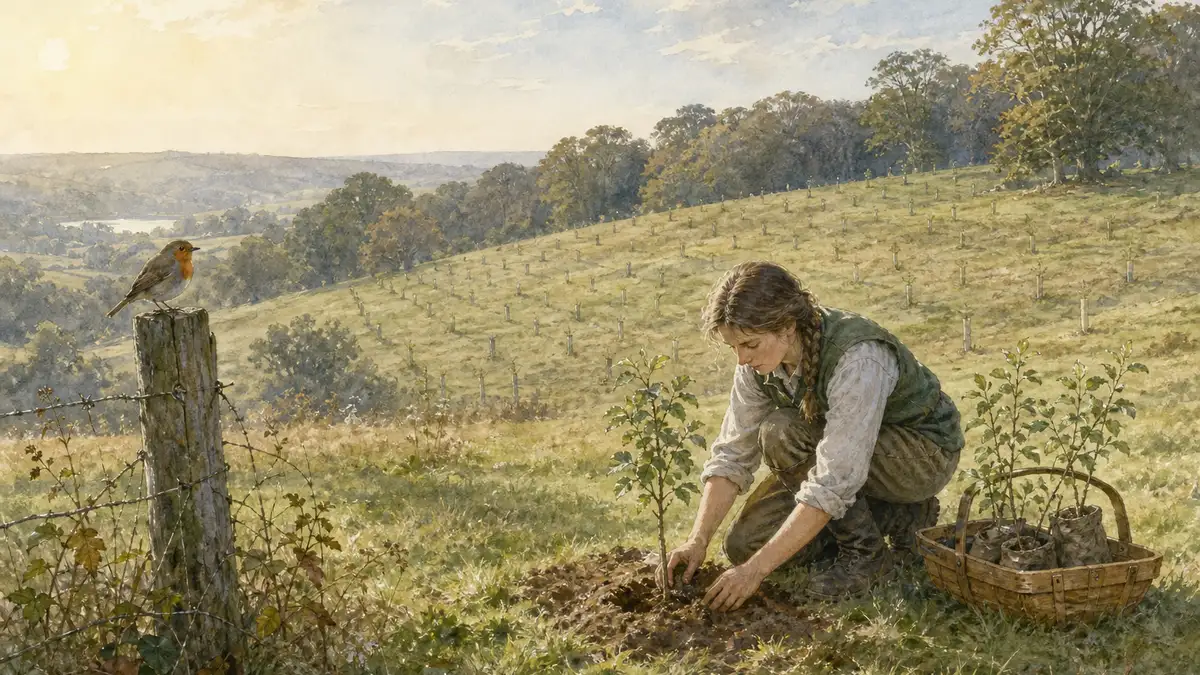
Forest restoration offers extraordinary potential. Studies of regrowing tropical forest show that many groups of species recover substantially within a few decades, but full species composition takes considerably longer.
Within the UK, the England Woodland Creation Offer funds woodland creation, with additional contributions for nature recovery, water quality and public access. England's statutory target is for tree canopy and woodland cover to reach 16.5% of land area by 2050.
However, restoration cannot substitute for protecting existing primary forests. Tree planting is often presented as a simple solution, but primary tropical forests are irreplaceable on any meaningful human timescale — they contain biodiversity, carbon stores, and ecological interactions that secondary forests take centuries to rebuild. The priority must remain protecting what exists whilst simultaneously restoring what has been lost.
Frequently Asked Questions About Deforestation
Why does deforestation happen?
Deforestation happens primarily because converting forest to farmland is more profitable in the short term than keeping it standing. About 90% of deforestation worldwide is driven by agricultural expansion — chiefly cattle ranching, soybean cultivation, and palm oil production. Subsistence farming, illegal logging, mining, and infrastructure development account for the remainder. Weak land tenure laws, insufficient enforcement, and external demand from richer countries are the underlying enablers.
What are the main causes of deforestation?
The five main causes of deforestation are agricultural expansion (about 90% of deforestation worldwide), commercial logging, mining, infrastructure and urban development, and fire. Agriculture is by far the largest, concentrated in three commodities: cattle ranching, soybean cultivation, and palm oil production. In 2024 fires also became the single largest immediate cause of tropical primary forest loss, driven by drought-stressed conditions and intentional clearing burns spreading out of control.
Who is causing deforestation?
Direct actors are commercial agriculture operators (especially cattle ranchers, soy farmers, palm oil plantations), commercial loggers, mining operations, and infrastructure developers. Indirect actors are the consumers and corporations in importing countries — including the UK — who buy commodities produced on recently deforested land. UK supermarkets, multinational food brands, and the global meat and animal-feed industry are all part of the demand chain that incentivises forest conversion.
Where is deforestation the worst?
In 2024, Brazil accounted for 42% of all tropical primary forest loss, driven by fire and cattle ranching. In 2025 Brazil's loss fell by 42% but remained the largest, with Bolivia second and the Democratic Republic of Congo third (WRI).
How many trees are cut down every year?
Between 2015 and 2025, approximately 10.9 million hectares of forest were lost annually worldwide. Net of regrowth and planting, the loss was 4.12 million hectares a year. In 2025, tropical primary forests alone lost 4.3 million hectares, down from 6.7 million hectares in 2024. Global deforestation is down from 17.6 million hectares a year in the 1990s, but is still above the rate needed to halt deforestation by 2030.
Does the UK contribute to deforestation?
Yes. Whilst UK woodland now covers about 14% of land area, the UK's imported deforestation footprint exceeds 39,300 hectares — larger than the New Forest. This comes through supply chains for beef, soy (used as animal feed), palm oil, cocoa, and coffee. Schedule 17 of the Environment Act 2021 was designed to address this, but its regulations have not yet been made; legislation for Great Britain is expected in 2027.
Can forests grow back after deforestation?
Secondary tropical forests can recover significant biological richness within 30 years, particularly regarding species abundance and diversity. However, full species composition recovery takes much longer. Recovery speed depends on prior land use and proximity to intact forest fragments. Primary forests remain irreplaceable on meaningful timescales.
Is palm oil always bad for forests?
Not necessarily. Certified palm oil schemes such as RSPO aim to reduce forest clearance. Boycotting palm oil entirely can backfire, as alternative oils like soy and rapeseed often require more land to produce equivalent yields. The priority should be demanding certified sustainable sourcing rather than blanket boycotts.
What is the Amazon tipping point?
Scientists warn that if Amazon forest loss exceeds approximately 20–25% of the biome's area, it may lose its capacity to regenerate and degrade permanently into savanna-like grassland. The southern Amazon has already become hotter and drier, with lowered water tables and elevated tree mortality suggesting movement toward this threshold.
What is the EU Deforestation Regulation?
The EUDR is landmark legislation requiring companies to prove that seven key commodities — cattle, cocoa, coffee, palm oil, rubber, soya, and wood — entering the EU market were not produced on land deforested after 31 December 2020. It requires geolocation data and deforestation analysis for all supply chain plots. It applies from 30 December 2026 for large and medium operators and 30 June 2027 for micro and small operators.
Knowledge Is the First Step to Protection
We publish free, evidence-based guides on UK biodiversity and climate. Spotted an error or have a question? Let us know.
Clwyd Probert
Founder of Pixcellence, an evidence-led guide to UK biodiversity and climate, illustrated in the tradition of Victorian natural-history watercolour.
Sources: FAO Global Forest Resources Assessment 2025, Global Forest Watch Forest Pulse 2024, Woodland Trust State of UK Woods and Trees 2025, WWF UK 2025, UK Government Tree Canopy Target 2025, World Resources Institute EUDR Explainer 2025, Our World in Data, Carbon Brief UK Tree Planting 2025