Key Takeaway
Global biodiversity continues to decline in 2026, with 47,000 species now threatened and vertebrate populations 68% lower than in 1970. The UK's priority species index sits at just 38% of its 1970 baseline. Yet record investment, rewilding successes and the upcoming COP17 review offer genuine grounds for cautious optimism — if political will matches the scale of the crisis.
The state of biodiversity in 2026 presents a paradox. On one hand, the scientific evidence paints an increasingly urgent picture: more species face extinction than at any point in recorded history, coral reefs have crossed a critical tipping point, and the gap between conservation spending and environmentally harmful subsidies has widened to a ratio of roughly 33 to 1. On the other, targeted conservation interventions are delivering measurable results, the UK government has announced its largest ever investment in species recovery, and nations are preparing for the first comprehensive review of the Kunming-Montreal Global Biodiversity Framework at COP17 in October.
This article draws on the latest data from the IUCN Red List, the Living Planet Index, the UK State of Nature partnership, and government policy announcements to provide a comprehensive overview of where biodiversity stands in 2026 — globally and in the United Kingdom.
The Global Picture: Species Under Threat
The IUCN Red List has now evaluated more than 172,600 species, a remarkable scientific achievement that nonetheless covers only around 2% of Earth's estimated 8.7 million eukaryotic species. Within those assessed, more than 47,000 are classified as threatened with extinction, representing 28% of the total. The 2025-1 update brought particular attention to previously overlooked groups through the addition of over 1,000 fungal species to threat listings, reflecting a welcome broadening of assessment beyond vertebrates and vascular plants.
The Living Planet Index, which tracks population trends among vertebrate species globally, reports a headline 68% average decline in monitored vertebrate populations between 1970 and 2016. Latin America has experienced the steepest declines, whilst freshwater species have suffered disproportionate losses. Fish, reptiles and amphibians show the most severe reductions among vertebrate groups. It is worth noting that the LPI covers vertebrates only — insects, corals, plants and fungi are excluded, meaning the 68% figure likely underestimates the true scale of population collapse across all life.
47,000+
Species Threatened
28% of all assessed species globally
68%
Vertebrate Decline
Average population loss since 1970
18.4%
Land Protected
Against a 30% target by 2030
38%
UK Priority Index
Decline from 1970 baseline value
Sources: IUCN Red List 2025, Living Planet Index, Protected Planet Report 2024, JNCC Priority Species Index 2023
Extinction Rates: Slowing but Not Reversing
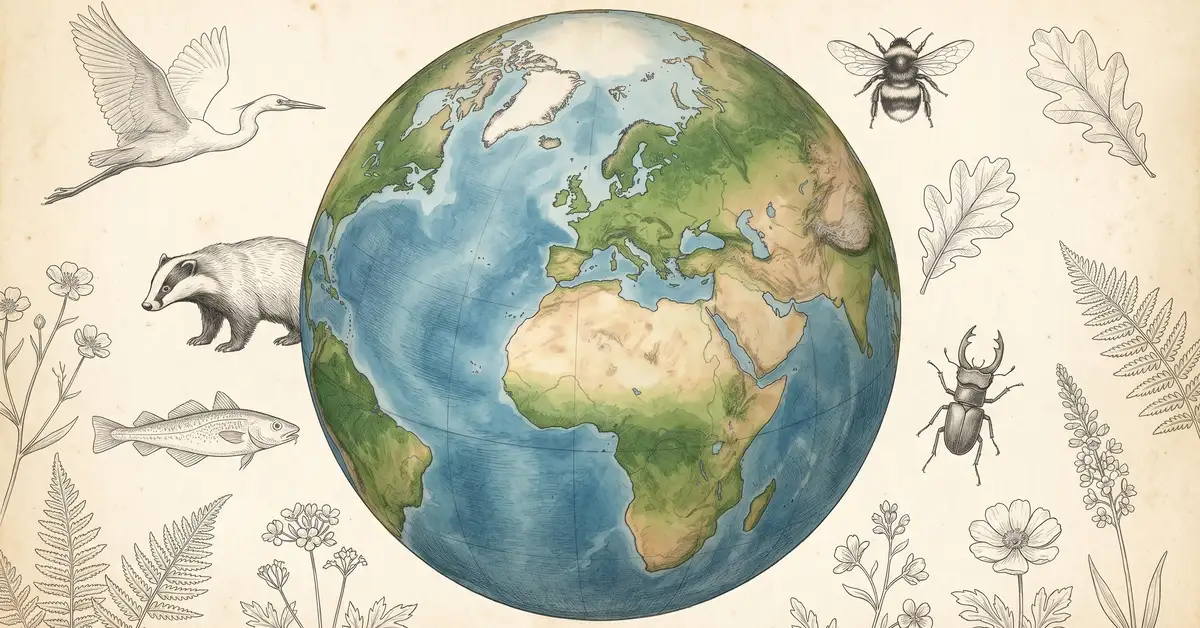
A major study published in 2025 examined 912 documented extinctions among plants and animals over 500 years and found a surprising pattern: extinction rates rose steeply through the 1800s and early 1900s before declining in rate, though not in absolute number. Vertebrates, arthropods and plants have all shown generally decreased extinction rates over the past century compared to earlier periods.
This apparent deceleration is less reassuring than it sounds. Nearly two-thirds of documented extinctions occurred on islands, with the Hawaiian archipelago alone accounting for almost a quarter of all island losses. Today's extinction drivers operate primarily on continents where the vast majority of species reside, through habitat destruction, pollution, climate change and habitat fragmentation. Freshwater species have been hit hardest on continents, accounting for three-quarters of non-island extinctions.
A critical limitation is that arthropods — roughly 77% of all animal species — remain largely uncounted in extinction assessments. Without better data on invertebrate losses, confident projections about the true pace of the sixth mass extinction remain elusive.
The 30×30 Target: Progress and Shortfalls
The Kunming-Montreal Global Biodiversity Framework, adopted at COP15 in December 2022, commits 196 nations to protecting 30% of terrestrial and marine areas by 2030. As of 2026, global coverage stands at 18.43% of land and inland waters and 9.97% of marine and coastal areas — well short of what is needed.
At current rates, terrestrial protection would need to accelerate from roughly 0.8 percentage points annually to 2.9 points per year, whilst marine coverage would require 4 percentage points of expansion each year. International funding for protected areas in developing countries reached just over $1 billion in 2024, but this is approximately $4 billion short of identified annual needs. Over half of tracked 30×30 finance flows from a small group of donors including Germany, the World Bank and the European Union.
Where Progress Is Happening
Colombia has protected 47% of its marine areas and 26% of terrestrial habitats through integrated strategies including public protected areas, Indigenous territory recognition and innovative financing. Its 2024–2030 Biodiversity Action Plan targets 34% coverage by 2030.
Where Gaps Remain
Marine protected areas receive just 14% of total international 30×30 finance, a share that has remained flat since 2014. Big Ocean States — whose territories encompass vast marine areas — receive only $48 million annually, around 4.5% of total funding.
COP17: The First Real Test
The seventeenth Conference of the Parties to the Convention on Biological Diversity takes place in Yerevan, Armenia from 19 to 30 October 2026. It represents the first comprehensive global review of whether nations are implementing their Kunming-Montreal commitments or merely filing aspirational reports.
By the February 2026 deadline, 125 countries — representing nearly two-thirds of CBD Parties — submitted their seventh national reports, providing the primary data source for the global assessment. However, several megadiverse nations including Brazil, the Democratic Republic of the Congo, South Africa and Papua New Guinea had not yet submitted their reports, creating significant gaps in the global picture. The delay in national biodiversity strategies has been substantial: 85% of countries missed the original deadline to submit their NBSAPs by October 2024, and only 28% had released nature pledges within a year of that deadline.
The COP17 logo features the Polyommatus eriwanensis butterfly, endemic to Armenia, and incorporates the 23 icons representing individual framework targets. The conference will determine whether the GBF follows the trajectory of its predecessor — the Strategic Plan for Biodiversity 2011–2020, which largely failed — or catalyses genuine implementation at scale.
The UK State of Nature: Where Do We Stand?
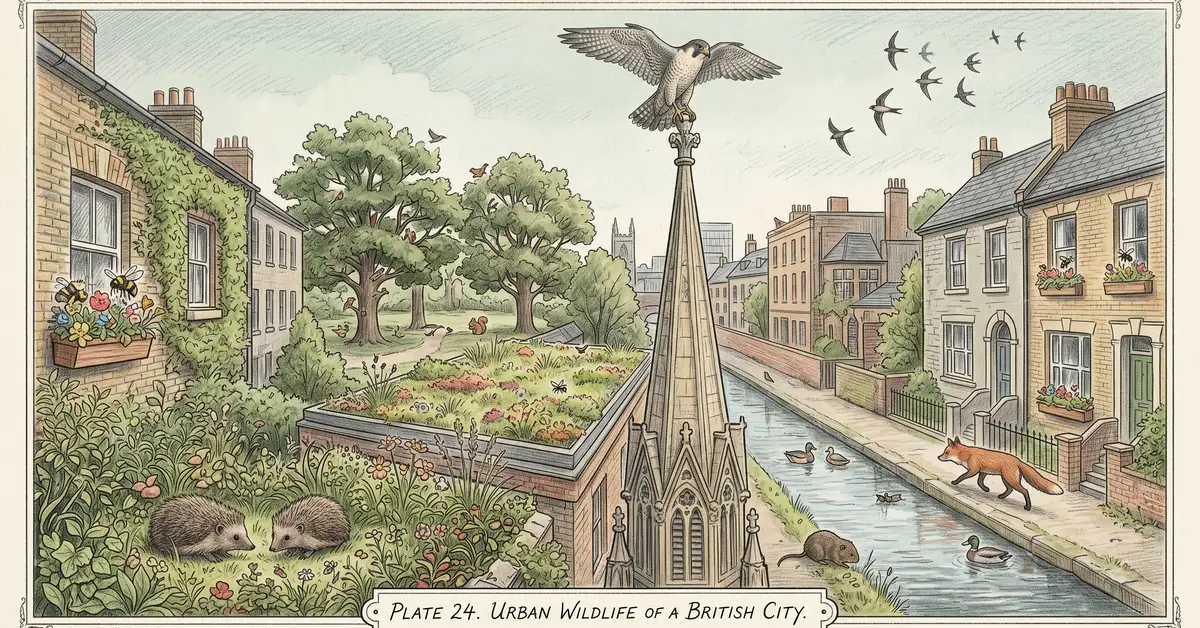
The UK's most recent State of Nature report, published in 2023, analysed long-term monitoring data for 753 species with abundance trends and 4,979 species with distributional data. The headline finding: priority species have declined to 38% of their 1970 baseline values. Over the long-term period, 52% of monitored priority species showed declines, with only 24% showing increases and the remainder unchanged.
Individual species declines illustrate the scale of the crisis. The Turtle Dove has experienced a 98% population reduction since 1994 — the largest decline of any of the 119 bird species monitored through the Breeding Bird Survey. By 2021, the UK population was estimated at only 2,092 territories. House Sparrows, once ubiquitous in British gardens, have also suffered drastic long-term declines, prompting their addition to the UK Red List in 2002.
England's biodiversity indicators for 2024 showed the all-species index declining approximately 4% from the previous year. England is home to around 55,000 native species, but monitoring coverage varies enormously: 77% of bird species are represented in indicators, compared with only 19% of moth species and negligible coverage of beetles, flies and bees.
The Monitoring Gap
What we measure: Vertebrate animals make up just 0.66% of the UK's known species, yet they dominate biodiversity indicators. Butterflies and moths are the only invertebrate groups with substantial monitoring coverage.
What we miss: Invertebrates account for over 53% of UK species. Without better monitoring of bees, beetles, flies and other groups, we cannot confidently assess the true state of UK biodiversity.
UK Policy: Record Investment and Reform
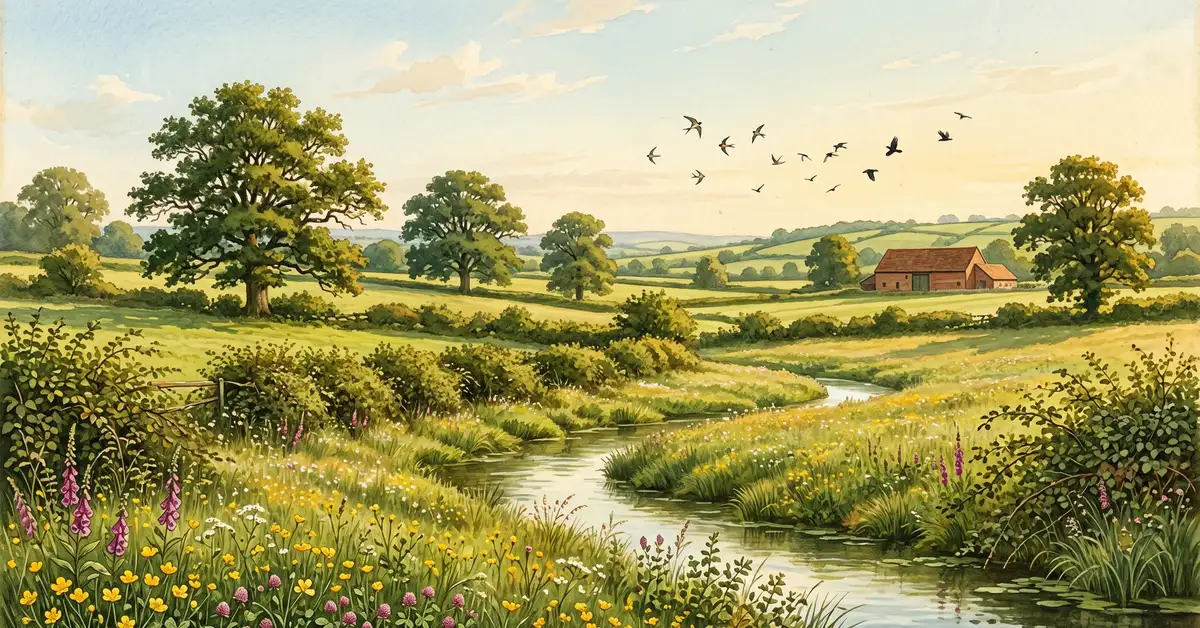
The UK government announced in 2026 its largest ever investment in threatened species conservation, allocating £60 million over three years (2026–2029) to the Species Recovery Programme, more than double the previous funding round. An additional £30 million supports species recovery on the national forest estate, bringing the total to £90 million. The programme has previously helped protect over 1,000 species and prevented the national extinction of at least 35.
Biodiversity Net Gain, introduced as a mandatory planning requirement in 2024, is also undergoing significant reform. From November 2026, BNG requirements will extend to Nationally Significant Infrastructure Projects. A new 0.2-hectare area-based exemption will remove roughly 50% of residential planning permissions from mandatory BNG compliance, though this is estimated to reduce overall baseline biodiversity units by only 12%.
The Environmental Improvement Plan 2025 sets targets including creating or restoring 250,000 hectares of wildlife-rich habitat by 2030 and progressing the 30×30 commitment for both land and sea. England's first Land Use Framework, released in March 2026, provides the first comprehensive spatial planning blueprint for reconciling competing demands including housing, food production, clean energy and nature restoration.
The redesigned Sustainable Farming Incentive launches in 2026 with 71 actions available across diverse farm types. Two application windows open in June (small farms and those without existing agreements) and September (all farmers), with a minimum eligibility threshold of 3 hectares. A new £30 million Farmer Collaboration Fund supports landscape-scale environmental delivery through farmer networks and partnerships. A 25-year Farming Roadmap, scheduled for 2026 publication, will provide long-term policy direction for farming support in England.
Local Nature Recovery Strategies are rolling out across England, providing locally developed plans that bring together ecological evidence, land use data and local knowledge to identify where nature recovery is most needed. Wales has advanced its own approach through the Nature Recovery Action Plan 2026, committing to update statutory Area Statements that guide place-based delivery of Global Biodiversity Framework targets. Approximately 45% of England's Sites of Special Scientific Interest are recorded as in unfavourable but recovering condition, and the Environmental Improvement Plan commits to delivering Protected Site Strategies for up to 12 priority sites by March 2026.
Climate Change and Biodiversity: Tipping Points Crossed
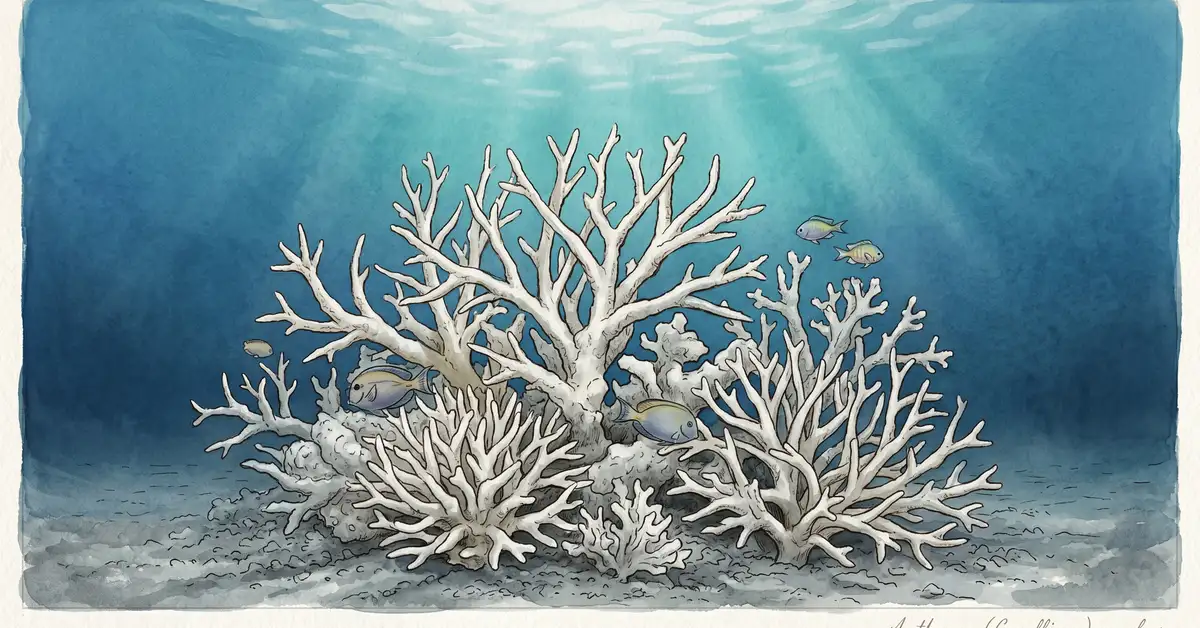
The interaction between climate change and biodiversity loss has intensified markedly. According to the Global Tipping Points Report released in October 2025, warm-water coral reefs have officially crossed their estimated tipping threshold at 1.2–1.4°C of warming above pre-industrial levels. The 2023–2025 global bleaching event — the fourth and most extensive ever recorded — has affected 84% of reefs worldwide. In Florida, elkhorn and staghorn corals are now functionally extinct in the wild.
Antarctic sea ice has also experienced dramatic collapse, declining by roughly the area of Greenland in a matter of months. This loss appears to represent a tipping point with potentially irreversible consequences for global ocean circulation. Models suggest Antarctic overturning circulation could slow by approximately 40% by 2050, with cascading effects on heat distribution and atmospheric composition. The emperor penguin and Antarctic fur seal both now rank as Endangered species, reflecting climate-driven sea ice loss that undermines their breeding habitat.
Species are responding through complex adaptive strategies. Research on dragonflies and damselflies shows that species with the greatest poleward range shifts also exhibit the largest phenological shifts toward earlier activity periods, with roughly half of all odonate species shifting simultaneously in both space and time. Surprisingly, these shifts were not predicted by species' functional traits — instead, southern species showed stronger range limit changes, whilst increased temperature variability hindered geographic range shifts regardless of a species' ecological characteristics.
The implications extend beyond individual species. Coral reefs support approximately one billion people who depend on them for food and income, and a quarter of all marine life inhabits reef ecosystems. Even stabilising warming at 1.5°C yields probabilities exceeding 99% that extensive reefs will be lost. Local-scale management — pollution control, overfishing prevention — can raise coral tolerance to thermal stress and improve post-bleaching recovery, but disturbances now occur with such frequency that corals lack adequate recovery time between events.
The Economics of Nature Loss
The UK's natural capital accounts, updated in 2025, value the country's annual ecosystem services at £41 billion. The total asset value of these services reaches £1.6 trillion, with health benefits from recreation provision contributing the largest single component at £508 billion. Recreation and tourism expenditure alone accounts for £10 billion annually.
Yet global financial flows tell a troubling story. In 2023, financial flows harmful to biodiversity reached an estimated €6.12 trillion — including €948 billion in fossil fuel subsidies, €344 billion in agricultural subsidies, and €336 billion in water subsidies — compared with just €184.58 billion invested in conservation and restoration. That is a ratio of approximately 33 to 1 in favour of activities that damage the natural world.
| Financial Flow | Annual Value | Context |
|---|---|---|
| Total harmful flows | €6.12 trillion | Subsidies and investment in high-impact sectors |
| Fossil fuel subsidies | €948 billion | Largest single category of harmful subsidy |
| Conservation investment | €184.58 billion | Total global conservation and restoration spend |
| UK ecosystem services | £41 billion/year | Total asset value: £1.6 trillion |
| Harmful-to-positive ratio | 33 : 1 | For every €1 spent on conservation, €33 flows to harmful activities |
Sources: European Commission Global Science Report 2026, ONS Natural Capital Accounts 2025
Conservation Successes: Evidence That Recovery Works

Despite the gravity of the overall picture, 2025–2026 has delivered genuine conservation successes demonstrating that targeted action can reverse population declines. Green sea turtles now rank as Least Concern on the IUCN Red List after experiencing a 28% population increase from recorded 1970–1980s levels. Twelve bird species were downlisted in recent assessments, including two endemic to the small Mauritian island of Rodrigues.
In the UK, the European wildcat — declared functionally extinct in Scotland in 2019 — is showing signs of recovery following a three-year reintroduction programme. Forty-six wildcats have been released into the Cairngorms National Park, with females successfully giving birth to kittens in both 2024 and 2025. The South West Wildcat Project plans to release 50 wildcats in England from 2028. Pine martens are also being reintroduced, with 19 released in Exmoor in September 2025 following a successful 2024 Dartmoor release.
Rewilding projects continue to demonstrate the potential of large-scale habitat restoration. Globally, rewilding contributes to reversing biodiversity loss through reintroduction of keystone species and restoration of disrupted habitats, with prominent initiatives including jaguar and puma habitat restoration in Brazil and beaver reintroduction across Scotland. Przewalski's horses — the only truly wild horse subspecies, last seen in the wild in the 1960s — are being restored through programmes descended from just 13 individuals, demonstrating the potential even of severely bottlenecked populations.
Citizen science participation continues to expand substantially. The RSPB Big Garden Birdwatch 2026 attracted over 650,000 participants who counted 9.4 million birds, contributing to 13.4 million hours of bird observations accumulated since 1979. In Ireland, the Clare Local Development Company launched a citizen science biodiversity training series offering free webinars on invasive species, habitats and species identification. These initiatives prove particularly valuable for landscape-scale monitoring at costs that would be economically infeasible through professional research alone, whilst simultaneously building ecological literacy and community engagement with biodiversity protection.
Emerging Threats: Microplastics, Invasives and the Deep Sea
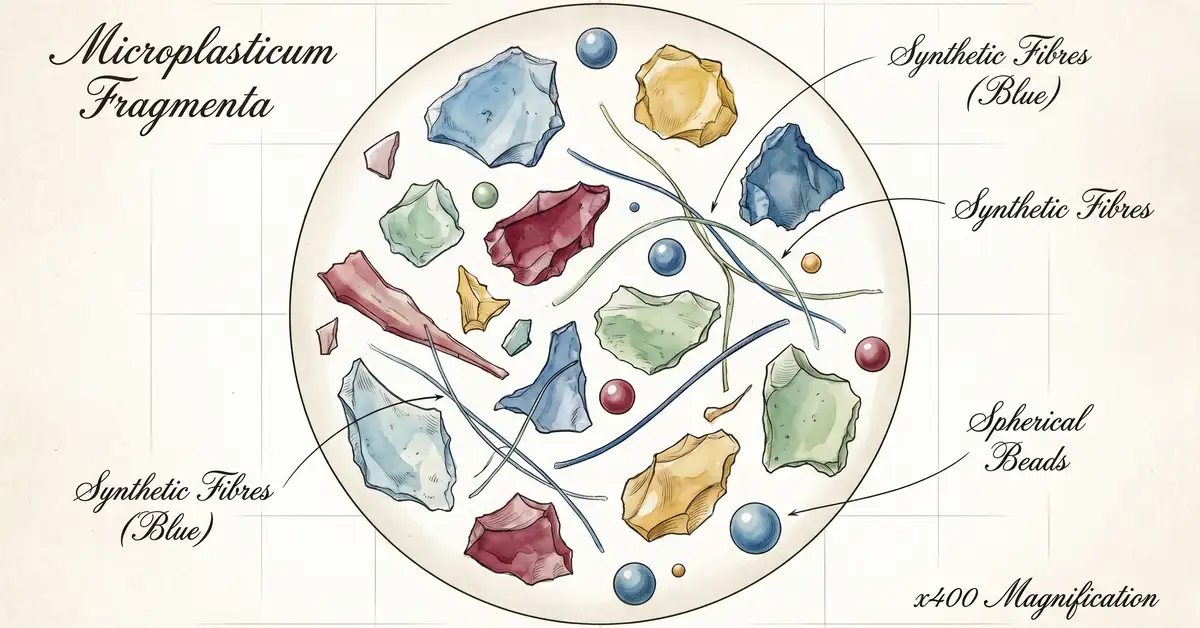
Novel contaminants pose growing threats that remain incompletely understood. Global microplastic pollution comprises 13% of total plastic pollution in 2025, with tyre wear, paint, agriculture and recycling as the largest sources. Under business-as-usual projections, microplastic pollution will grow from 17 to 26 million tonnes annually by 2040. PFAS — persistent synthetic compounds used in everything from firefighting foams to non-stick cookware — accumulate through food chains, with marine mammals building contaminant burdens hundreds of times higher than surrounding water.
Invasive species remain one of the five major drivers of global biodiversity loss, implicated in approximately 60% of plant and animal extinctions. The UK has recorded over 3,000 non-native species, of which around 300 are designated invasive. Signal crayfish continue to outcompete native white-clawed crayfish, pink salmon threaten northern rivers, and climate change aids invasive establishment through flooding and rising temperatures.
Deep-sea mining represents an emerging frontier of concern. The deep-sea floor is the most unexplored ecosystem on Earth, yet mining operations would cause direct habitat loss, generate sediment plumes dispersing for hundreds of kilometres, and introduce toxic heavy metals at concentrations up to 15 times higher than surrounding seawater. Mining infrastructure would also introduce significant noise and light pollution — novel stressors in an ecosystem where such inputs are naturally absent. Scientific consensus currently favours a global moratorium until ecological impacts are better characterised, and WWF has warned that deep-sea mining impacts would undermine efforts toward multiple Global Biodiversity Framework targets.
Agricultural intensification remains the single largest cause of planetary boundary transgression. More than 50% of agricultural lands are moderately to severely degraded, with conventional tillage dramatically reducing soil biodiversity and depleting soil organic matter. The shift toward conservation agriculture and regenerative practices represents a critical intervention pathway, but adoption rates remain low relative to the scale of the challenge.
The Bottom Line
Biodiversity in 2026 is at a crossroads. The science is unambiguous — nature is declining at an unprecedented rate, tipping points are being crossed, and financial systems remain structurally misaligned with ecological reality. Yet the tools for recovery exist: protected areas, species reintroduction, agricultural reform, nature-positive finance and genuine international cooperation. COP17 in Armenia this October will reveal whether the world's governments are prepared to use them.
Frequently Asked Questions
How many species are threatened with extinction in 2026?
More than 47,000 species are classified as threatened with extinction on the IUCN Red List, representing 28% of all assessed species. However, only around 172,600 species have been formally evaluated out of an estimated 8.7 million, meaning the true number of threatened species is likely considerably higher.
What is the state of biodiversity in the UK in 2026?
UK priority species have declined to 38% of their 1970 baseline values, with 52% of monitored species showing declines. The Turtle Dove has lost 98% of its population since 1994. However, the government has announced a record £90 million investment in species recovery and is implementing Biodiversity Net Gain reforms to integrate nature into planning decisions.
Is the 30×30 biodiversity target on track?
No. As of 2026, 18.43% of land and 9.97% of marine areas are protected globally, well short of the 30% target for 2030. Terrestrial protection would need to accelerate from 0.8 to 2.9 percentage points annually, and marine protection from roughly 1.5 to 4 percentage points per year to meet the deadline.
What is COP17 and when does it take place?
COP17 is the 17th Conference of the Parties to the Convention on Biological Diversity, scheduled for 19–30 October 2026 in Yerevan, Armenia. It will conduct the first comprehensive global review of progress toward the 23 targets of the Kunming-Montreal Global Biodiversity Framework adopted at COP15 in 2022.
Are any species recovering in the UK?
Yes. European wildcats, declared functionally extinct in Scotland in 2019, are breeding successfully in the Cairngorms following a reintroduction programme. Pine martens have been reintroduced to Dartmoor and Exmoor. Over 150 at-risk species are showing signs of recovery through the Species Recovery Programme, which has prevented the national extinction of at least 35 species.
Sources: IUCN Red List 2025, JNCC Priority Species Abundance 2023, Environmental Improvement Plan 2025, CBD National Reports 2026, DEFRA Species Recovery Announcement 2026, ONS Natural Capital Accounts 2025, European Commission Nature Finance Report 2026, Earth.org Conservation Successes 2025