Last updated 7 November 2026. A Pixcellence guide to understanding the UK's diverse ecosystems and habitats, their current condition, and how conservation protected species efforts are working to restore them.
What Are the Main Types of Habitat Found in the UK?
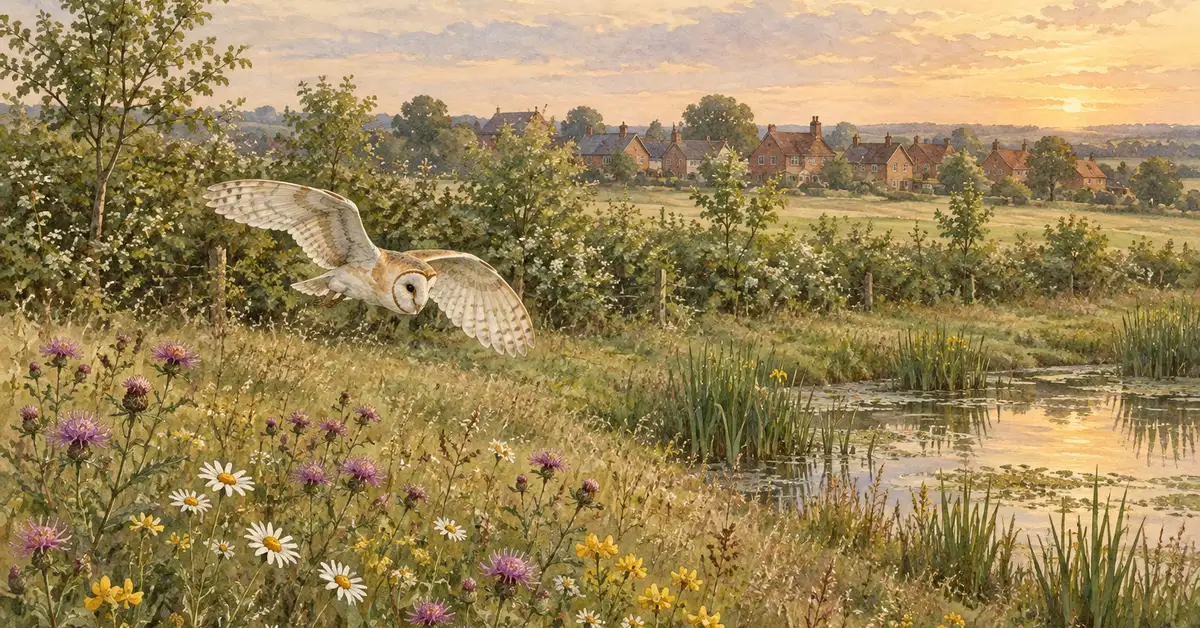
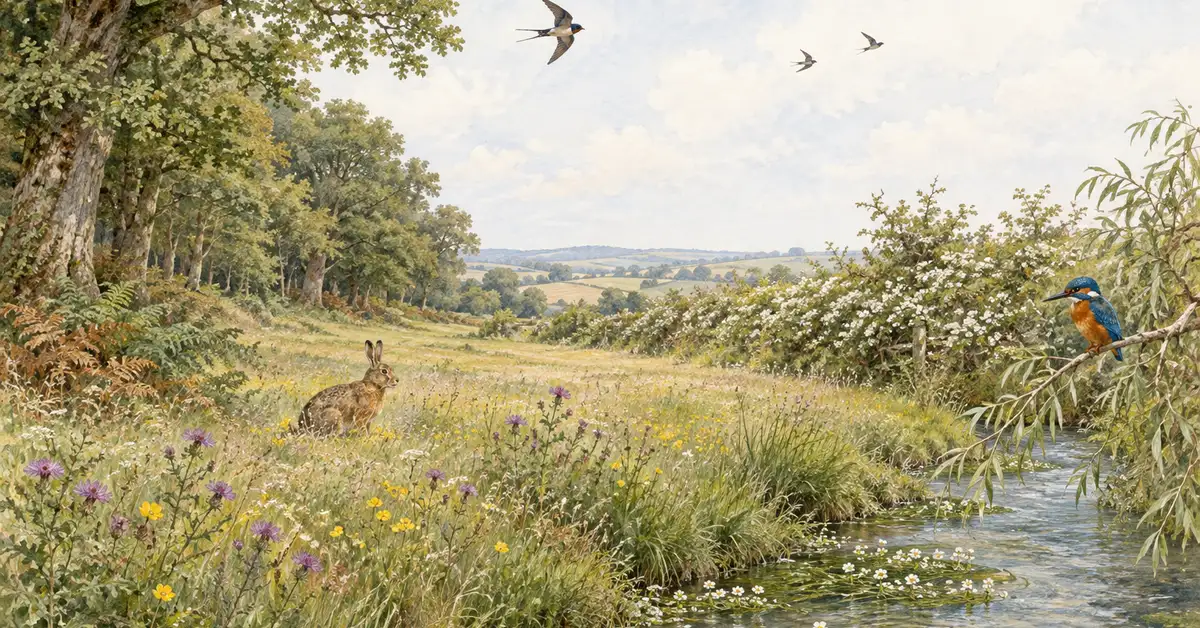
The UK's ecosystems encompass a remarkable diversity of habitat types shaped by climate, geology, and centuries of land use. These include woodlands, grasslands, heathlands, wetlands, peatlands, and coastal systems, each supporting distinct assemblages of plants, animals, and fungi. Woodlands range from ancient oak and beech forests to coniferous plantations; grasslands span lowland meadows to upland grasslands rich in wildflowers and invertebrates; wetlands include fens, marshes, and reed beds supporting specialised wildlife; and peatlands represent our rarest and most carbon-rich ecosystems. Coastal habitats—salt marshes, sand dunes, shingle beaches—form transitions between terrestrial and marine environments, while marine habitats beneath UK waters include kelp forests, seagrass meadows, and rocky reefs. Understanding the different levels of biodiversity across these habitats is essential to recognising what we must protect and restore.
Each habitat type has evolved to support specific wildlife. Biodiversity in UK habitats reflects thousands of years of adaptation—from the rare plants of chalk grasslands to the specialised amphibians of lowland fens. Conservation frameworks recognise this by designating "priority habitats" under Section 41 of the Natural Environment and Rural Communities Act 2006 (in England), protecting irreplaceable ecosystems like lowland fens, upland flushes, and heathlands. Today, identifying and protecting existing habitat patches is the foundation of all conservation work.
| Habitat Type | Approximate UK Extent | Condition | Key Species Supported |
|---|---|---|---|
| Woodland | 3.29 million ha (14% of UK land) | 7% of native woodland in good condition | Dormouse, bluebell, great spotted woodpecker |
| Lowland Grassland | 97% of wildflower meadows lost since the 1930s | Critically depleted | Orchids, brown hare, skylark |
| Peatland | Extent varies by source | 80% degraded | Sphagnum mosses, golden plover, large heath butterfly |
| Heathland | Within mountains, moorland and heath (11% of UK land) | Severely fragmented | Dartford warbler, sand lizard, nightjar |
| Wetland & Freshwater | 5% of UK land (freshwater, wetlands and floodplain) | Critically depleted | Bittern, water vole, great crested newt |
| Coastal & Marine | Coastal margins 2% of UK land; marine assessed separately | Variable; under pressure | Seagrass, puffin, grey seal, kelp forests |
By area, the Office for National Statistics uses the National Ecosystem Assessment's broad habitats to describe UK land cover (2019 data): enclosed farmland covers 52% of the UK, woodland 13%, mountains, moorlands and heath 11%, semi-natural grassland 10%, urban land 7%, freshwater, wetlands and floodplain 5%, and coastal margins 2%. The eighth broad habitat, marine, is assessed separately.
How Are UK Woodlands Classified and Why Do They Matter?

UK woodlands are classified by their dominant tree species and ecological characteristics. Broadleaved woodlands—primarily oak, ash, beech, and birch—represent our most biodiverse forest type, supporting a wide range of wildlife. These ancient woodlands, many dating back centuries, form the ecological core of terrestrial conservation. Coniferous woodlands, dominated by Scots pine and spruce, provide different ecological services, particularly in Scotland and upland regions. Mixed woodlands combine both types, creating diverse structural complexity. The UK's current woodland covers 3.29 million hectares, representing 14% of our land area (Forest Research, 2025), but this is significantly lower than historical levels.
Woodlands matter because they underpin terrestrial biodiversity and ecosystem function. They stabilise soil, regulate water cycles, store carbon, and provide habitat structure at multiple layers—from the forest floor to the canopy. Hedgerows, often overlooked, are linear woodland systems that provide shelter, food and corridors for wildlife in agricultural landscapes. England's target is to raise woodland cover to 16.5% of its land area by 2050, and Forest Research's statistics track progress.
What Is the Current Condition of UK Habitats?

The condition of UK habitats is critically concerning. State of Nature 2023 found that only six of the UK's 77 habitats of European importance were in favourable condition (about 8%), and that about a quarter of UK peatland and less than half of UK saltmarsh are in good ecological condition. Just 7% of Britain's native woodland is in good ecological condition (Forest Research). The wider UK Biodiversity Indicators tell a similar story, and together these statistics describe a habitat crisis requiring urgent intervention.
Habitat degradation stems from multiple pressures: fragmentation by roads and development, pollution, inappropriate management, invasive species, and increasingly, climate change. Many habitats exist as small, isolated patches unable to support viable populations of specialist species. The combined effect is a landscape where biodiversity loss accelerates—not dramatically in most cases, but persistently and pervasively. This decline threatens not only wildlife but the ecosystem services upon which human communities depend.
Key Takeaway
Only about 8% of the UK's habitats of European importance are in favourable condition (State of Nature 2023), and just 7% of Britain's native woodland is in good ecological condition. Urgent restoration and creation is essential to reverse decades of decline and meet national biodiversity targets.
Which UK Habitats Have Declined the Most?
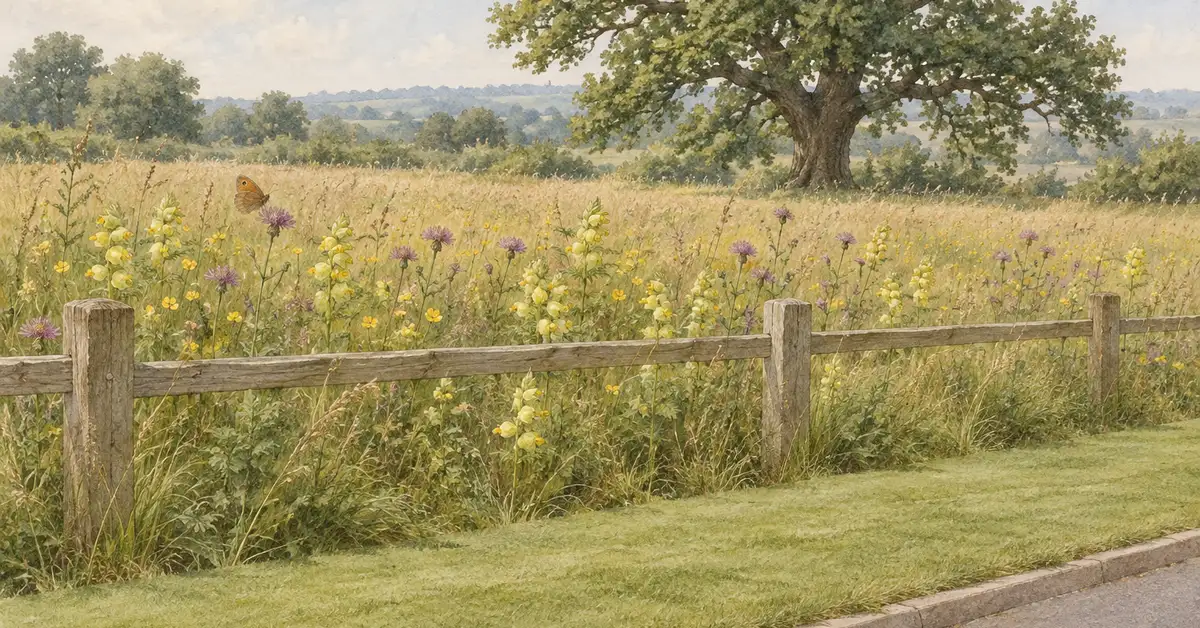
Historical losses have been severe. Plantlife reports that around 97% of wildflower meadows in England and Wales have disappeared since the 1930s, mainly through intensive agriculture and development, with much species-rich grassland converted to arable land or improved pasture.
Lowland Habitats
Wildflower meadows are down about 97% since the 1930s, while wetlands and heathlands have been drained, built on or fragmented by agricultural intensification and urban development. Remaining patches are often isolated and degraded.
Upland Habitats
About 80% of UK peatland is degraded (IUCN UK Peatland Programme), moorlands fragmented, and upland grasslands threatened by overgrazing and climate change. Recovery is slower in harsh upland conditions.
Conservation Warning
The threat: Some UK habitats are approaching points of no return. Lowland meadows, wetlands, and heathlands exist in fragments so small they cannot support viable populations of many specialist species.
What this means: Without immediate habitat creation and connection, entire ecological communities could be lost within decades. Extinction debts—species destined to vanish from small, isolated habitats—are already accumulating across the UK.
How Does the UK Protect Its Natural Habitats?
The UK operates a multi-layered protection framework combining international, national, and local designations. At the international level, the UK is signatory to conventions including the Convention on Biological Diversity, CITES (for threatened species trade), and the Ramsar Convention (for wetlands of international importance). These frameworks commit the UK to conservation targets, including the recent Kunming-Montreal Global Biodiversity Framework commitment to protect 30% of terrestrial and marine areas by 2030.
Domestically, the UK has 378 Marine Protected Areas covering 38% of UK waters (JNCC). On land, designation does not always mean effective management: in England, only around 7% of land meets the 30by30 standard (Defra, July 2026). Protected area designations include National Parks, Sites of Special Scientific Interest (SSSIs), Special Areas of Conservation (SACs), Special Protection Areas (SPAs), and local Wildlife Trust reserves. England's Environment Act (2021) introduced mandatory Biodiversity Net Gain (BNG) requirements, ensuring new development creates net habitat gains. The Landscape Recovery Scheme and Nature Recovery Projects provide funding for large-scale habitat restoration on private land.
| Designation | Level | Number / Coverage | Primary Purpose |
|---|---|---|---|
| Sites of Special Scientific Interest (SSSIs) | National | ~4,100+ in England | Protect habitats and species of national importance |
| National Parks | National | 15 across UK | Landscape conservation and public access |
| Special Areas of Conservation (SACs) | International | 256 in England | Protect habitats under Habitats Regulations |
| National Nature Reserves (NNRs) | National | 221 in England | Exemplary habitat management and research |
| Ramsar Sites | International | Listed by JNCC | Protect wetlands of international importance |
Explore more of our conservation guides and share them with your community.
Browse All GuidesWhat Major Habitat Restoration Projects Are Underway?

Across the UK, landscape-scale habitat restoration is under way, including peatland rewetting, wetland creation, heathland reconnection and woodland creation. In England, 48 Local Nature Recovery Strategies map the places where habitat creation and restoration would help nature most.
Peatland restoration programmes raise water tables and halt erosion, which matters for carbon storage and biodiversity. Woodland creation is one measure of progress: UK-wide, about 15,600 hectares of new woodland were created in 2024/25 (Forest Research). These projects represent a shift from protection alone to active restoration, essential for reversing historical losses.
8%
UK habitats of European importance in favourable condition
UK, State of Nature 2023
7%
Native woodland in good condition
Great Britain, Forest Research
97%
Wildflower Meadows Lost
Since the 1930s, England and Wales
500,000
Hectares Target
Wildlife-rich habitat in England by 2042
Sources: State of Nature 2023, Forest Research, Plantlife, Environmental Targets (Biodiversity) (England) Regulations 2023
How Is Climate Change Affecting UK Ecosystems?
Climate change represents an increasingly dominant pressure on UK habitats and species. Rising temperatures, altered precipitation patterns, and more frequent extreme weather events destabilise ecosystems adapted to stable historical conditions. Climate change is an increasing pressure on UK wildlife alongside habitat loss. Research by the British Trust for Ornithology shows species are responding by shifting their ranges northward and upward in elevation, seeking suitable climate conditions. Some migratory birds are arriving earlier or departing later; breeding seasons are shifting; and entire ecological communities risk becoming asynchronous—where predators and prey no longer coincide in time.
Specific habitats face acute climate vulnerability. Peatlands, which store twice as much carbon as all forests globally, are at risk of becoming carbon sources if degradation and drying continue. Mountain ecosystems face "summit imprisonment"—species unable to move higher as the climate warms. Coastal habitats face inundation from rising sea levels and increased storm surge. Climate impacts on biodiversity are interconnected with habitat loss; isolated habitat patches cannot accommodate species range shifts, pushing species toward extinction. Restoration that builds habitat connectivity and resilience is therefore essential to climate adaptation.

What Can You Do to Help UK Habitats?
Support Protected Area Expansion
Advocate for meeting the 30x30 target of protecting 30% of UK land and sea by 2030. Support local campaigns protecting wild places in your region. Join Wildlife Trusts or conservation organisations working to establish new reserves and strengthen protections.
Create or Restore Habitat on Your Land
If you own land, explore agri-environment schemes or the Landscape Recovery Scheme, which provide funding for habitat creation and restoration. Even small gardens can become wildlife havens—plant native trees and wildflowers, establish ponds, and leave areas for invertebrates. These patches contribute to broader habitat connectivity.
Contribute to Citizen Science Monitoring
Join biological recording schemes like the British Trust for Ornithology, Butterfly Conservation, or the National Biodiversity Network. Your observations of local species inform conservation priorities and track habitat health. Many schemes require minimal expertise and offer learning opportunities.
Advocate for Sustainable Agriculture and Land Management
Support farmers practising habitat-friendly agriculture—regenerative grazing, hedgerow management, and wildflower corridors. Buy food from local producers who prioritise wildlife. Pressure agricultural policies to reward environmental stewardship alongside productivity.
Support Climate Action and Habitat Resilience
Reducing your own carbon footprint strengthens habitat resilience to climate impacts. Support renewable energy, reduce consumption, and advocate for climate policies. Resilient habitats—well-connected and diverse—better withstand climate stress.
Engage With Biodiversity Protection Locally
Attend local environmental planning meetings, support nature reserves through volunteering, and participate in habitat restoration days. Local action amplifies impact—habitat creation requires many hands, and volunteer effort remains central to UK conservation success.
Why This Matters
Individual actions compound into landscape-scale change. Every native plant planted, every pound donated to habitat restoration, and every voice raised for wildlife protection strengthens the networks supporting biodiversity conservation. The UK can reverse habitat decline—but only if conservation becomes a collective commitment.
Frequently Asked Questions
What is the difference between habitat loss and habitat degradation?
Habitat loss occurs when an entire ecosystem is converted to a different land use—e.g., woodland cleared for arable farming. Habitat degradation describes when habitat remains but becomes progressively less suitable for wildlife through pollution, fragmentation, invasive species, or inappropriate management. Both are destructive; degradation is often overlooked because the habitat remains visibly present, yet its wildlife value diminishes. UK habitats face both pressures simultaneously.
Why are hedgerows so important for UK wildlife?
Hedgerows function as linear corridors connecting fragmented habitat patches across agricultural landscapes. They provide shelter, foraging, and breeding sites. In landscapes where woodland and wetland patches are isolated, hedgerows are critical lifelines allowing species movement and genetic exchange. Their loss directly accelerates biodiversity loss in lowland areas.
How long does habitat restoration take to show results?
Results vary by habitat type and restoration intensity. Restored wetlands can begin supporting specialist invertebrates within a few years, woodland creation takes decades to develop ecological complexity, and peatland restoration is slower still, often requiring years of hydrological recovery before biodiversity significantly increases. However, even early-stage restoration demonstrates value—pioneer species colonise quickly, food webs begin reorganising, and soil development accelerates. Patience is essential, but results are measurable.
Can small habitat patches contribute meaningfully to conservation?
While large habitat networks are ideal, small patches matter. A garden meadow, woodland corner, or pond contributes stepping-stone habitat, particularly in agricultural landscapes where habitat connectivity is fragmented. Small patches support generalist species and invertebrates; collectively, they provide the connectivity allowing specialist species to move between larger reserves. However, small patches alone cannot support viable populations of many specialist species—they must be part of a broader landscape-scale strategy combining reserve expansion with habitat creation and corridor development.
What is Biodiversity Net Gain (BNG) and how does it protect habitats?
Biodiversity Net Gain (BNG) has been mandatory in England for major development since 12 February 2024 and for minor development since 2 April 2024 (sites of 0.2 hectares or less are exempt from 6 August 2026). It requires that new development creates measurable habitat gains offsetting any ecological impacts. Developers must achieve a minimum 10% net gain in biodiversity through on-site creation, off-site habitat banking, or purchasing BNG credits. While BNG is sometimes criticised as insufficient or complex to implement, it represents a significant policy shift—development can no longer deliver zero conservation benefit. Over time, BNG should deliver substantial new habitat, though rigorous monitoring is essential to verify genuine outcomes.
How can I tell if a habitat is being effectively managed for conservation?
Signs of effective conservation management include: habitat structure appropriate for target species (varied vegetation height and composition in grasslands; understory diversity in woodlands); evidence of targeted management (e.g., coppicing, controlled burns); presence of target species; absence of unmanaged invasive species; and management plans informed by monitoring data. Many UK reserves produce public monitoring reports documenting species trends, habitats condition, and management outcomes—review these to understand conservation effectiveness. Transparency about monitoring and results indicates genuine conservation commitment.
What role do private landowners play in UK habitat conservation?
Private landowners and farmers manage a large share of the UK's land, making their role fundamental to conservation success. Schemes like the Landscape Recovery Scheme, agri-environment payments, and Higher Tier Stewardship provide funding incentivising habitat creation and restoration. Forward-thinking landowners are increasingly recognising that wildlife-rich land provides multiple benefits—improved water retention, soil health, carbon sequestration, and often increased land value. Farmer-conservationist partnerships are expanding; support for these partnerships through policy and funding is critical for scaling habitat restoration across the UK.
How do overseas conservation efforts affect UK habitats and species?
UK species depend on overseas habitats during migration and wintering. Warblers nesting in British woodlands winter in African savannas; shorebirds breeding in UK estuaries winter in West African mangroves. Habitat loss in these regions directly threatens UK populations. Conversely, UK tropical forest consumption through imports drives rainforest clearance affecting globally threatened species. Conservation cannot be isolated geographically; UK conservation commitment must include supporting habitat protection in key overseas regions supporting British species and reducing consumption-driven habitat loss in tropical and subtropical regions.
Help Us Build a Trusted Conservation Resource
We publish free, evidence-based guides on UK biodiversity and climate. Spotted an error or have a question? Let us know.
Clwyd Probert
Founder, Pixcellence
Clwyd writes Pixcellence's evidence-led guides to UK biodiversity and climate, illustrated in the tradition of Victorian natural-history watercolour.
Sources: Government of the United Kingdom Biodiversity Indicators 2026, RSPB State of Nature Report 2024, Natural England Nature Recovery Projects 2025, IUCN UK Peatland Programme 2025, UK Centre for Ecology & Hydrology 2024
More Pixcellence guides
- UK soil conservation guide
- UK habitats: Britain's natural environments
- Types of biodiversity explained
- Butterfly conservation in the UK
- UK ecosystem examples: from woodlands to coastlines
- What is biodiversity? Meaning, types and UK examples
- The statutory biodiversity metric: strengths and criticisms